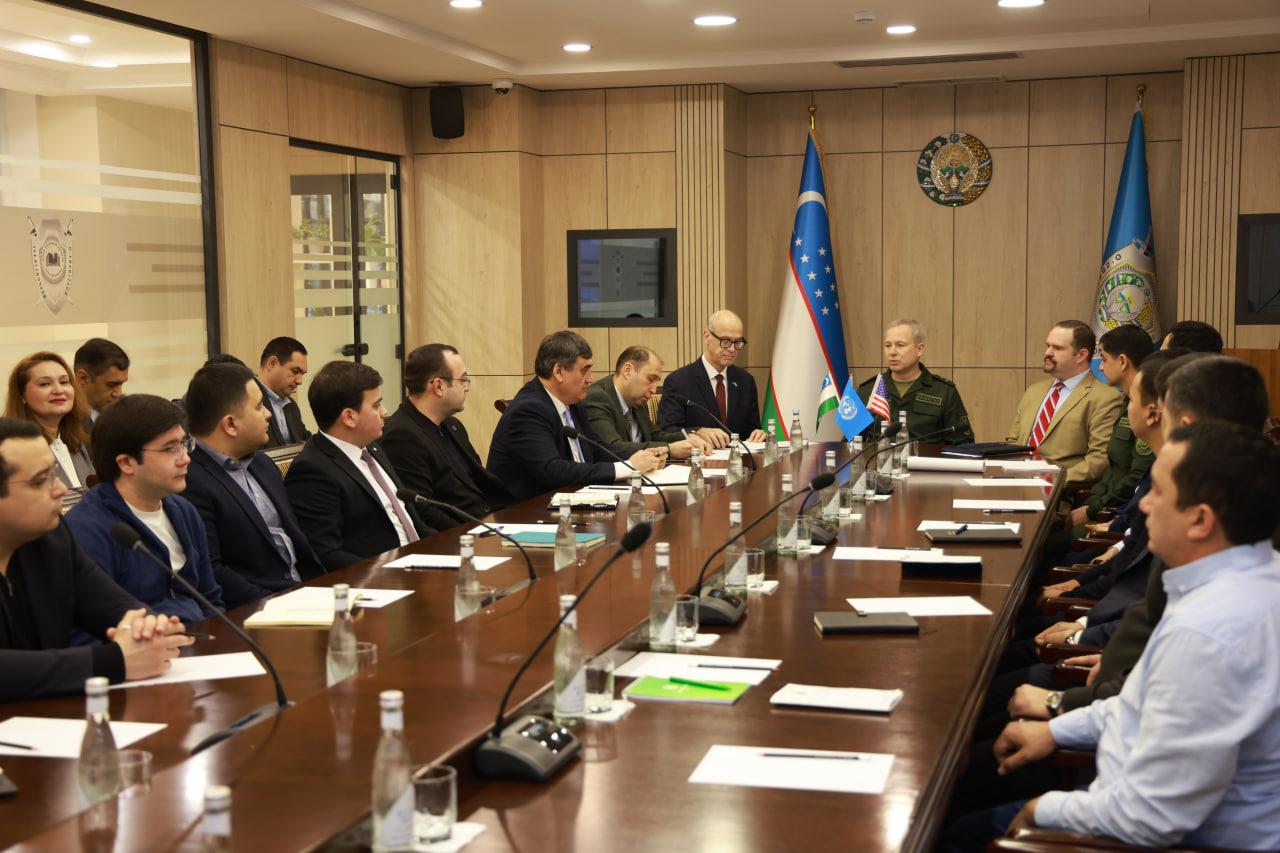
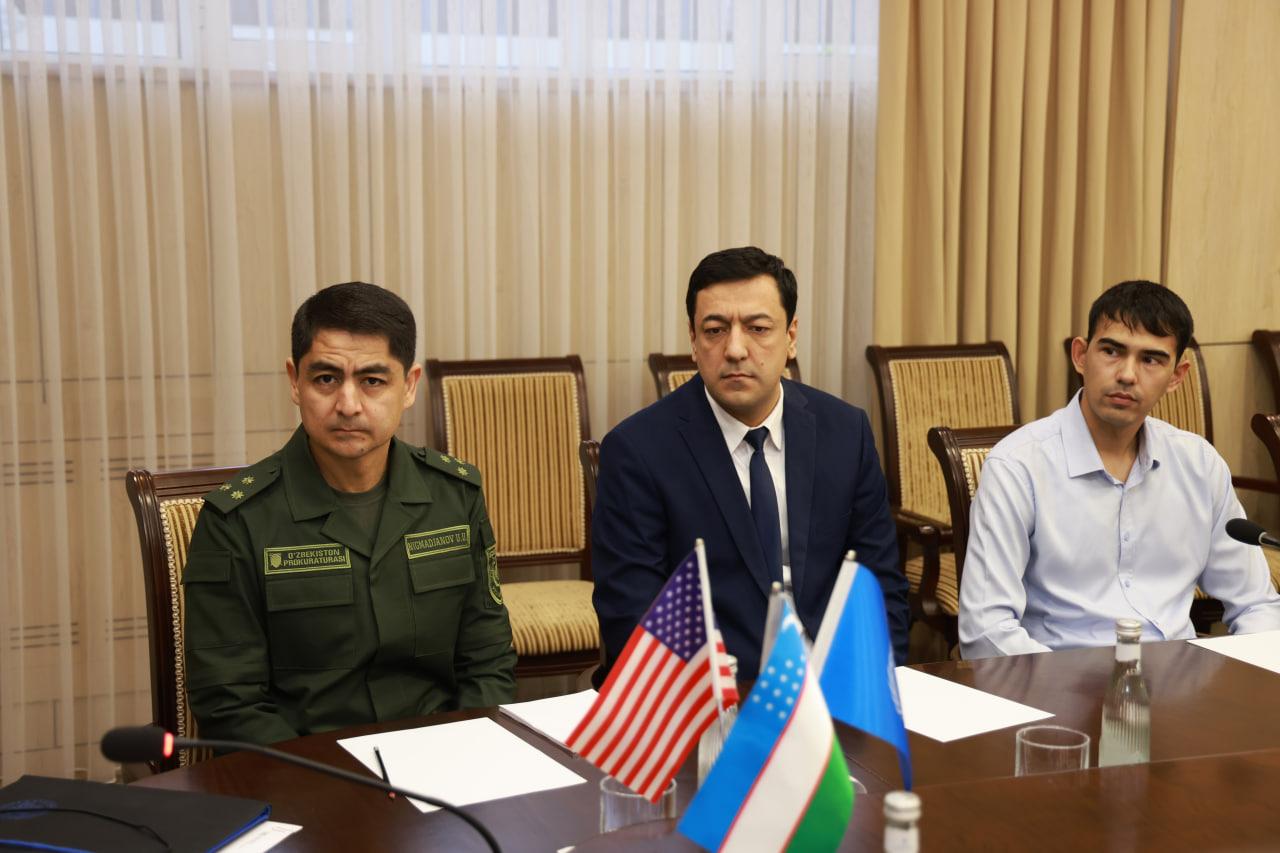

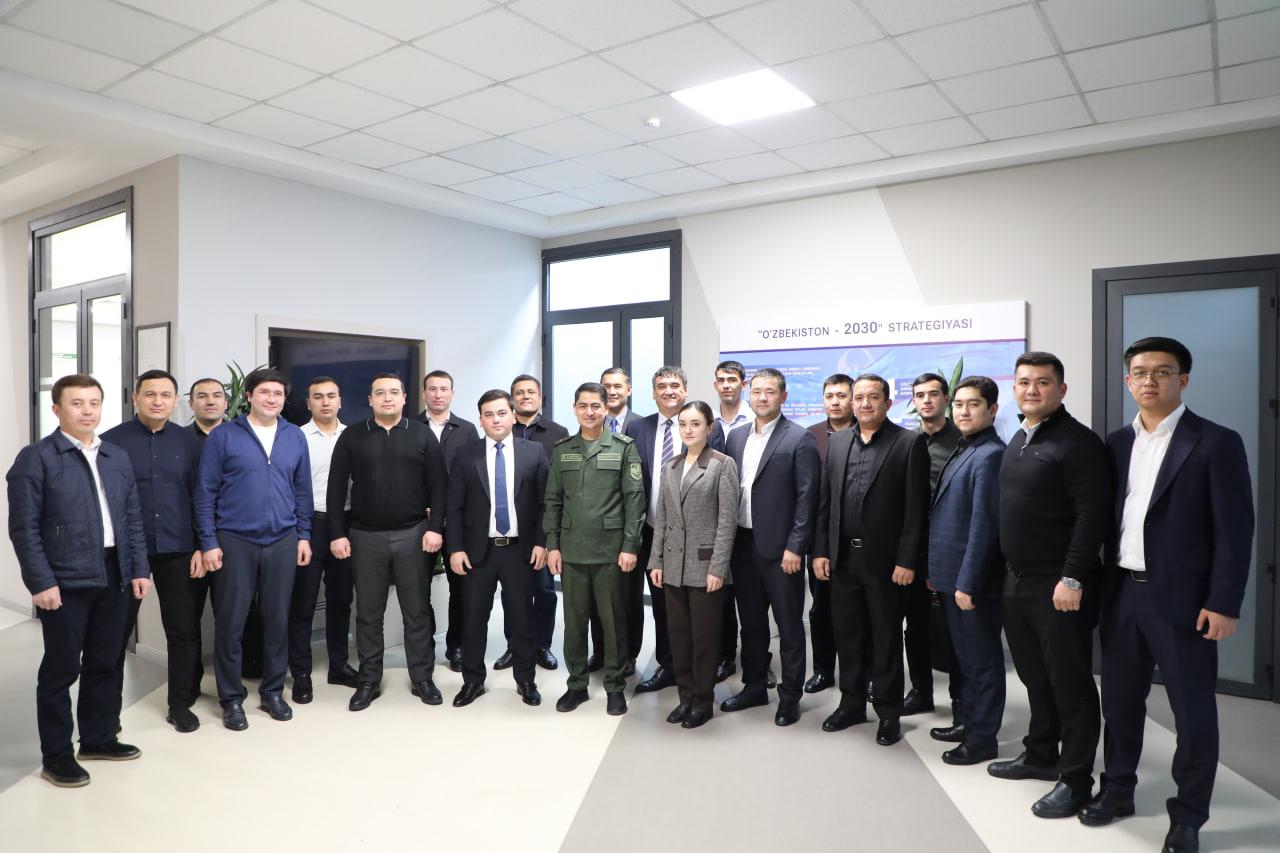

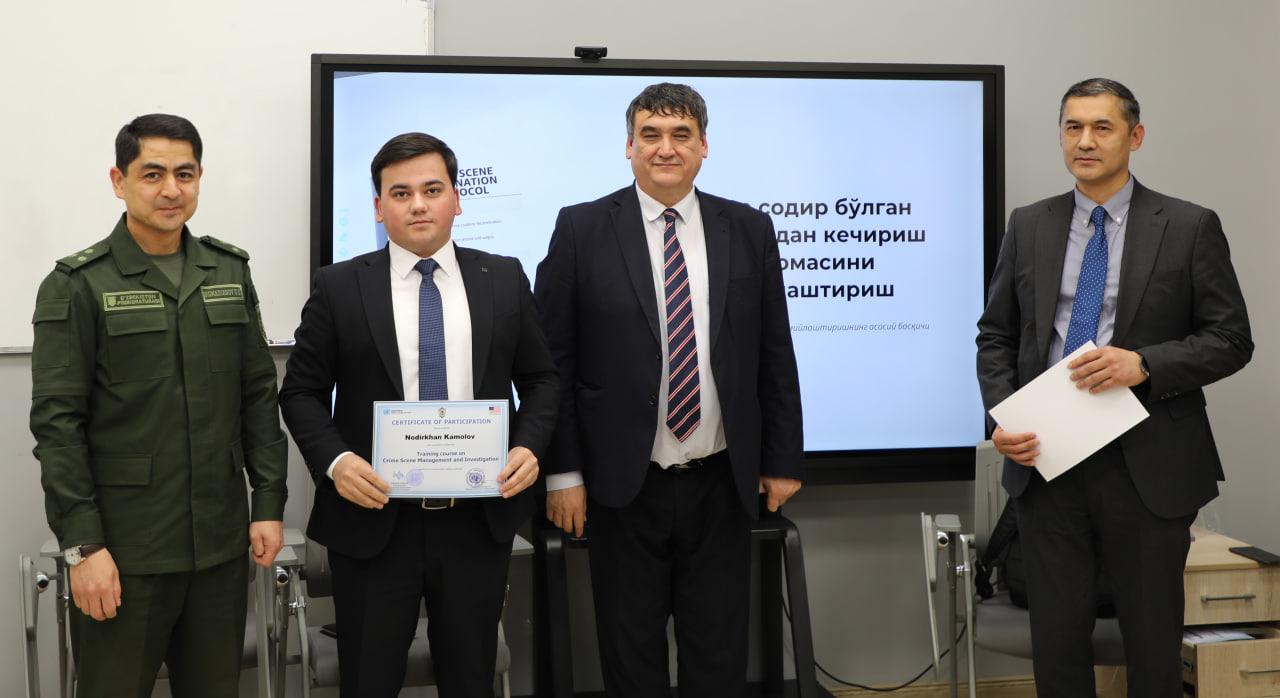
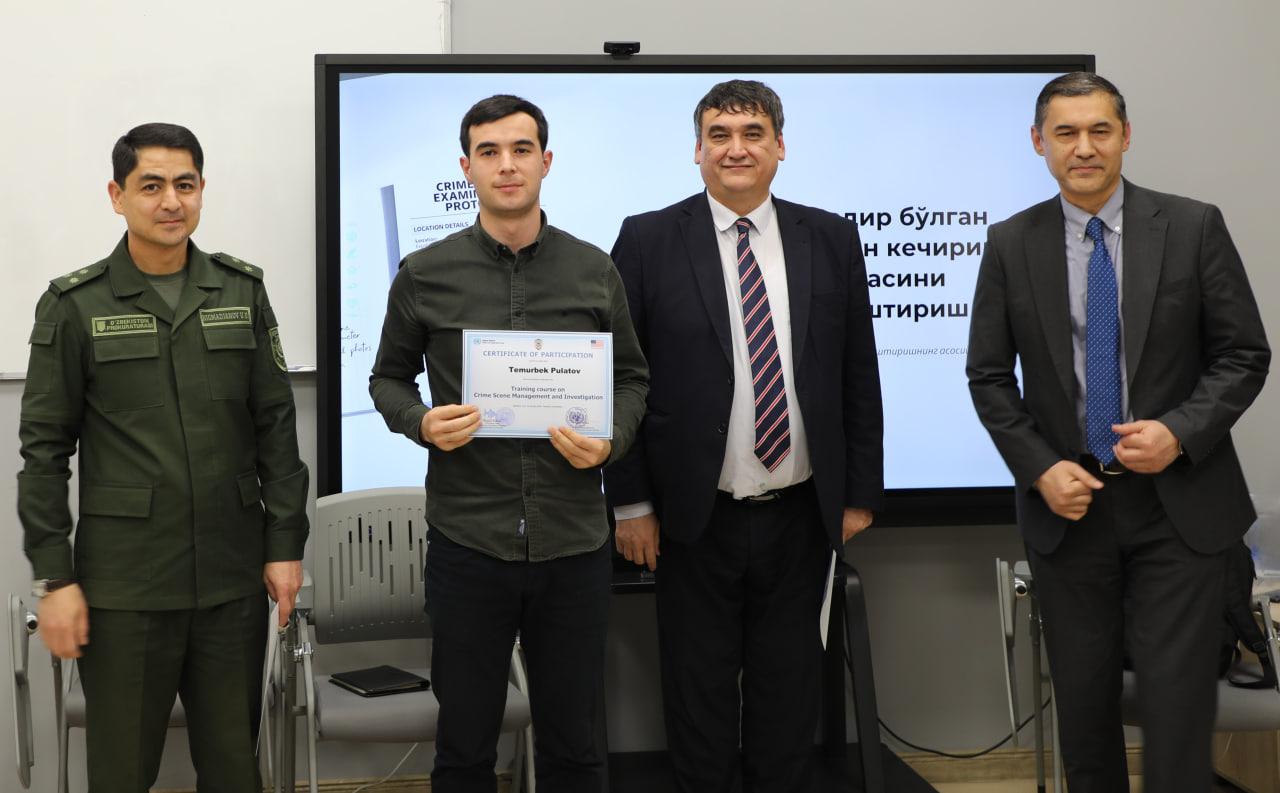
A five-day international seminar-training on “Crime scene examination and management” was held at the Law Enforcement Academy in cooperation with the United Nations Office on Drugs and Crime (UNODC) and the Bureau of International Narcotics and Law Enforcement Affairs (INL) of the U.S. Department of State. The seminar was organized for investigators of the prosecution authorities and forensic experts.
Within the framework of the seminar, participants enhanced their professional knowledge and practical skills in organizing initial actions at a crime scene in accordance with international standards and best foreign practices, as well as in collecting, documenting, and ensuring the preservation of physical evidence.
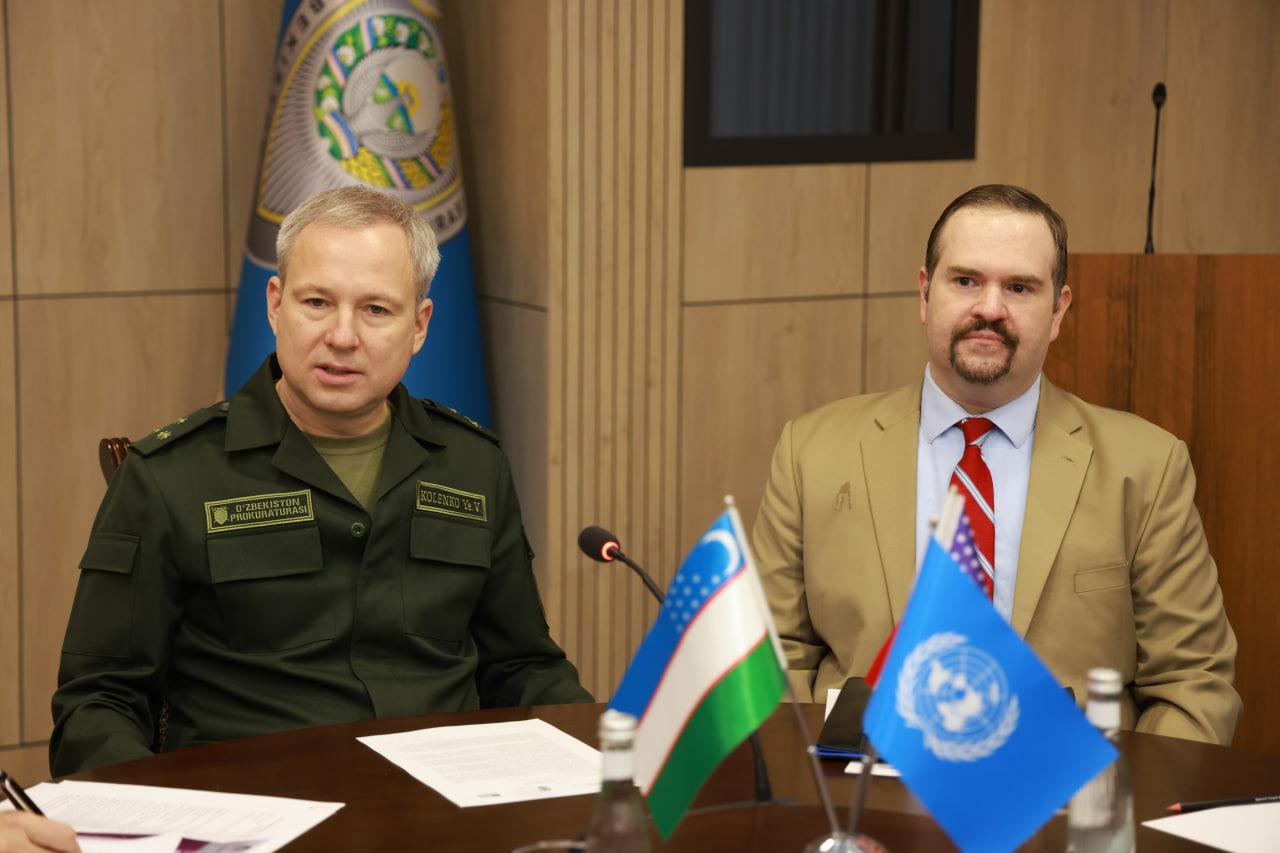
The opening ceremony was attended by the First Deputy Head of the Academy, Doctor of Philosophy (PhD) in Law, Professor E. V. Kolenko; the Head of the Regional Office of the United Nations Office on Drugs and Crime, Dr. Oliver Stolpe; and the Director of the INL Office at the U.S. Embassy, Nathaniel Rettenmeyer. In their speeches, they emphasized that the effectiveness of justice directly depends on the reliability of physical evidence and strict observance of the principle of the “chain of custody”.
During the seminar, special attention was paid to strengthening cooperation between investigators and forensic experts at the crime scene, as well as to preventing technical errors in the collection and documentation of evidence in order to improve the quality of criminal investigations.
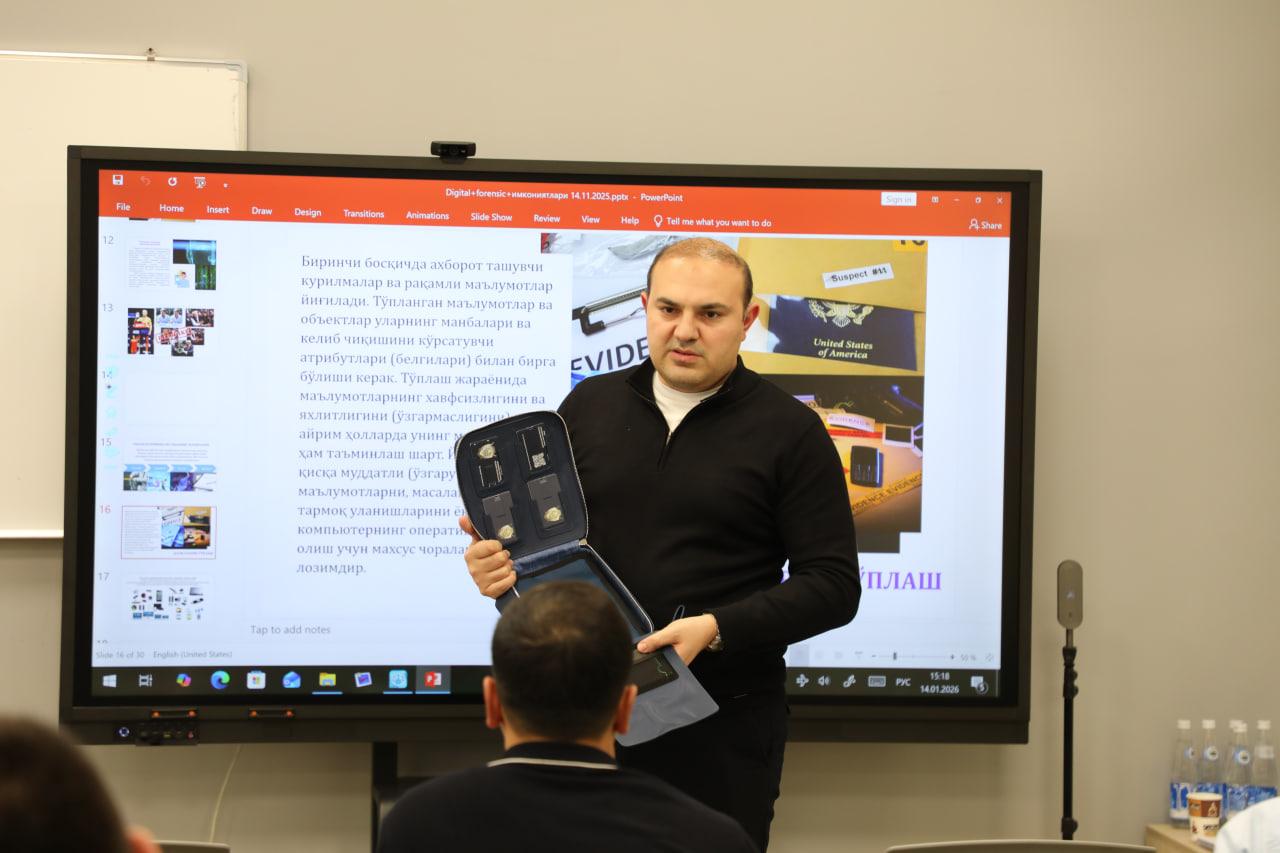
The training program included practical exercises conducted under conditions close to real-life situations, including the examination of explosion sites and work with DNA samples and digital evidence, which enabled participants to consolidate theoretical knowledge and refine their professional skills.
As a result of the seminar, participants strengthened their competencies in the application of modern forensic technologies, high-quality preparation of evidence for expert examination, and the conduct of investigative actions in compliance with international standards.