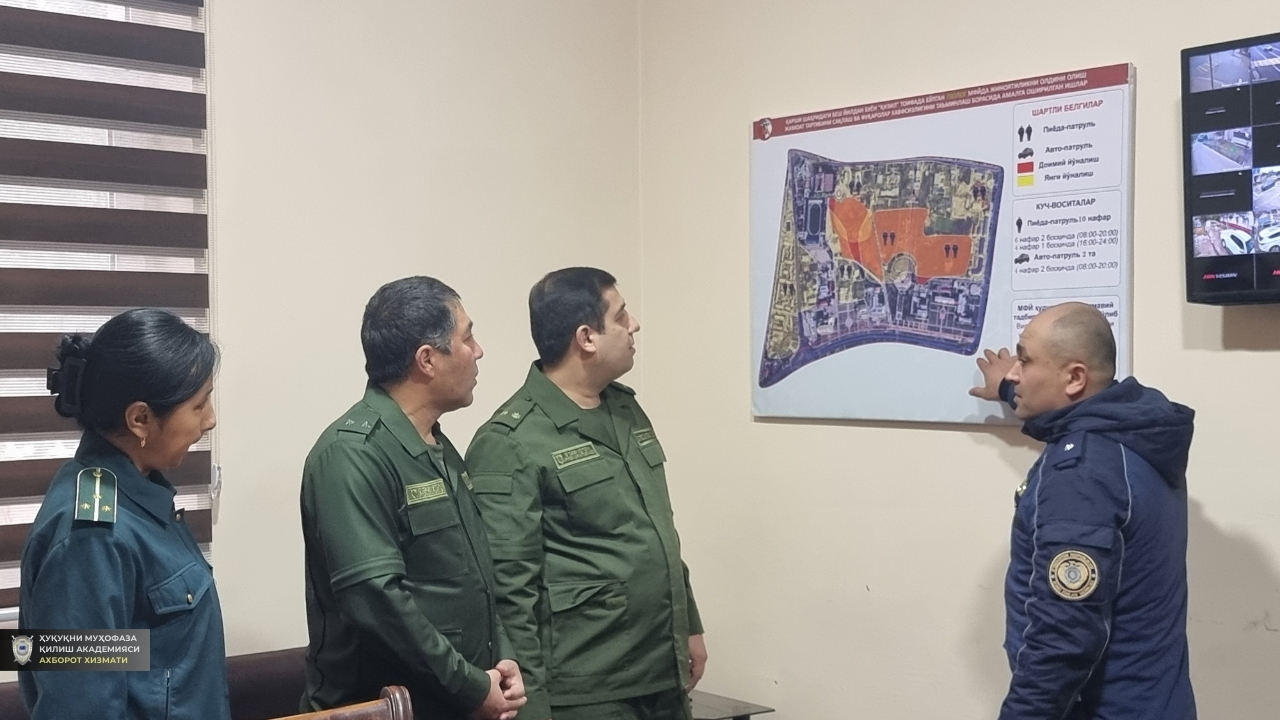
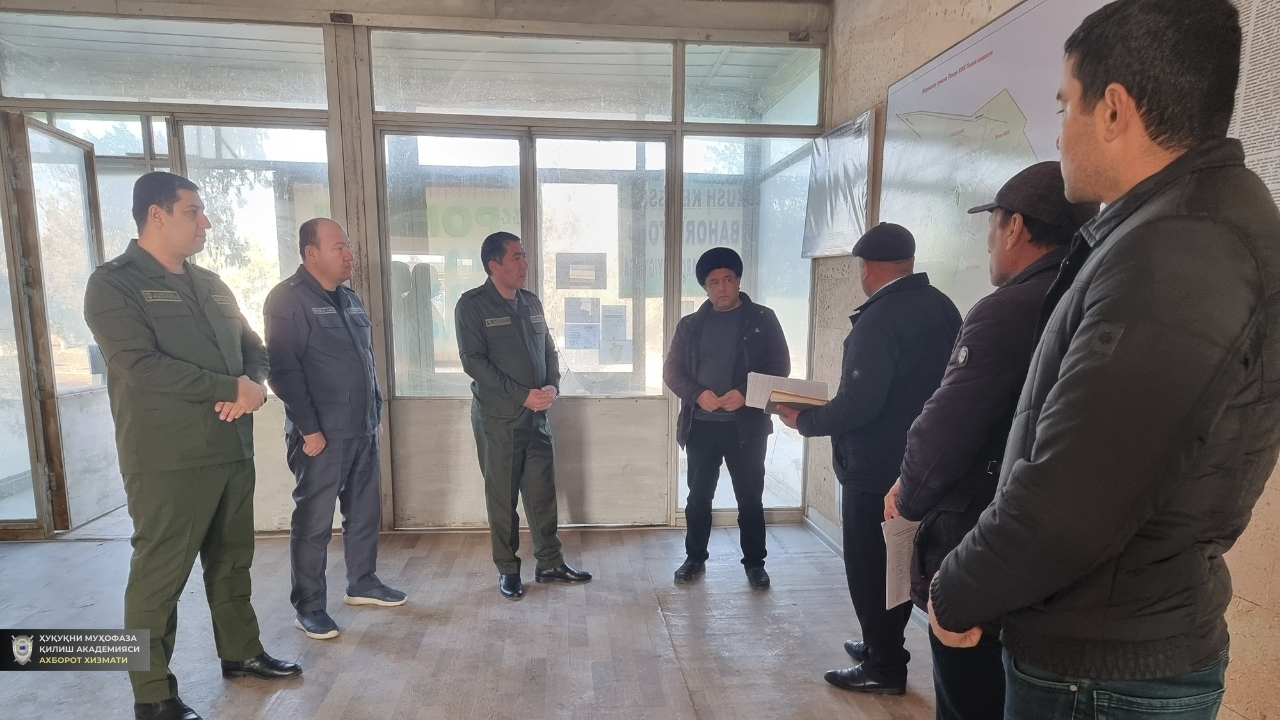
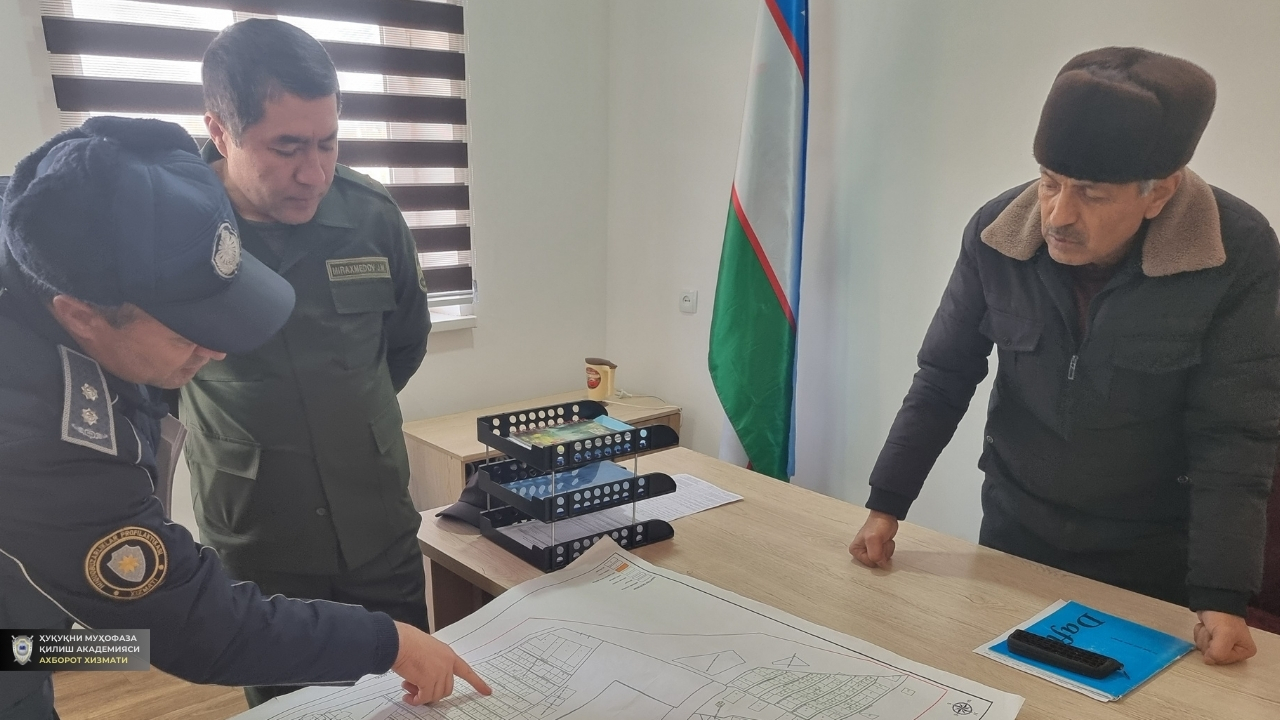
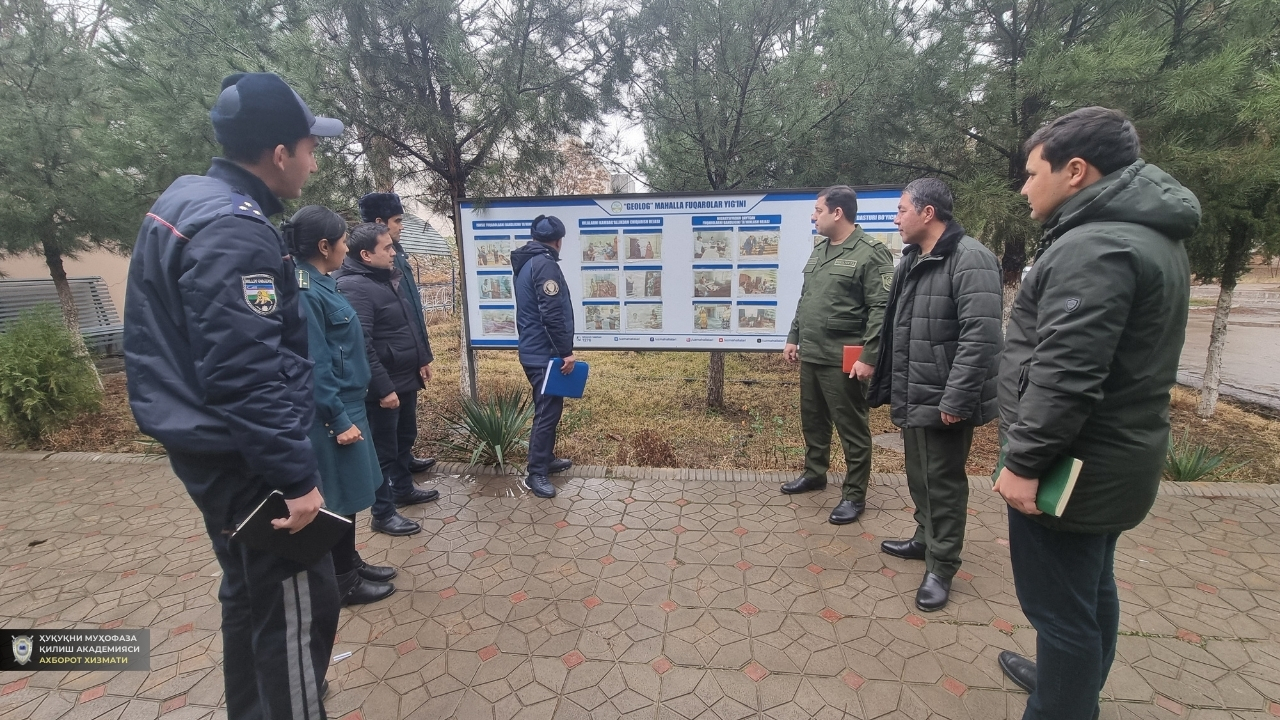
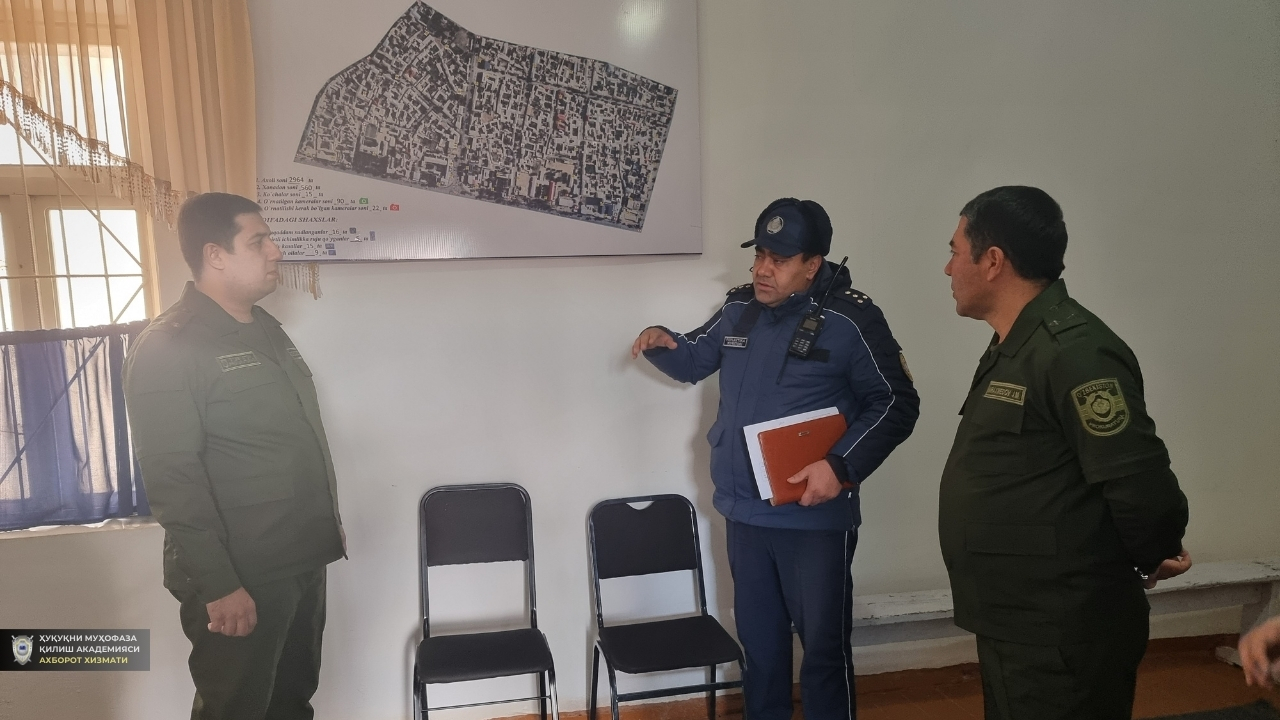
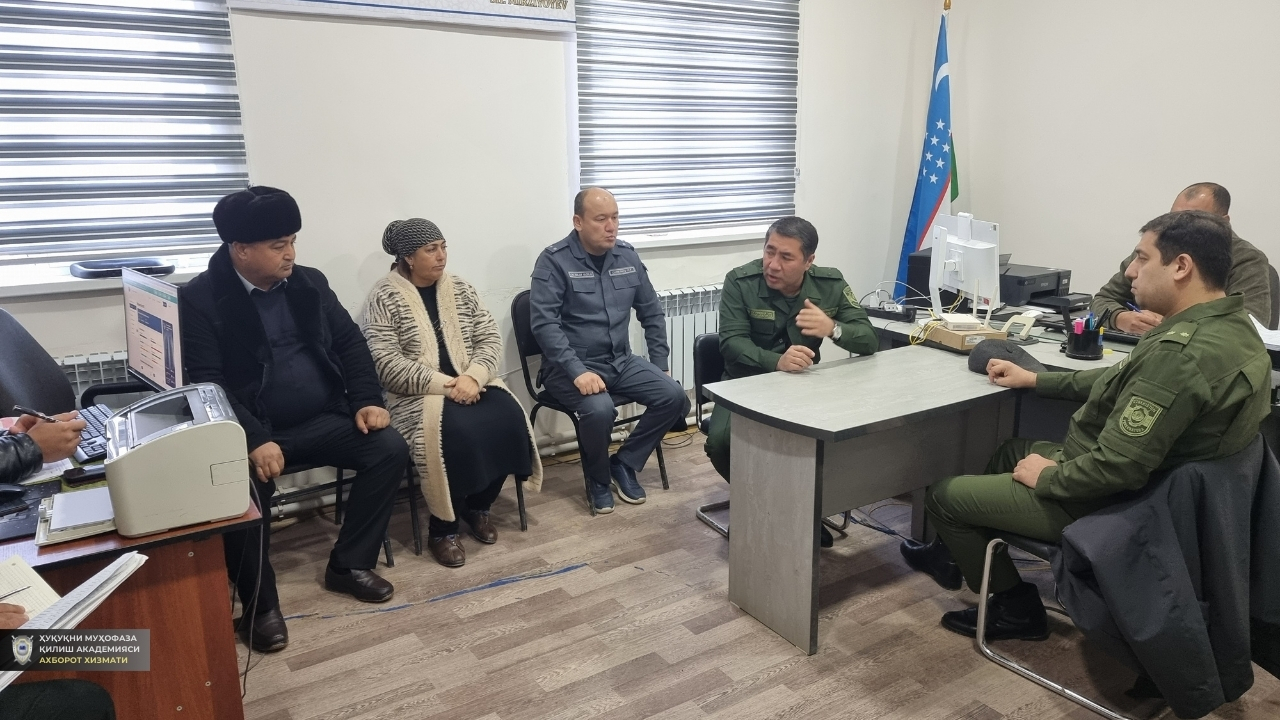
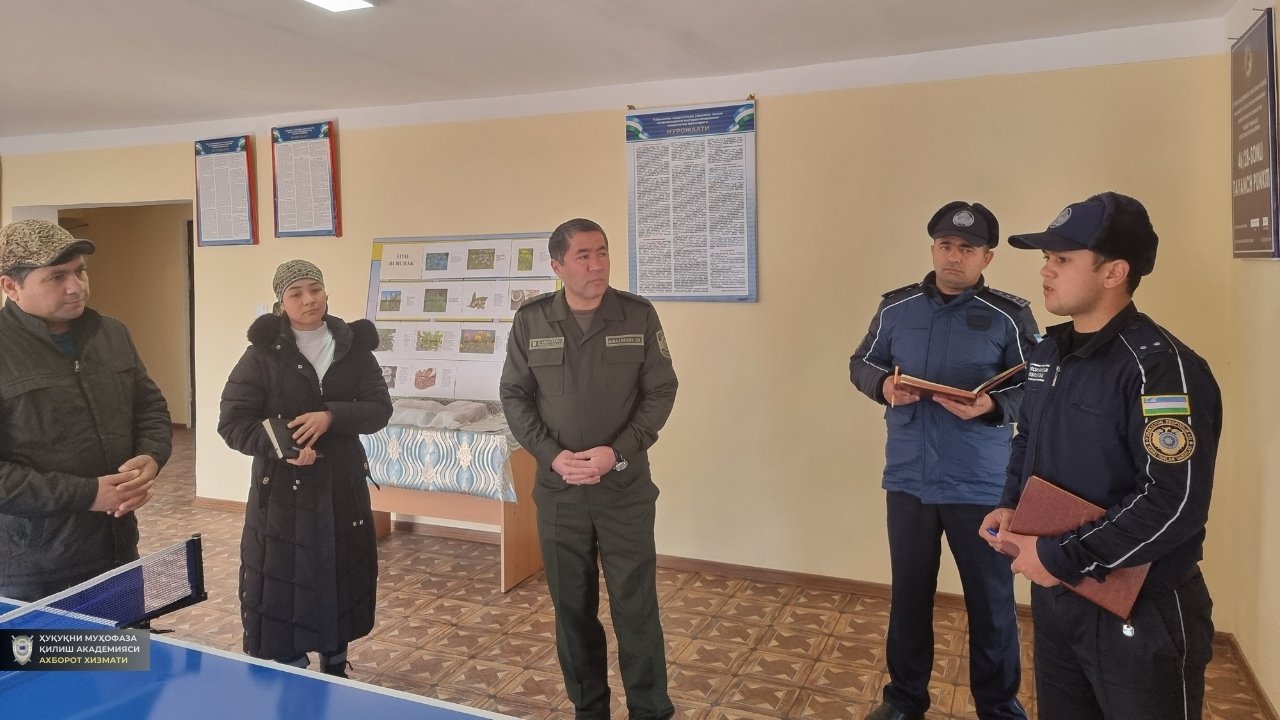
The Law Enforcement Academy is consistently conducting a comprehensive study of the criminogenic situation in the mahallas of Kashkadarya region, aimed at the early prevention of crime, based on a scientific approach. These events were organized on the basis of the principle of "scientific conclusion - recommendation - result" in order to ensure the implementation of the resolutions of the President of the Republic of Uzbekistan dated January 5, 2026 No. PP-1 "On additional measures aimed at introducing a unified targeted work system in the direction of creating a safe environment in the mahallas of the republic" and dated January 5, 2026 No. PP-2 "On organizational measures to further increase the effectiveness of early crime prevention in the mahallas of the republic in 2026."
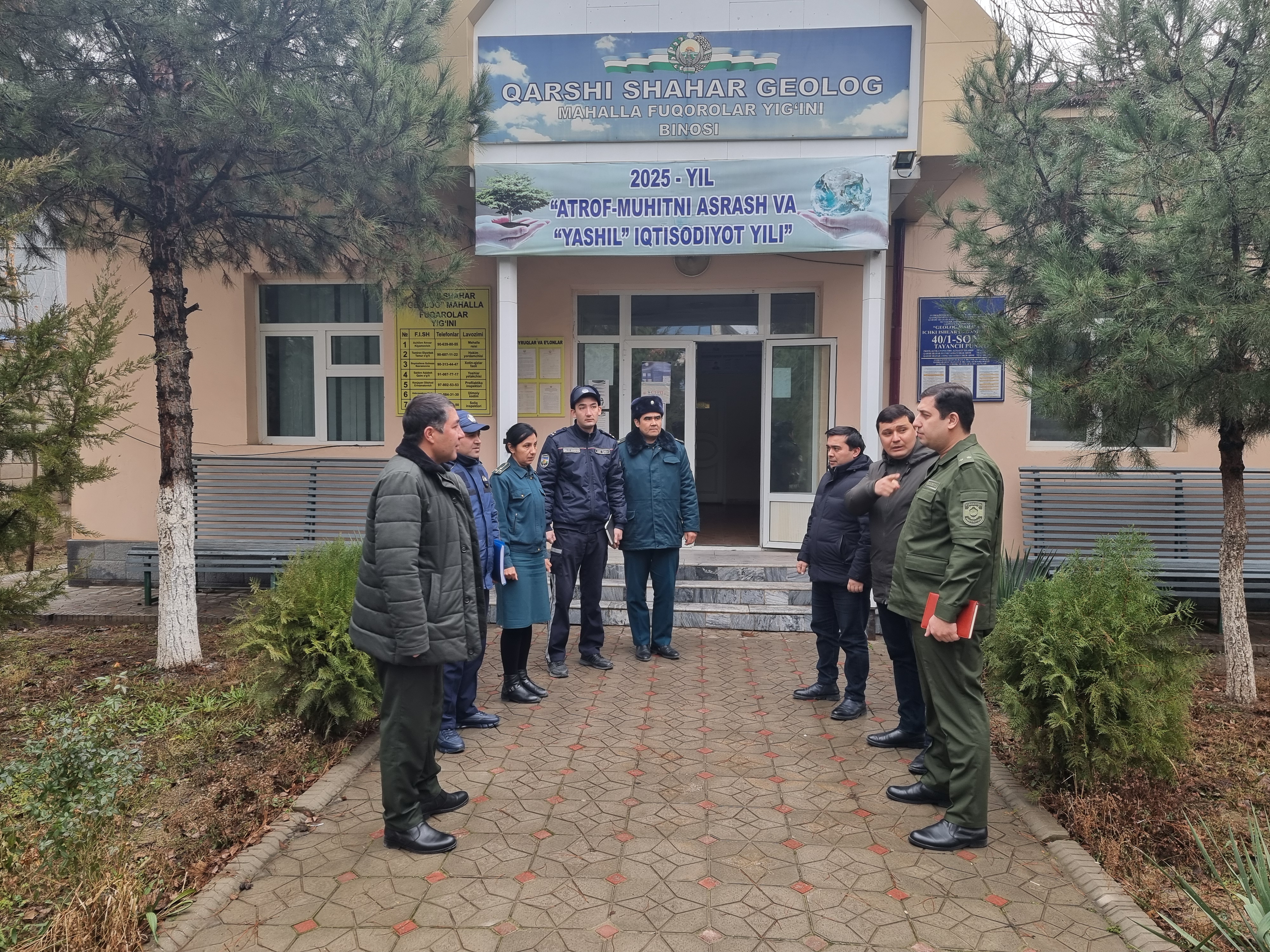
Members of the working group visited the mahallas of “A. Navoi” and “Geolog” in the city of Karshi of Kashkadarya region; “Kat” in Karshi district; “Karakul” and “Buyuk Karvon Yoli” in Guzor district; “Saripul,” “Paxtazor,” and “Yangiobod” in Koson district; “Kesh,” “Pillakashlik,” and “Uyçilik” in the city of Shahrisabz; “Chorshanbe” and “Miraki” in Shahrisabz district; “Chiroqchi,” “Navoi,” and “Uzbekistan” in Chiroqchi district; “Jambul,” “Chumich,” and “Dustlik” in Yakkabog district; “Istiqbol” in Kitob district; “Balandchayla,” “Navoi,” and “Okguzar” in Kamashi district; “Nuriston,” “Yuksalish,” and “Paxtakor” in Nishon district; “Uzbekistan” in Dehqonobod district; “Pomuq,” “Bahoriston,” and “Shodlik” in Mirishkor district; “Bobur,” “Yoshlik,” and “Istiqlol” in Muborak district; as well as “Oltin Dala,” “Toshli,” and “Shorquduq” in Kukdala district, where they studied, on the basis of scientific methodology, issues of early identification of offenses and crimes.
In the course of the research, the conditions and circumstances creating grounds for the commission of crimes, in particular factors such as citizens’ negligence in ensuring the security of their homes and property, were analyzed in detail. Practical proposals were developed to increase the use of modern security technologies and vigilance in protecting the personal property of the population. In addition, recommendations aimed at increasing the effectiveness of preventive measures and eliminating existing systemic shortcomings were provided.
Based on the results of the study, proposals were developed to strengthen control in densely populated areas and to introduce new scientifically grounded working methods into the activities of prevention inspectors. In particular, procedures were defined for applying preventive measures to persons who have committed offenses, as well as for widely discussing, in cooperation with law enforcement agencies, the legal consequences of crimes among residents of the mahalla.
Furthermore, scientifically grounded proposals aimed at increasing the legal culture of the population in order to reduce the risk of becoming victims of cybercrime and fraud were submitted to responsible officials for inclusion in territorial “road maps” aimed at improving the criminogenic situation.
The regular analytical work carried out by the Academy’s specialists serves to create a safe environment in mahallas and to further increase the effectiveness of the system for preventing offenses.