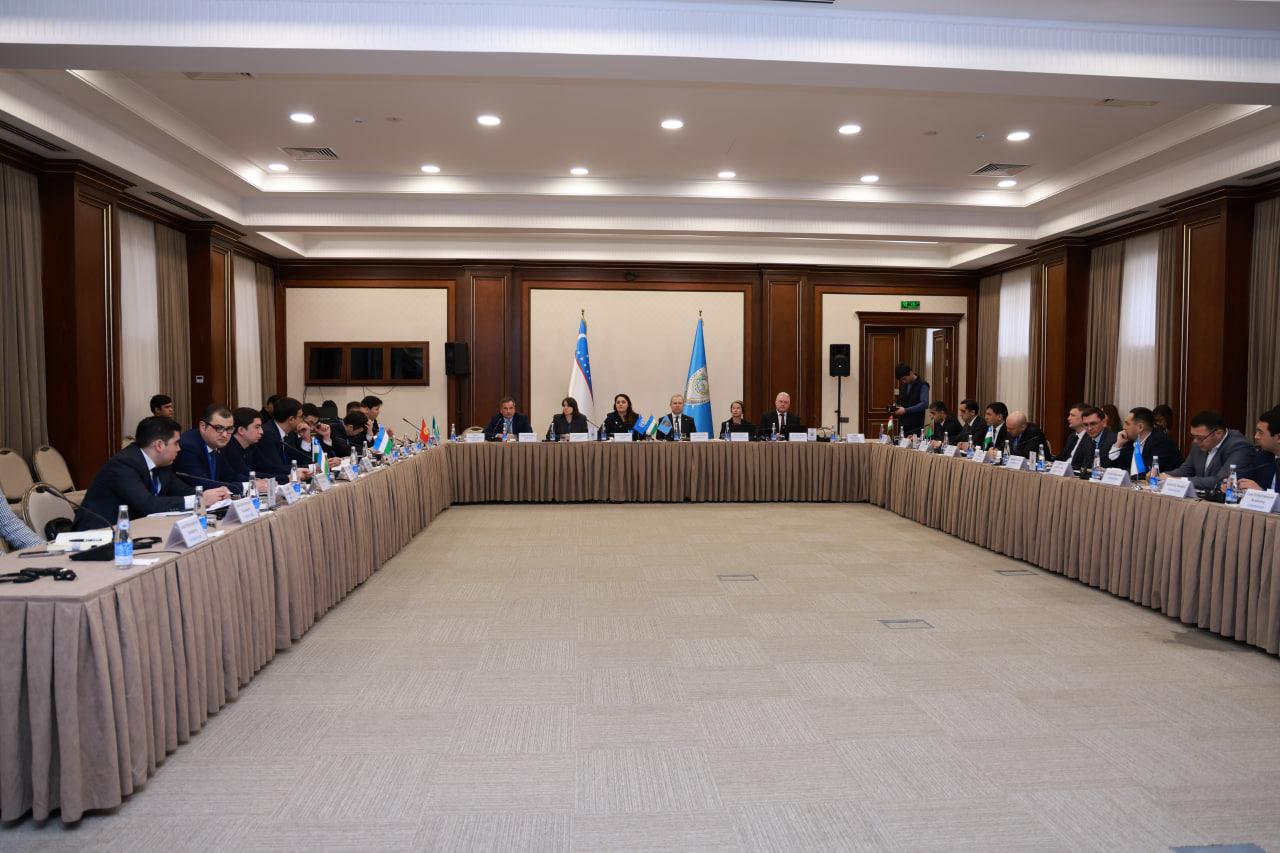
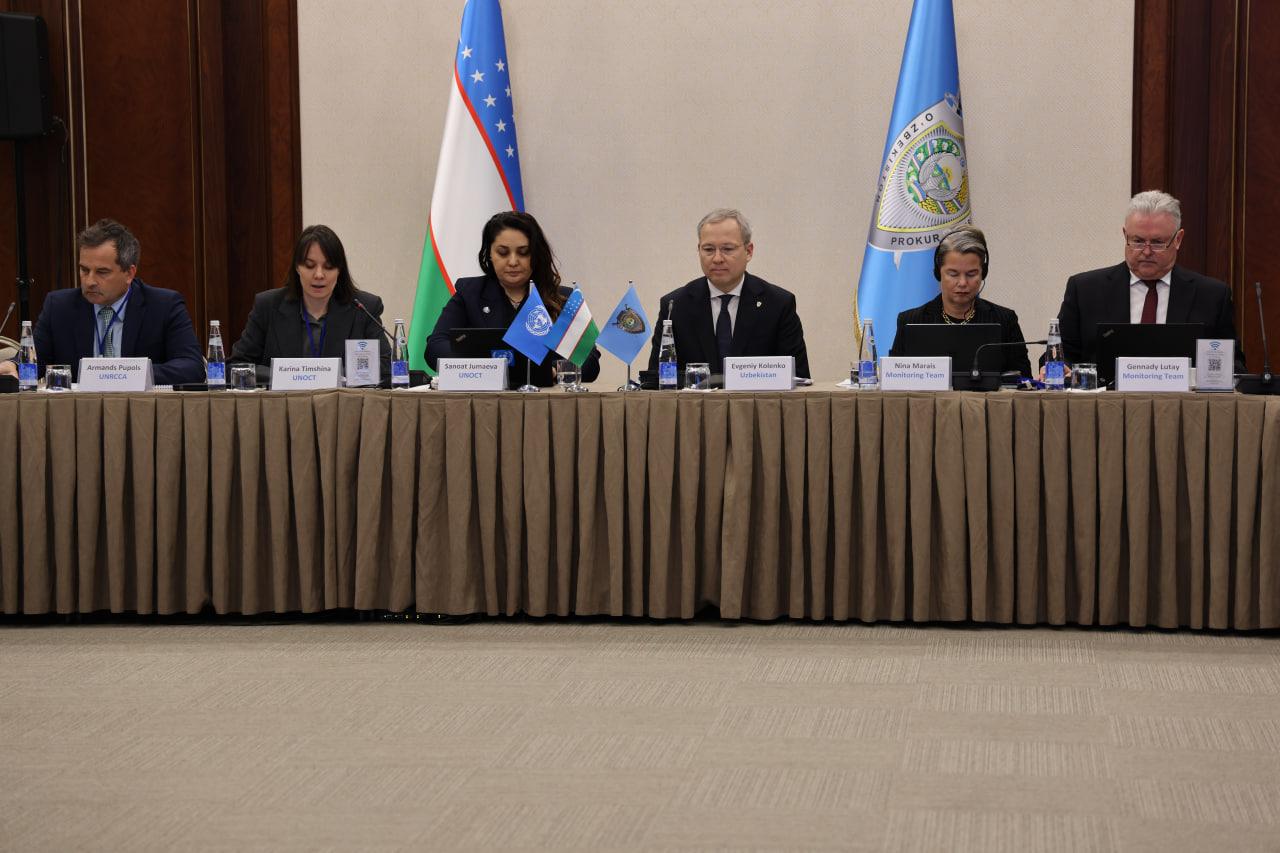
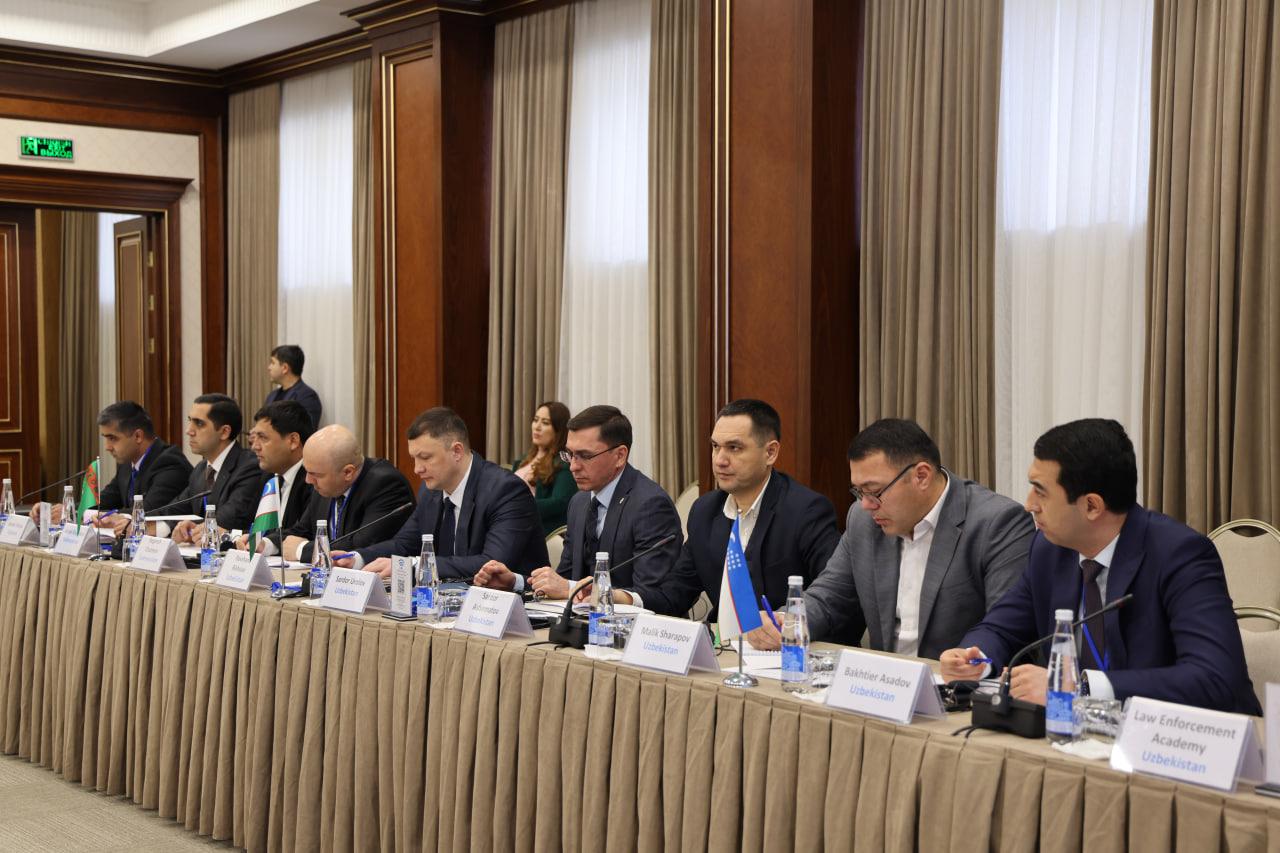
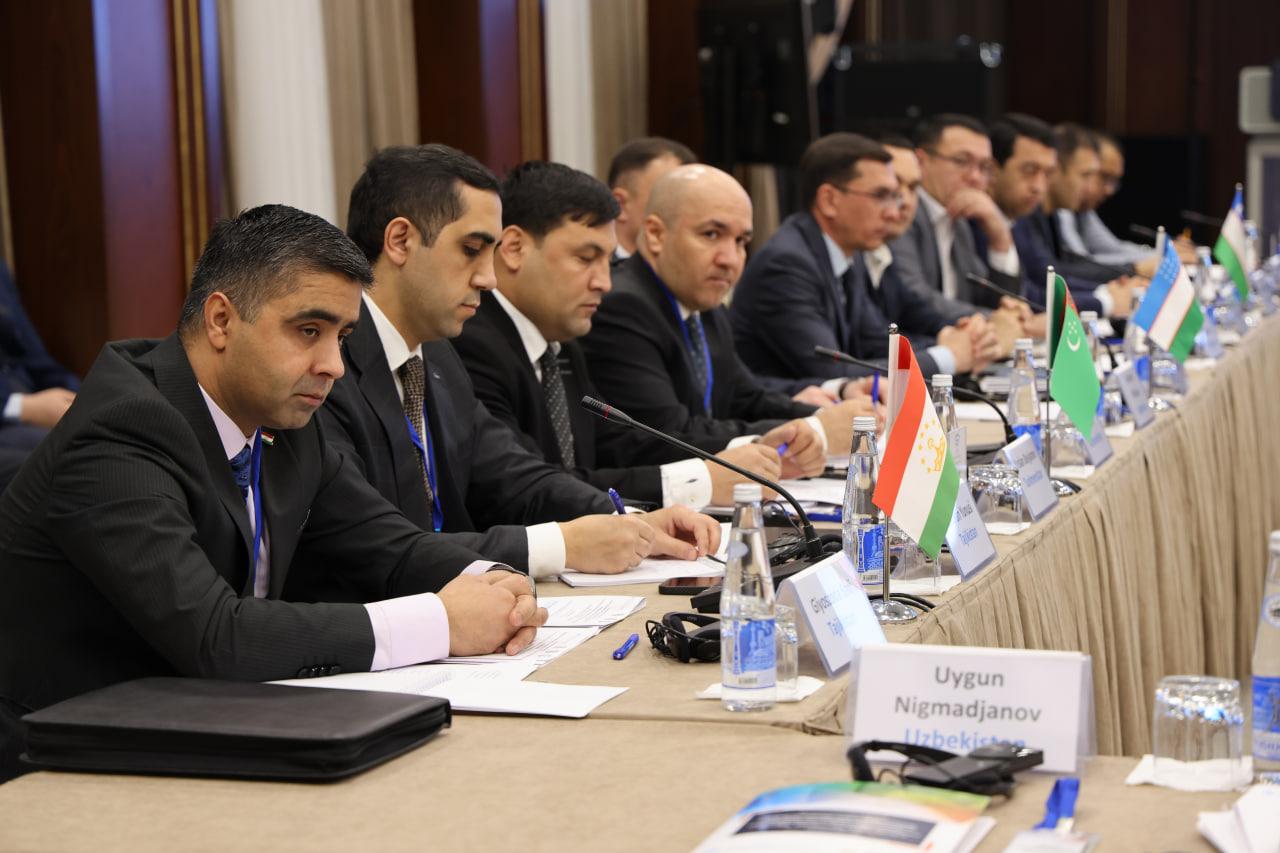
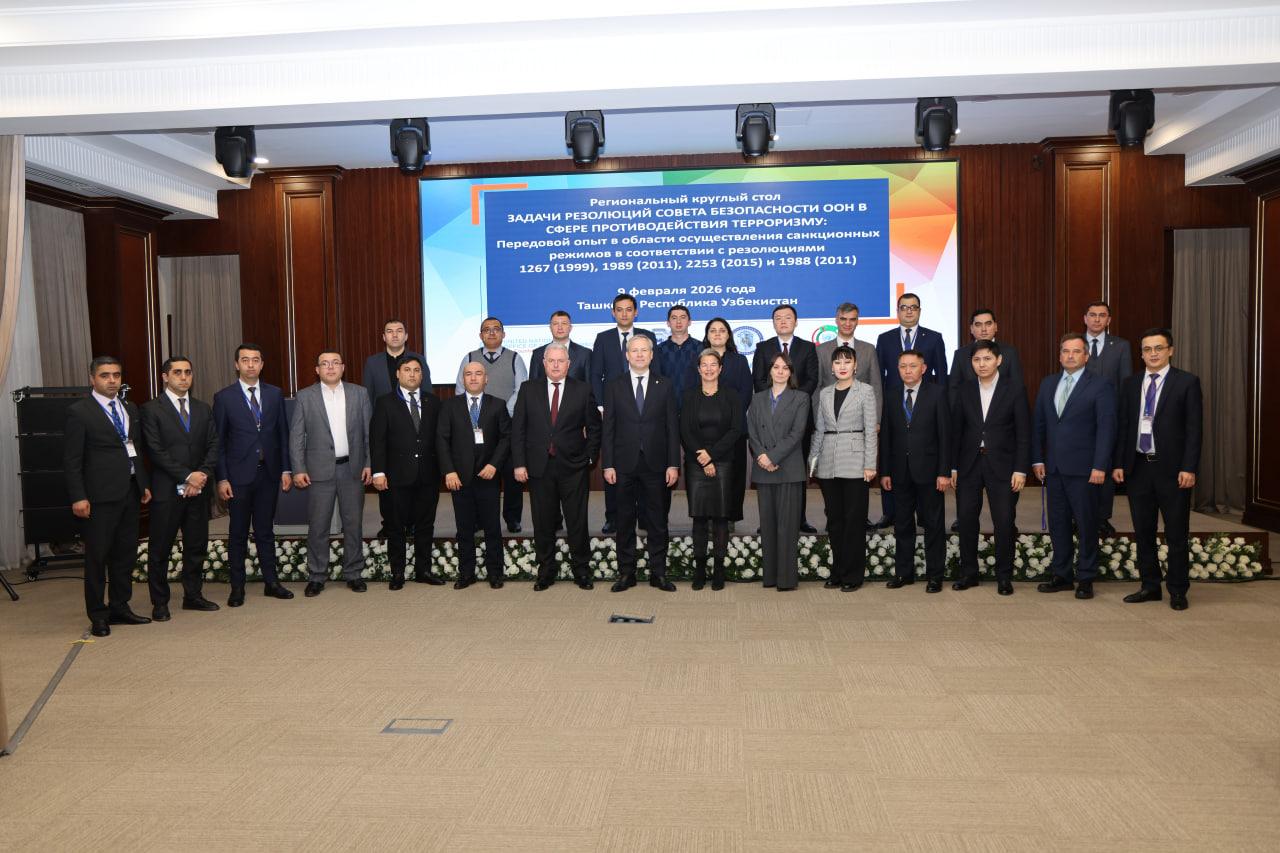
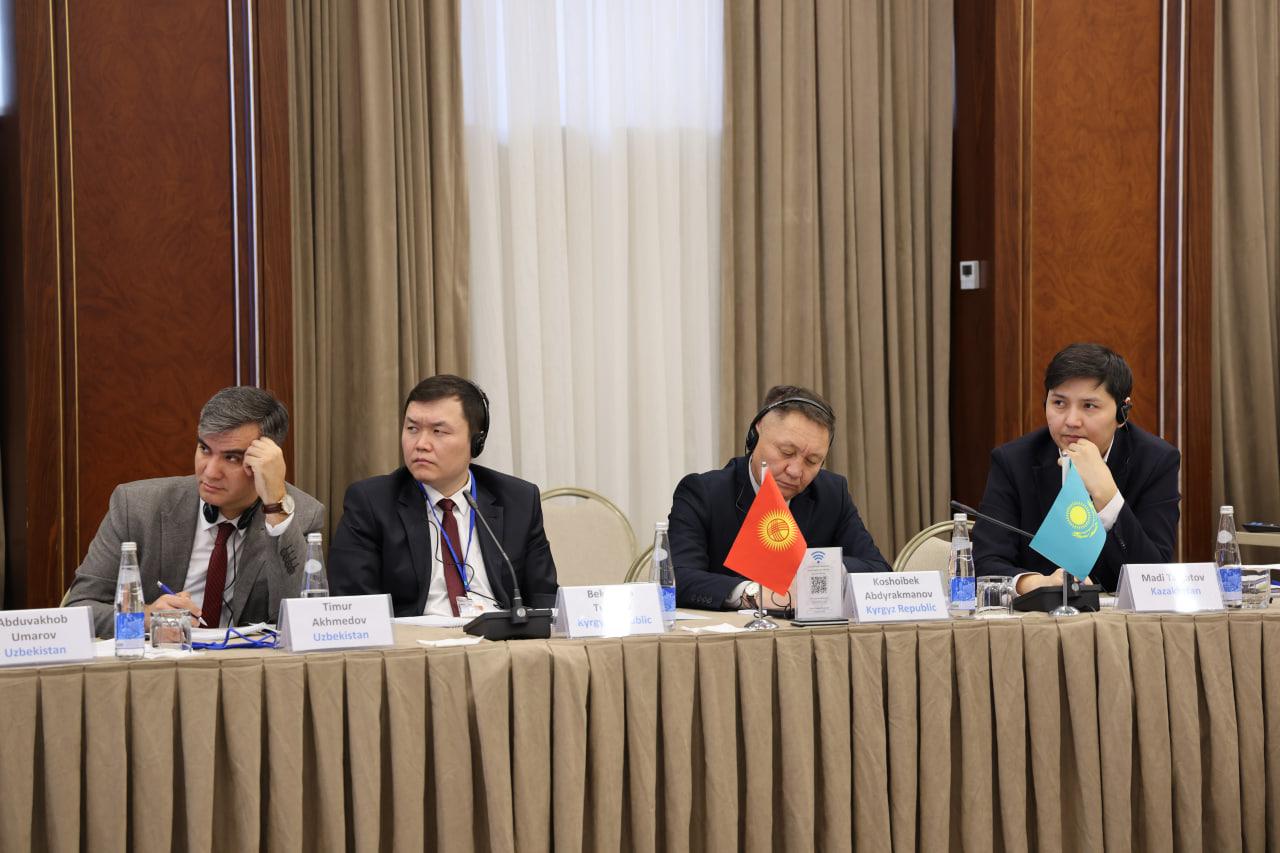
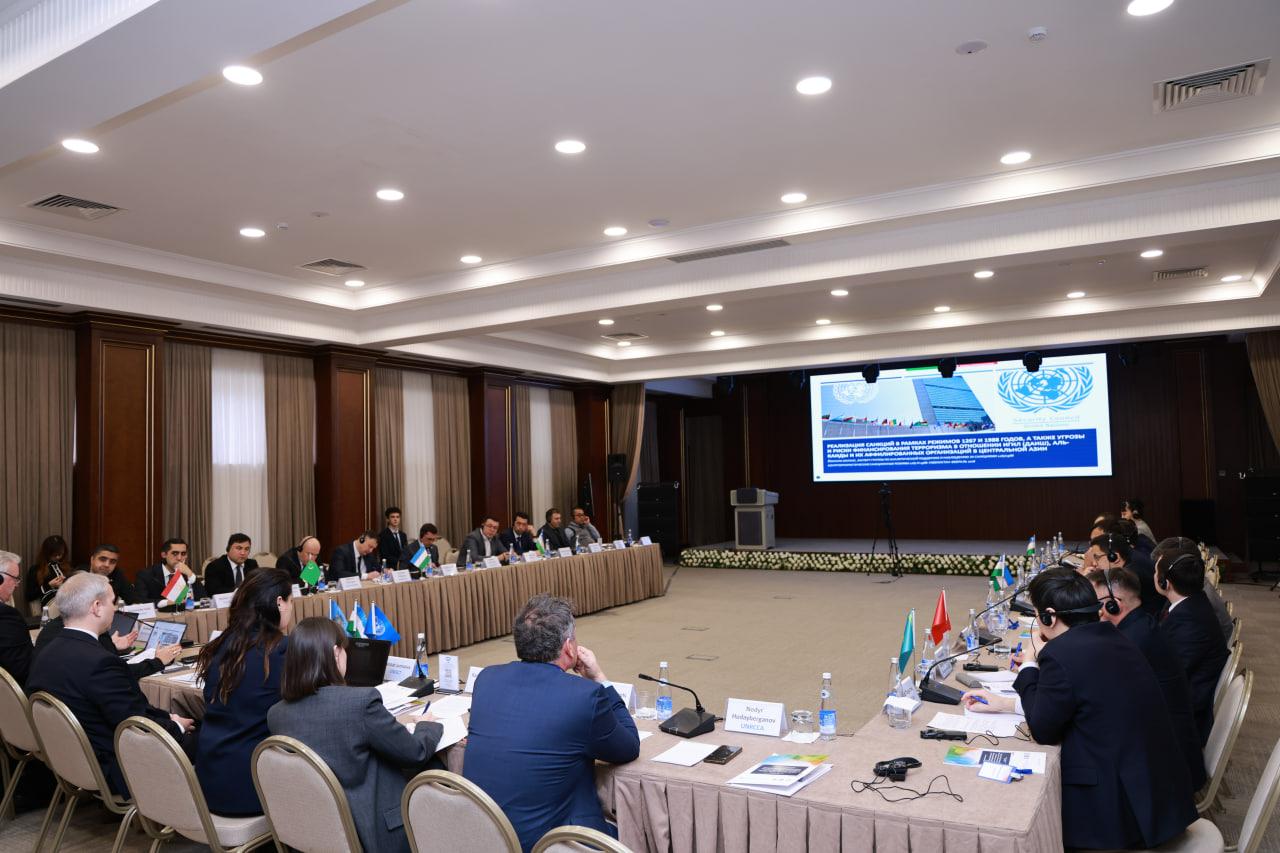
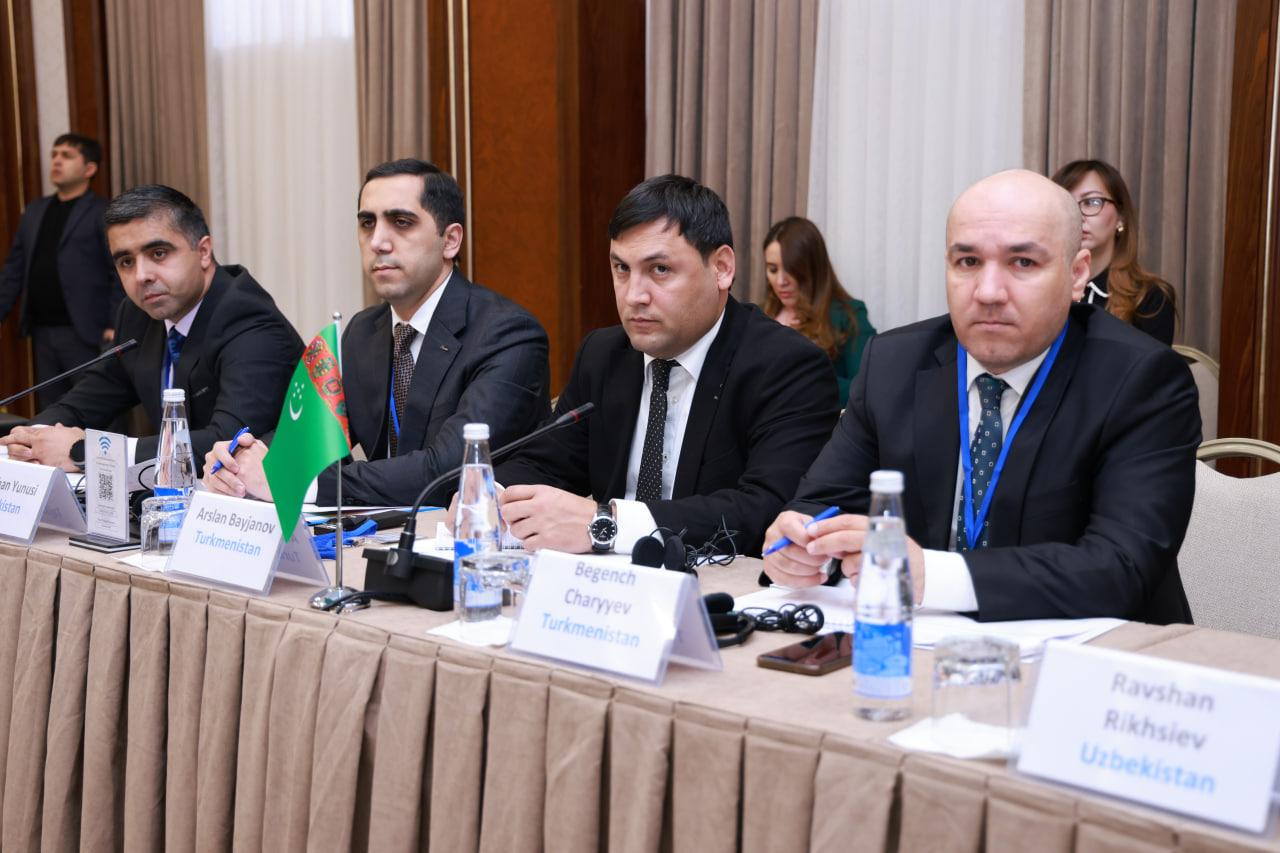
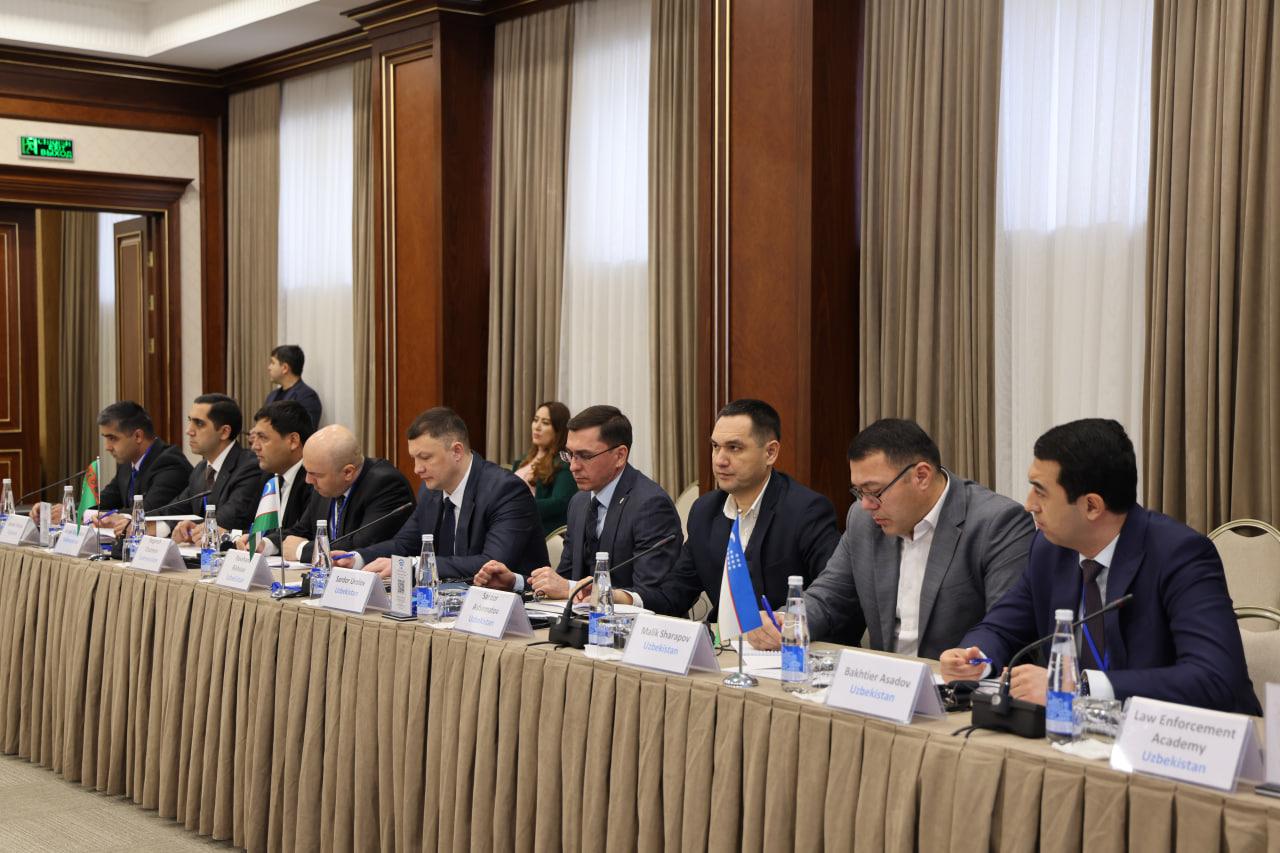
A regional round table was held at the Law Enforcement Academy on the topic "Goals of UN Security Council resolutions in the field of combating terrorism: best practices in implementing sanctions regimes in accordance with resolutions 1267 (1999), 1989 (2011), 2253 (2015) and 1988 (2011)."
The event was organized in cooperation with the State Security Service of the Republic of Uzbekistan, the UN Counter-Terrorism Center (UNCT), the UN Counter-Terrorism Office (UNCT), the Analytical Support and Monitoring Group on sanctions, approved by UN Security Council Resolutions 1526 (2004) and 2253 (2015), as well as the UN Regional Centre for Preventive Diplomacy for Central Asia (RSPDSA).
Representatives of security agencies and financial intelligence units of Kazakhstan, Kyrgyzstan, Tajikistan, Turkmenistan, and the Republic of Uzbekistan participated in the event.
The dialogue was also attended by consultants and experts from the UN Counter-Terrorism Center and the UN Counter-Terrorism Office, representatives of the Analytical Support and Monitoring Group on Sanctions, the UN Regional Center for Preventive Diplomacy for Central Asia, the Organization for Security and Co-operation in Europe, the Counter-Terrorism Center of the Commonwealth of Independent States, the Eurasian Group on Combating the Legalization of Criminal Proceeds and the Financing of Terrorism, the Collective Security Treaty Organization, and the Regional Anti-Terrorist Structure of the Shanghai Cooperation Organization.
The round table was devoted to a deeper understanding of the goals and requirements of the UN Security Council resolutions in the field of combating terrorism, taking measures against persons included in the list by national structures, and identifying problems arising in the process of their removal from the list. Issues of ensuring institutional coordination, establishing information exchange, and ensuring respect for human rights were also discussed.
The participants exchanged best practices and lessons learned during the implementation of sanctions regimes at the national level, including asset freezing, travel bans, and arms embargoes.
The event served to strengthen the potential of the member states in the field of implementing the resolutions of the UN Security Council, as well as to further develop cooperation between the countries of Central Asia and with UN agencies, regional and international organizations.