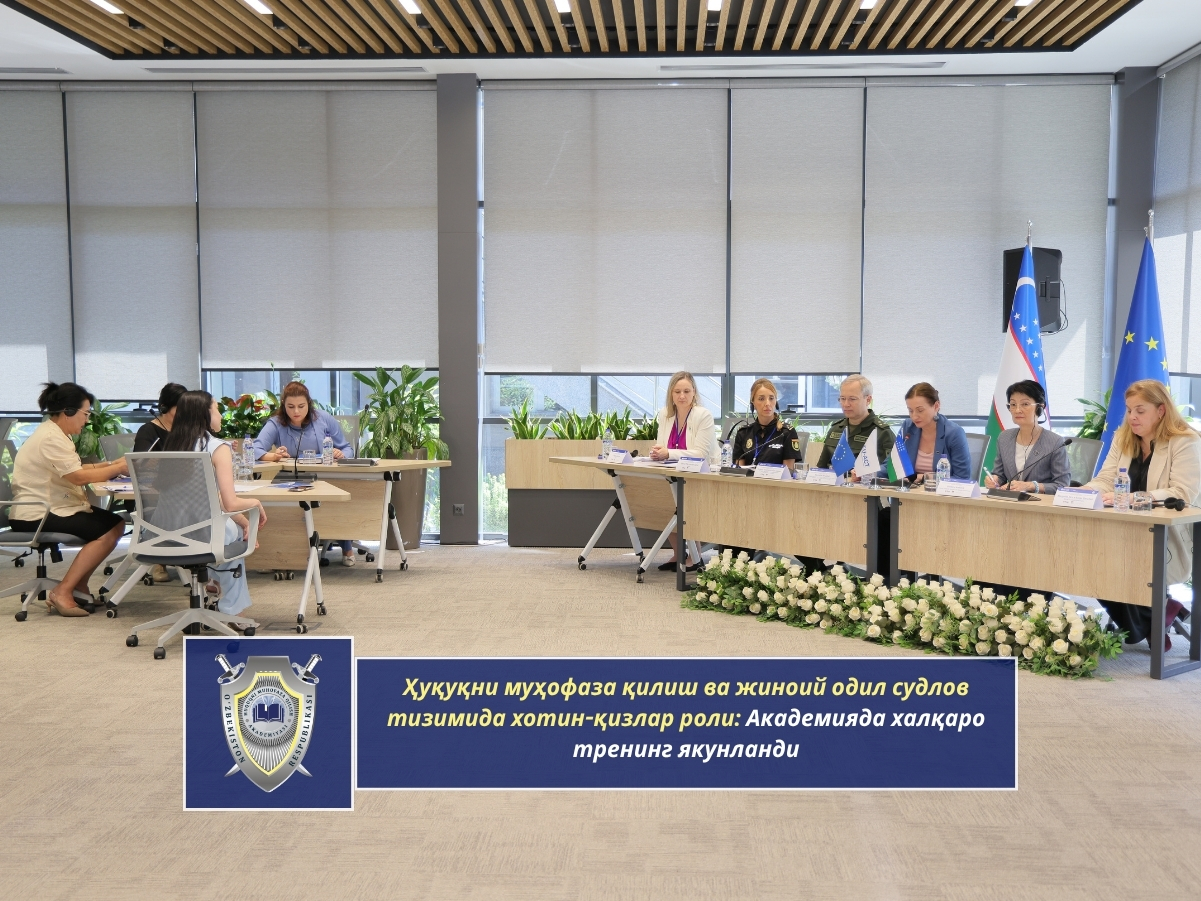
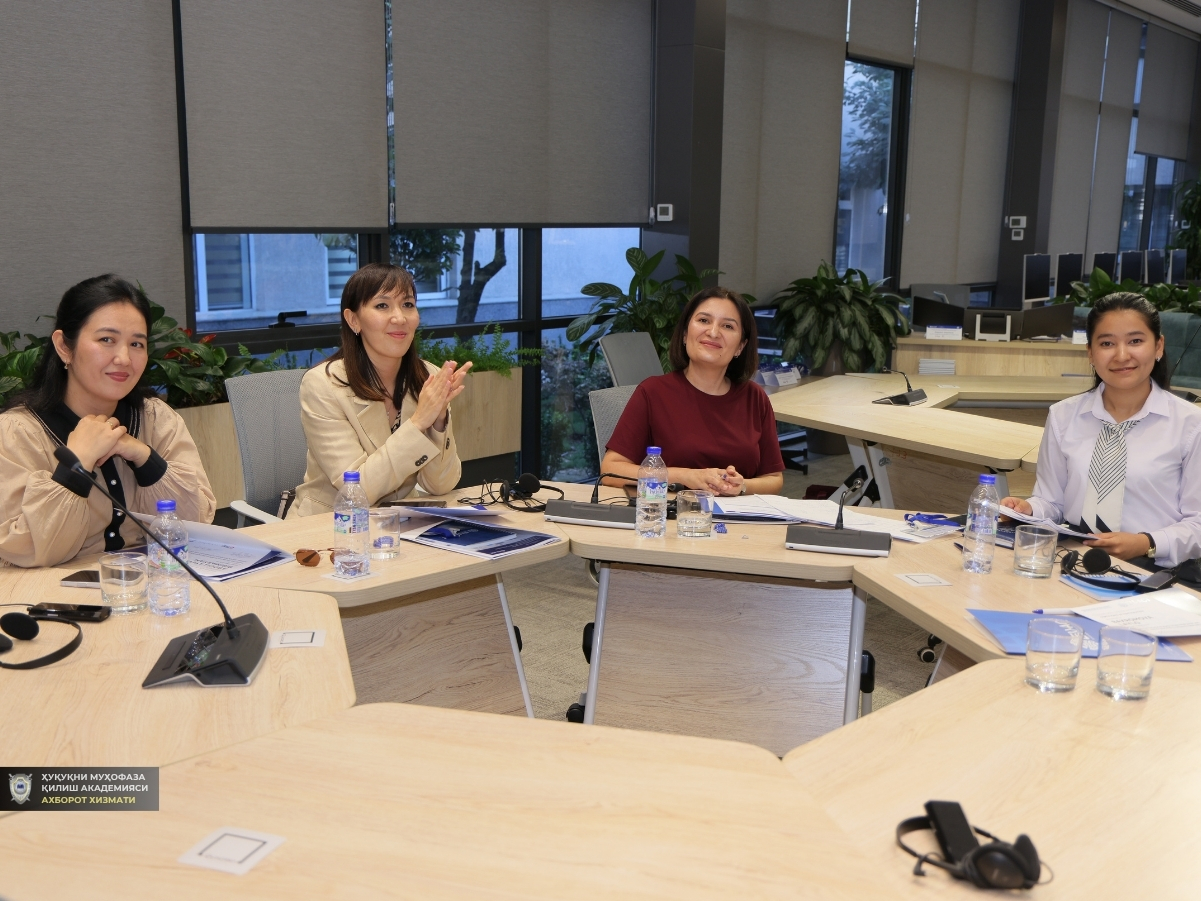
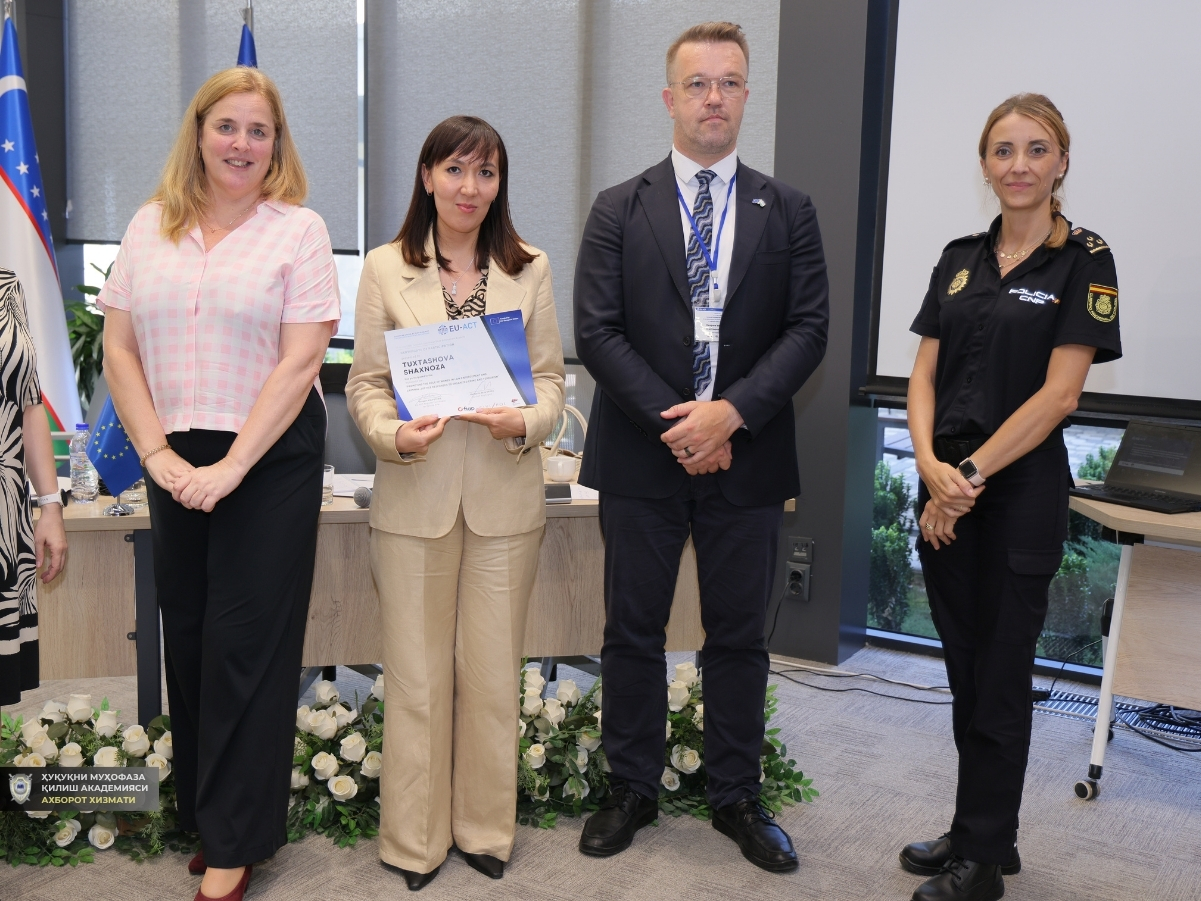
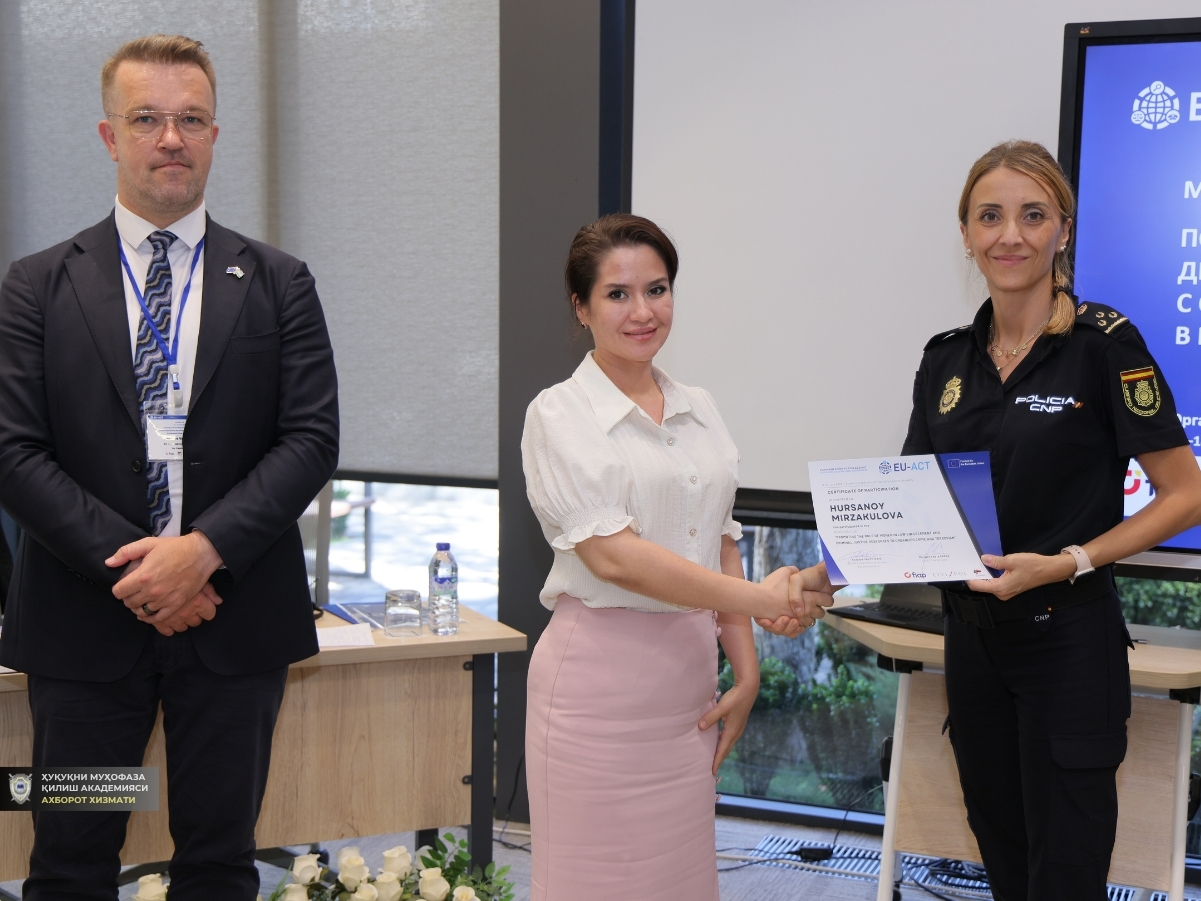
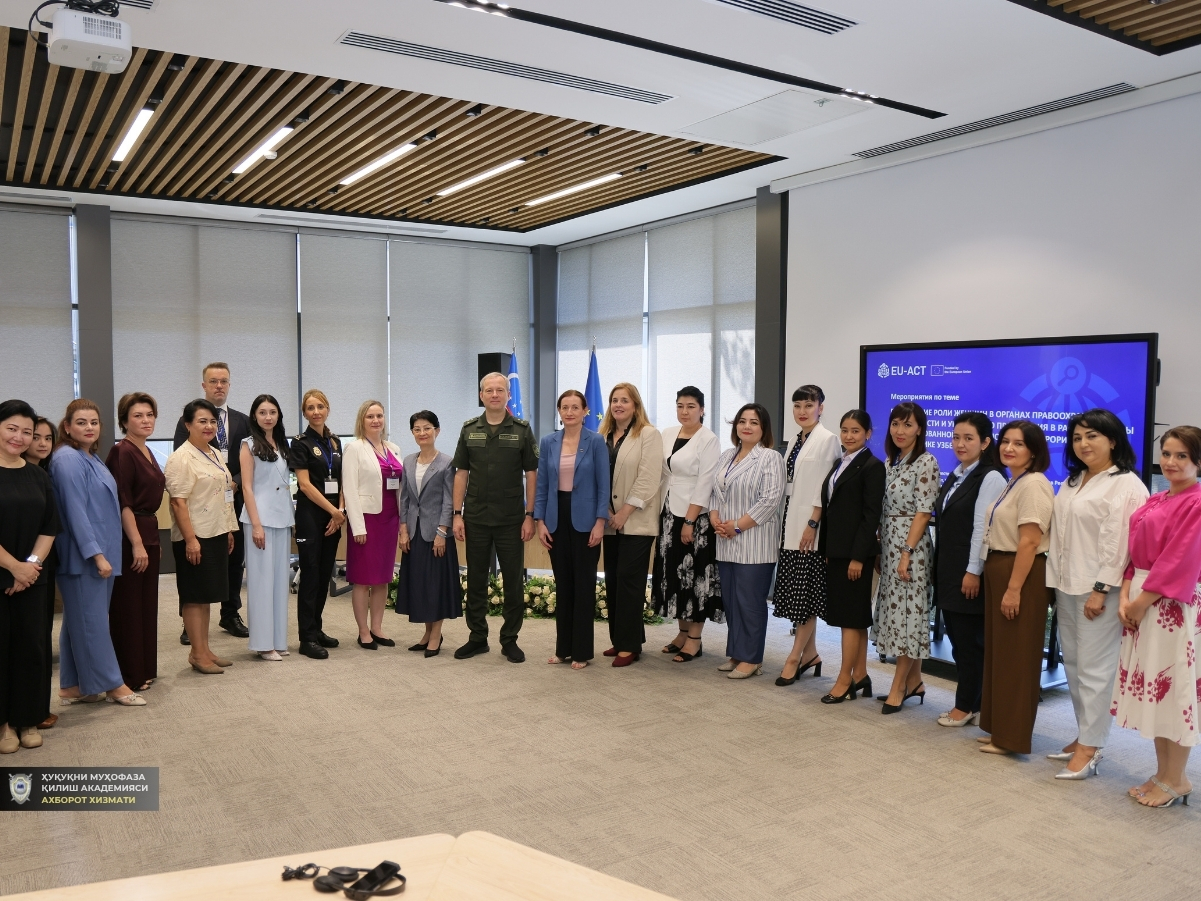
A two-day international training dedicated to expanding the participation of women in law enforcement agencies and the criminal justice system in the field of combating organized crime and terrorism concluded at the Law Enforcement Academy of the Republic of Uzbekistan. At the end of the programme, participants were awarded certificates.
The training, entitled "Enhancing the Role of Women in Law Enforcement and the Criminal Justice System in Combating Organized Crime and Terrorism in the Republic of Uzbekistan," was organized within the framework of the EU-ACT Programme with the support of the European Union and the CIVIPOL project.
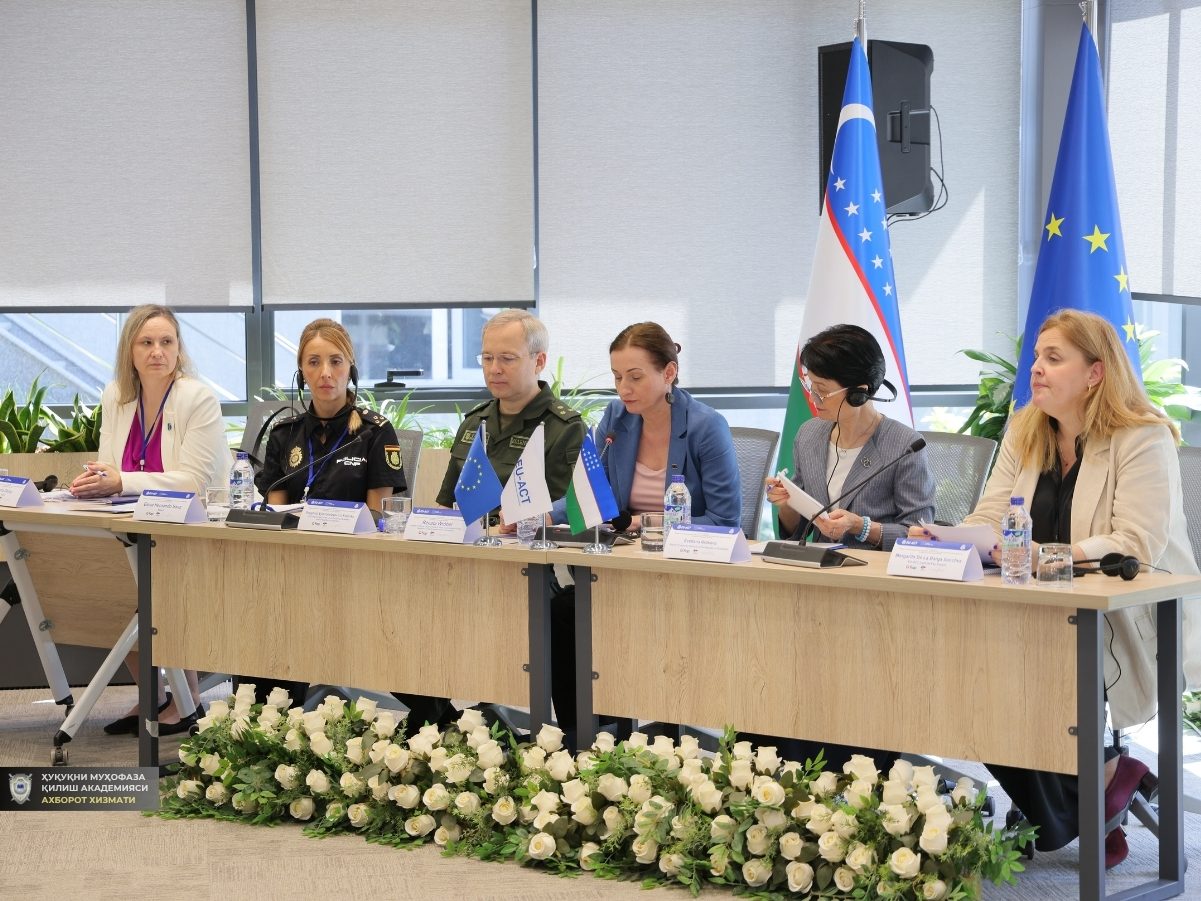
The event brought together representatives of law enforcement and judicial authorities, international organizations, and the expert community. Opening remarks were delivered by Svetlana Artikova, Deputy Prosecutor General of the Republic of Uzbekistan; Yevgeniy Kolenko, First Deputy Head of the Law Enforcement Academy of the Republic of Uzbekistan; Renat Probel, Chargé d'Affaires ad interim and Head of the Political, Press and Information Section of the Delegation of the European Union to Uzbekistan; as well as Margarita de la Barga, Lead Expert of the EU-ACT Programme.
During the expert and practical sessions, participants examined contemporary approaches to strengthening the role of women in law enforcement and the criminal justice system, enhancing their professional and leadership potential, creating equal opportunities for career advancement, and improving human resource policies.
Particular attention was paid to strengthening the participation of women in preventing, detecting, and investigating crimes related to organized crime and terrorism, as well as to addressing legal and organizational factors that may hinder their professional development.
Margarita de la Barga presented current trends in the development of European prosecution services and shared practical experience in integrating a gender-responsive approach into criminal prosecution. Participants discussed opportunities for adapting international best practices to the national context.
A representative of the Academy introduced approaches to incorporating gender-related issues into the initial and continuous professional training programmes for prosecutors and personnel of other law enforcement agencies. The sessions also addressed the development of practical skills among officers and raising awareness of gender aspects within the criminal justice system.
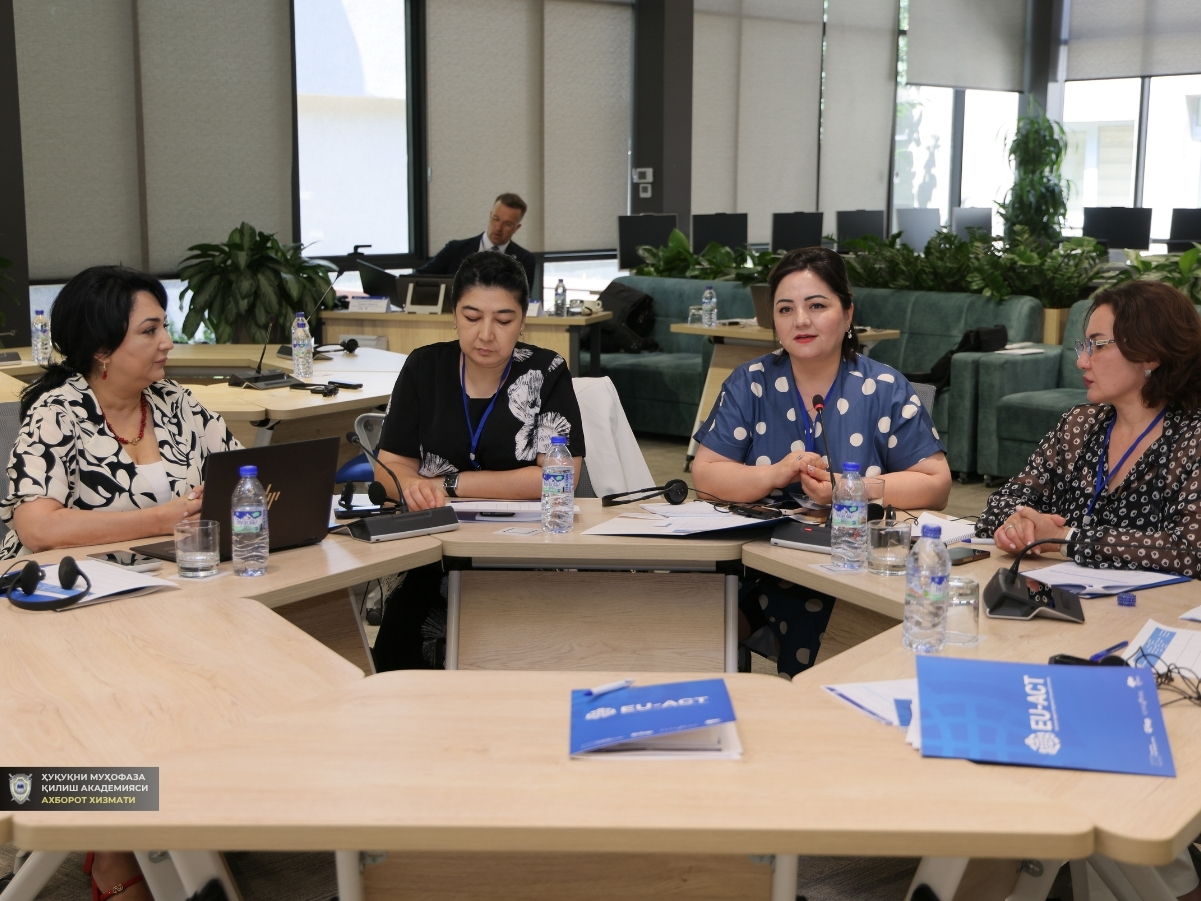
The interactive format of the training enabled participants to exchange professional experience, present effective practices, and develop proposals for further expanding the participation of women in combating organized crime and terrorism.
At the conclusion of the two-day programme, participants were awarded certificates.