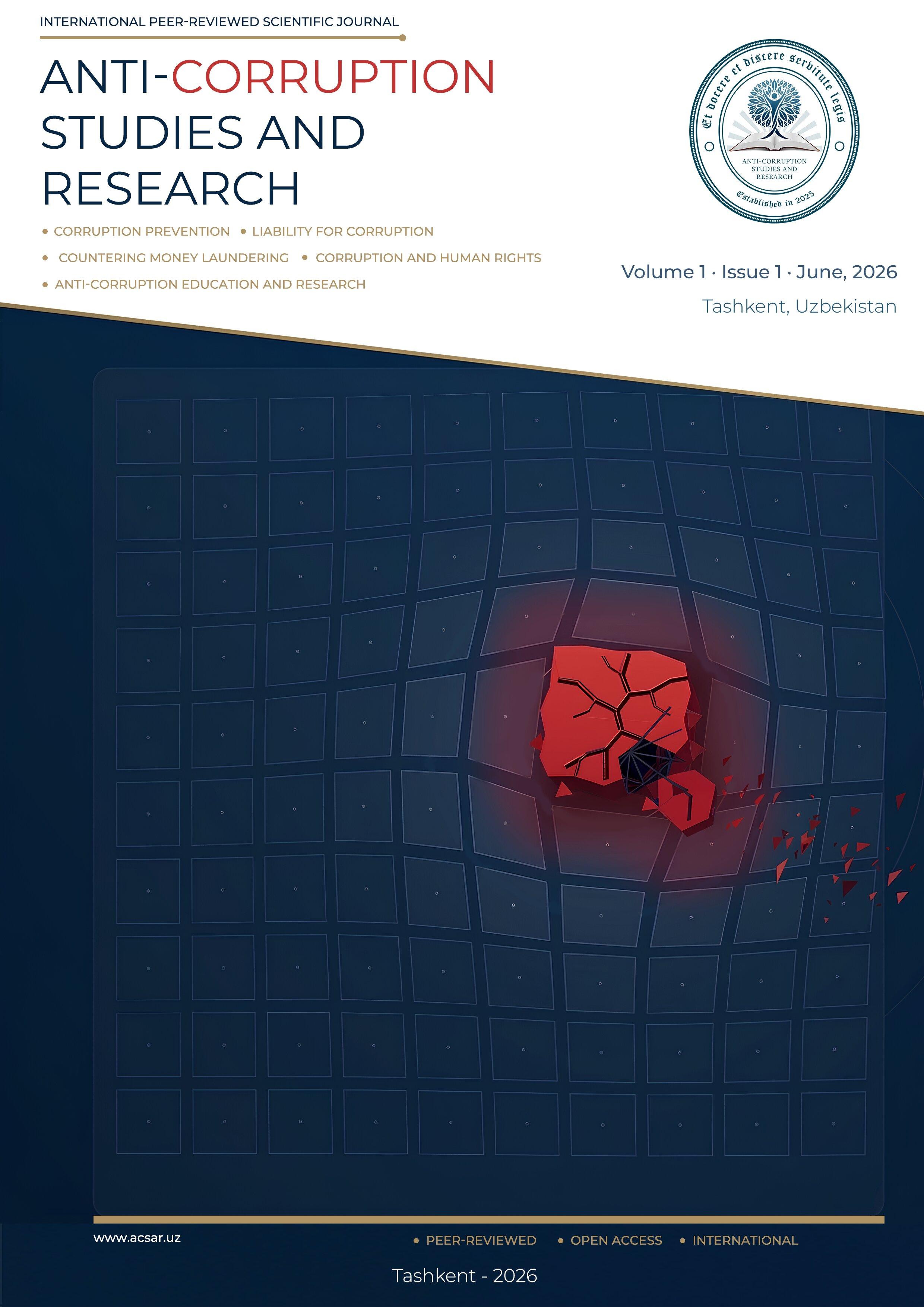
The first issue covers a wide range of topical subjects, including corruption prevention, liability for corruption offences, combating the laundering of criminal proceeds, anti-corruption education and research, as well as the relationship between corruption and human rights.
The articles were selected through an international editorial and peer-review process. The journal adheres to internationally recognized publishing standards, including an international editorial board, a double-blind peer-review system, Digital Object Identifiers (DOIs), an open-access publishing model, publication ethics principles, and robust plagiarism detection mechanisms.
The Editorial Board comprises distinguished scholars from Sweden, the United States, Pakistan, South Africa, Slovenia, Kazakhstan, the Netherlands, Bangladesh, Mexico, Indonesia, and Uzbekistan. This international composition enables the journal to serve as a platform that brings together diverse academic traditions and research perspectives while ensuring that submitted manuscripts are evaluated in accordance with internationally recognized scholarly standards.
Anti-Corruption Studies and Research is dedicated to the comprehensive study of anti-corruption issues through an interdisciplinary approach encompassing law, economics, political science, sociology, international relations, and public administration. The journal's primary mission is to support the development of evidence-based policies and practical solutions in the field of anti-corruption.
The Editorial Office has identified as its strategic priority the continuous improvement of the journal's academic content and publication quality in accordance with international standards, with the long-term objective of meeting the criteria required for inclusion in the Scopus international citation database and joining the ranks of internationally recognized scholarly journals.