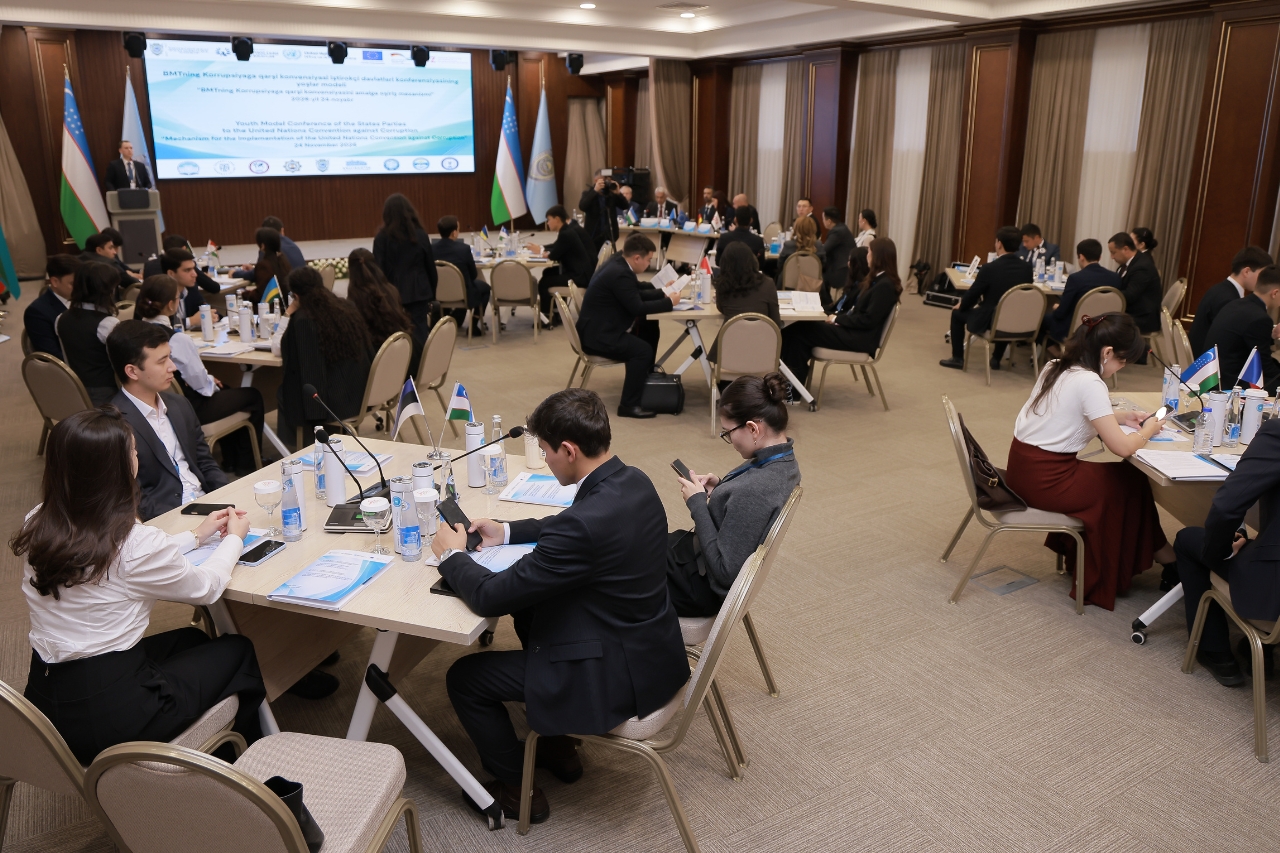
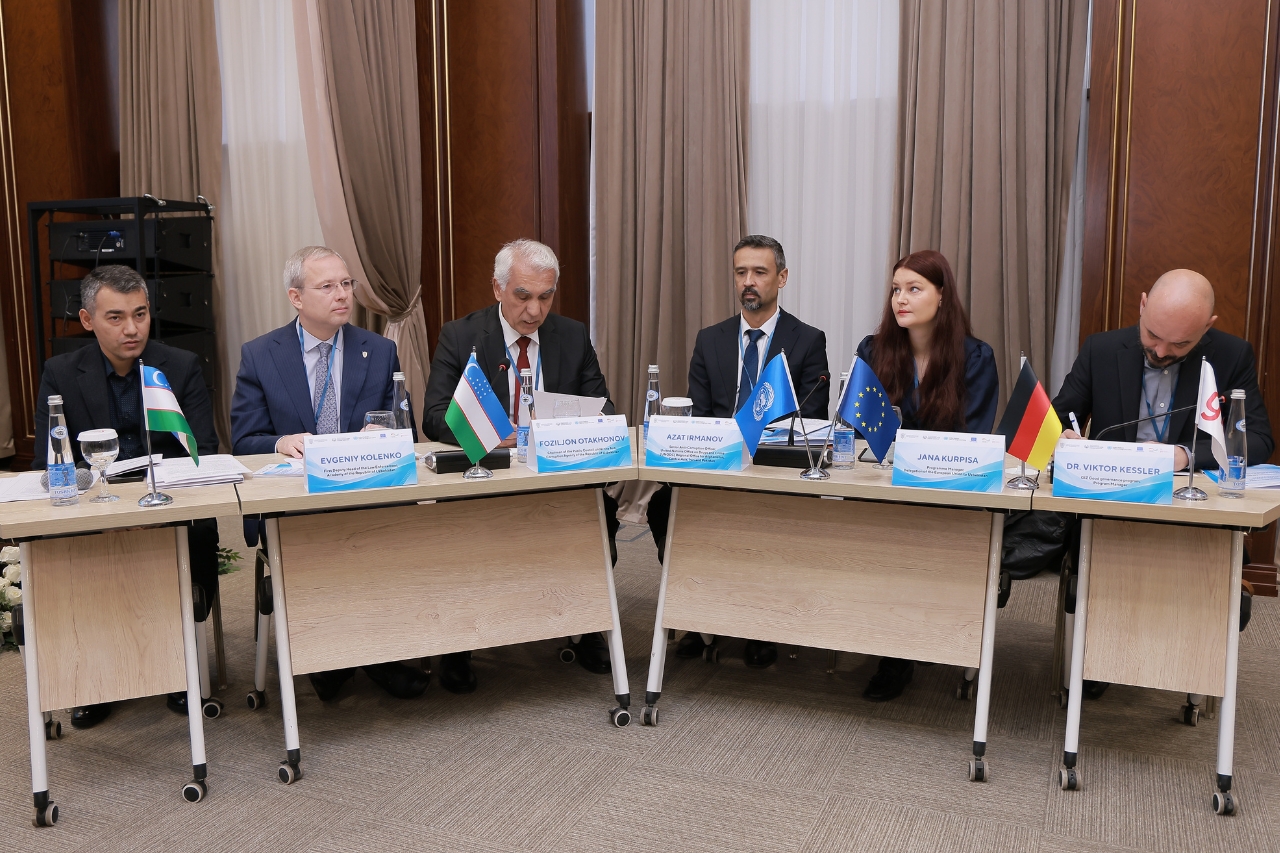
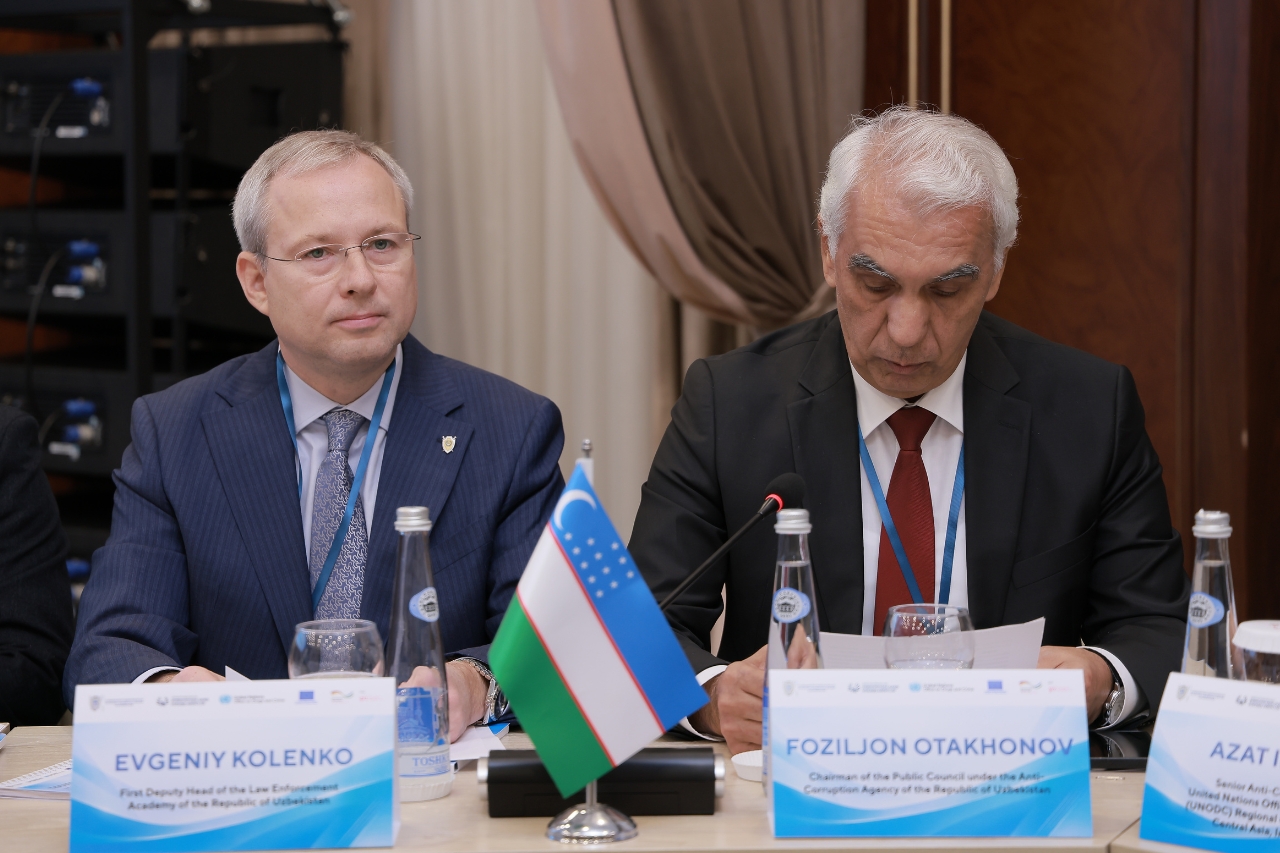
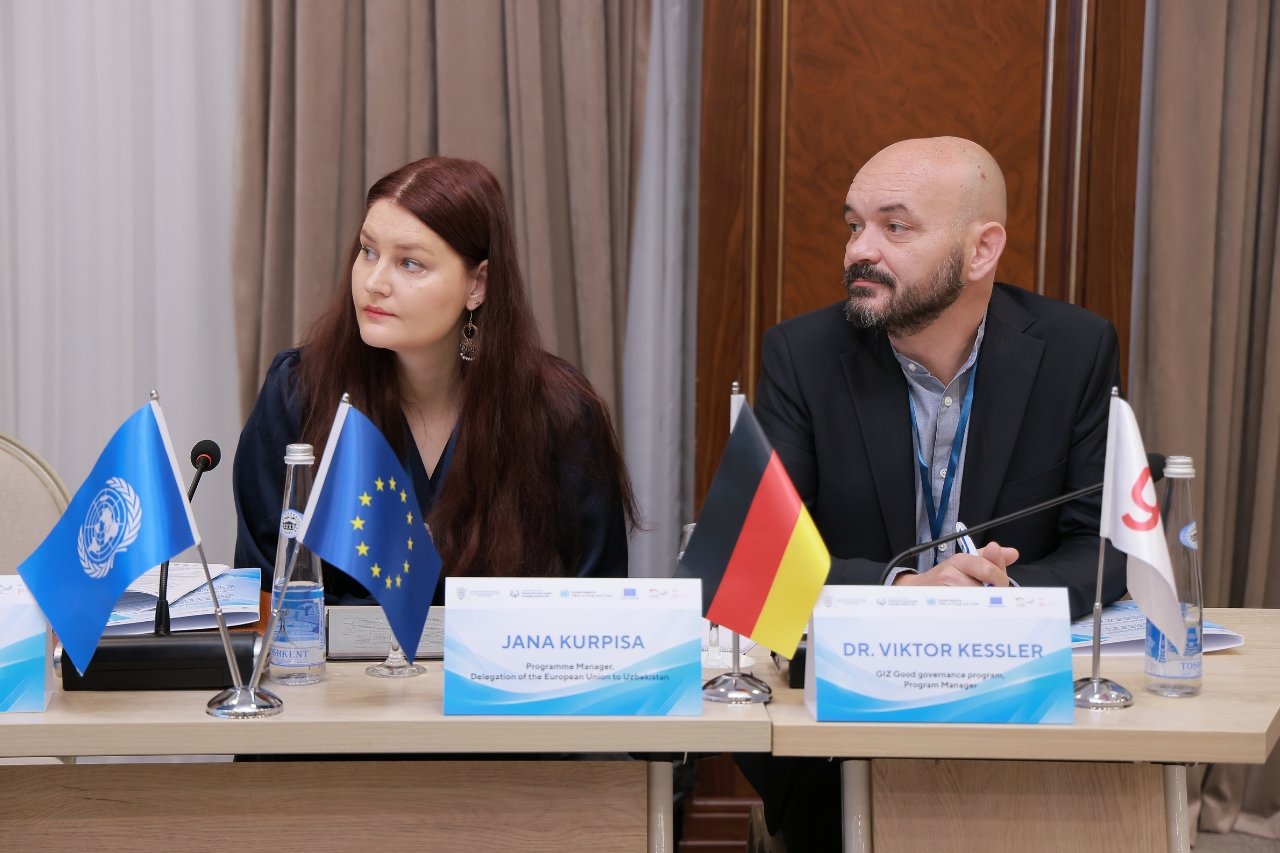
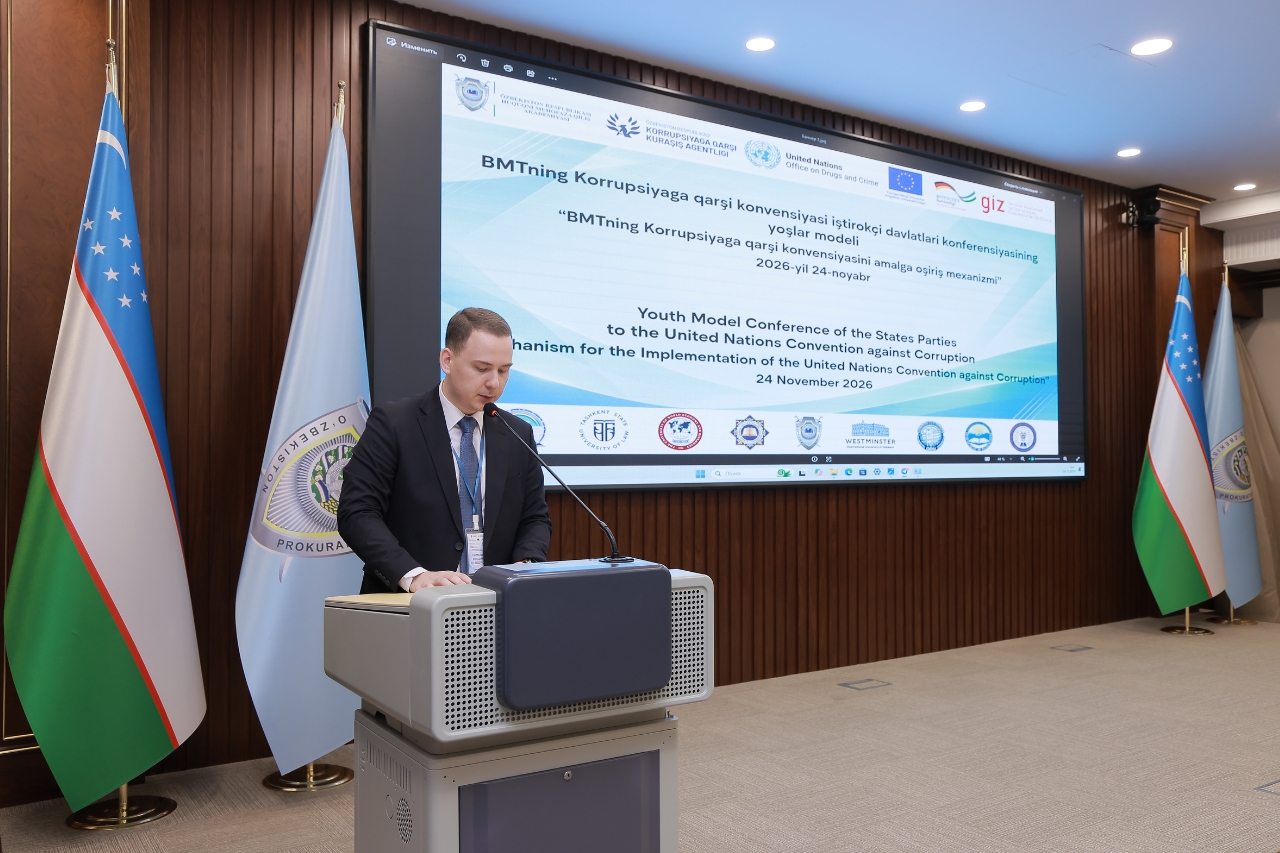
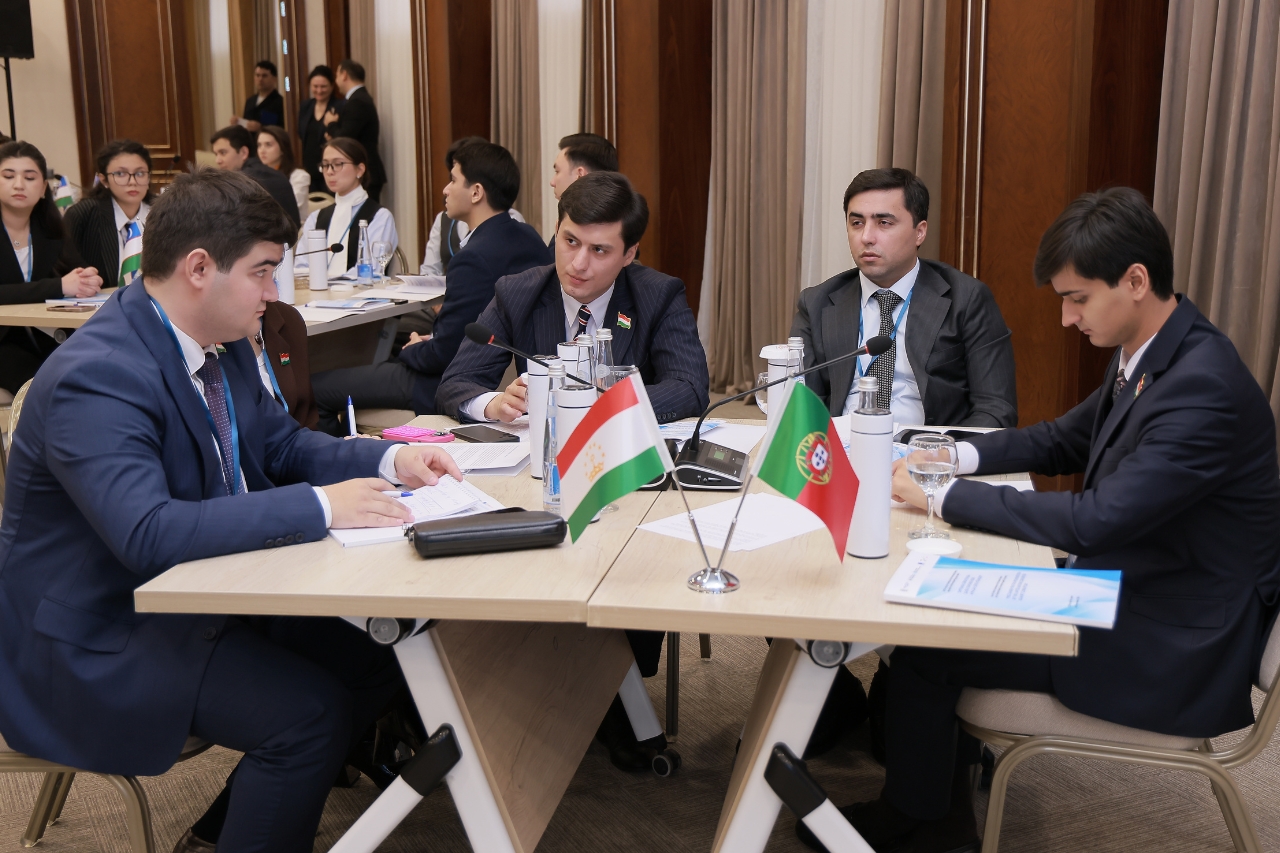
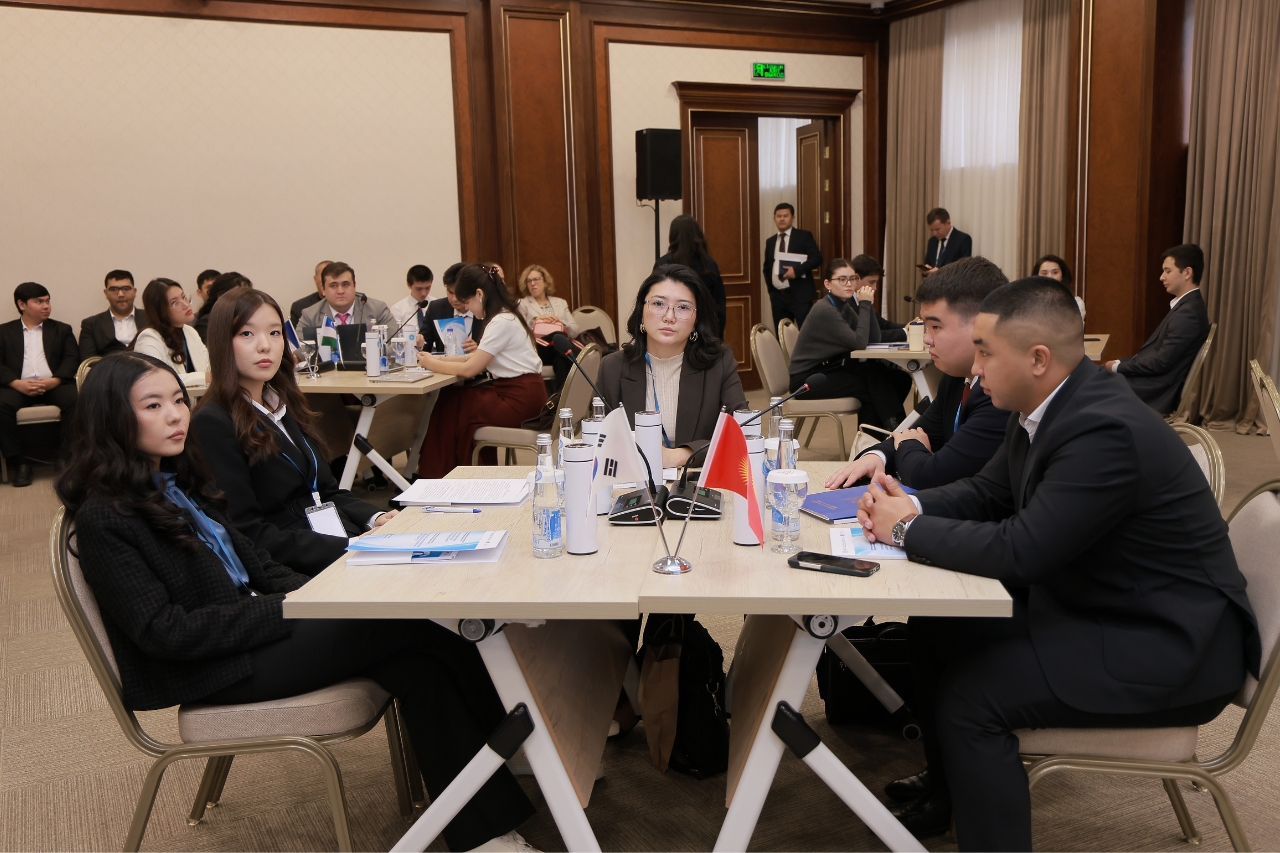
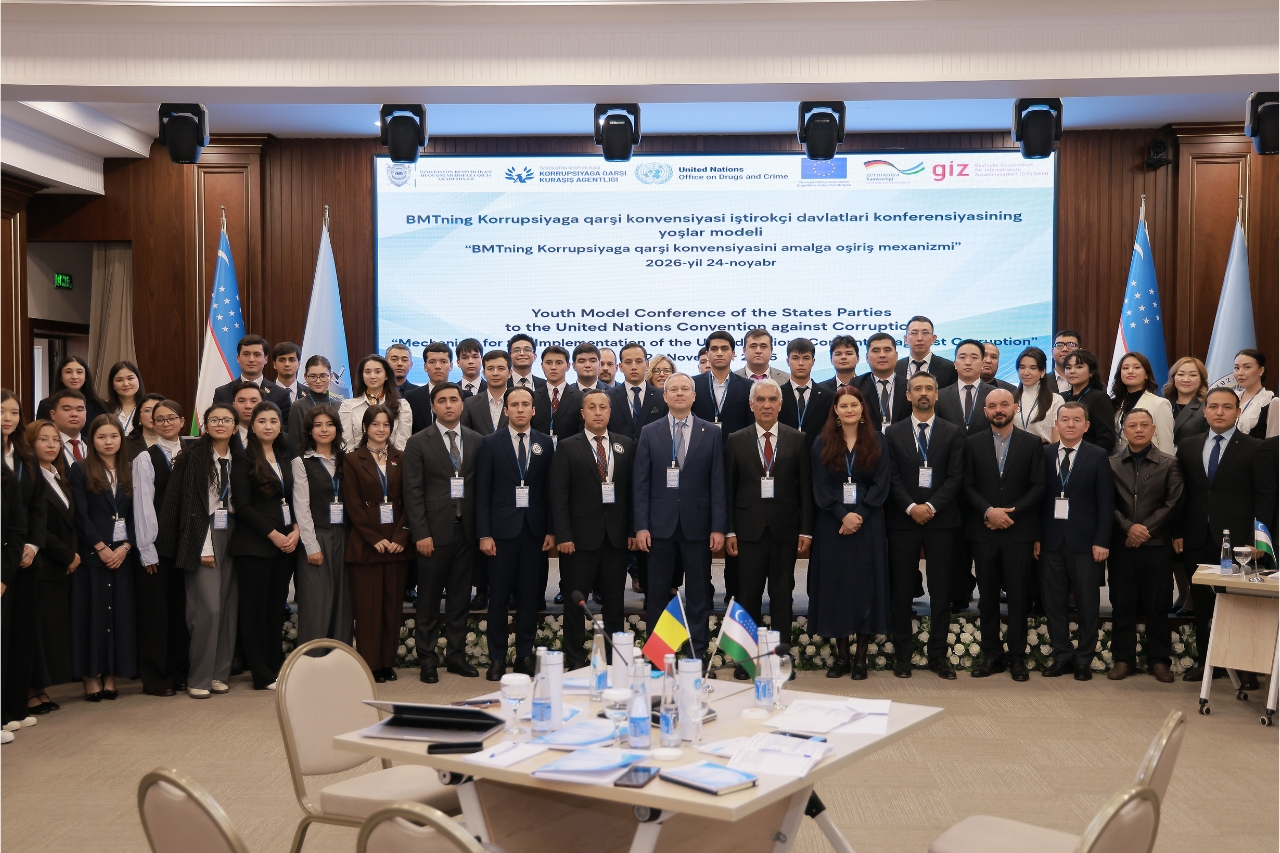
The three-week programme of the International Law Enforcement Forum dedicated to the 35th anniversary of Uzbekistan’s prosecutorial bodies continued with an international Model Conference of the States Parties to the United Nations Convention against Corruption. Held at the Law Enforcement Academy of the Republic of Uzbekistan, the event brought together nine teams from higher education institutions in Kazakhstan, the Kyrgyz Republic, Tajikistan and Uzbekistan.
The Model Conference has been held annually at the Academy since 2019. While the team from the Kyrgyz Republic joined the event in 2025, teams from Kazakhstan and Tajikistan participated for the first time in the eighth edition. The Academy organized the event in cooperation with the Anti-Corruption Agency, with the support of the United Nations Office on Drugs and Crime, the European Union and the German Agency for International Cooperation (GIZ).
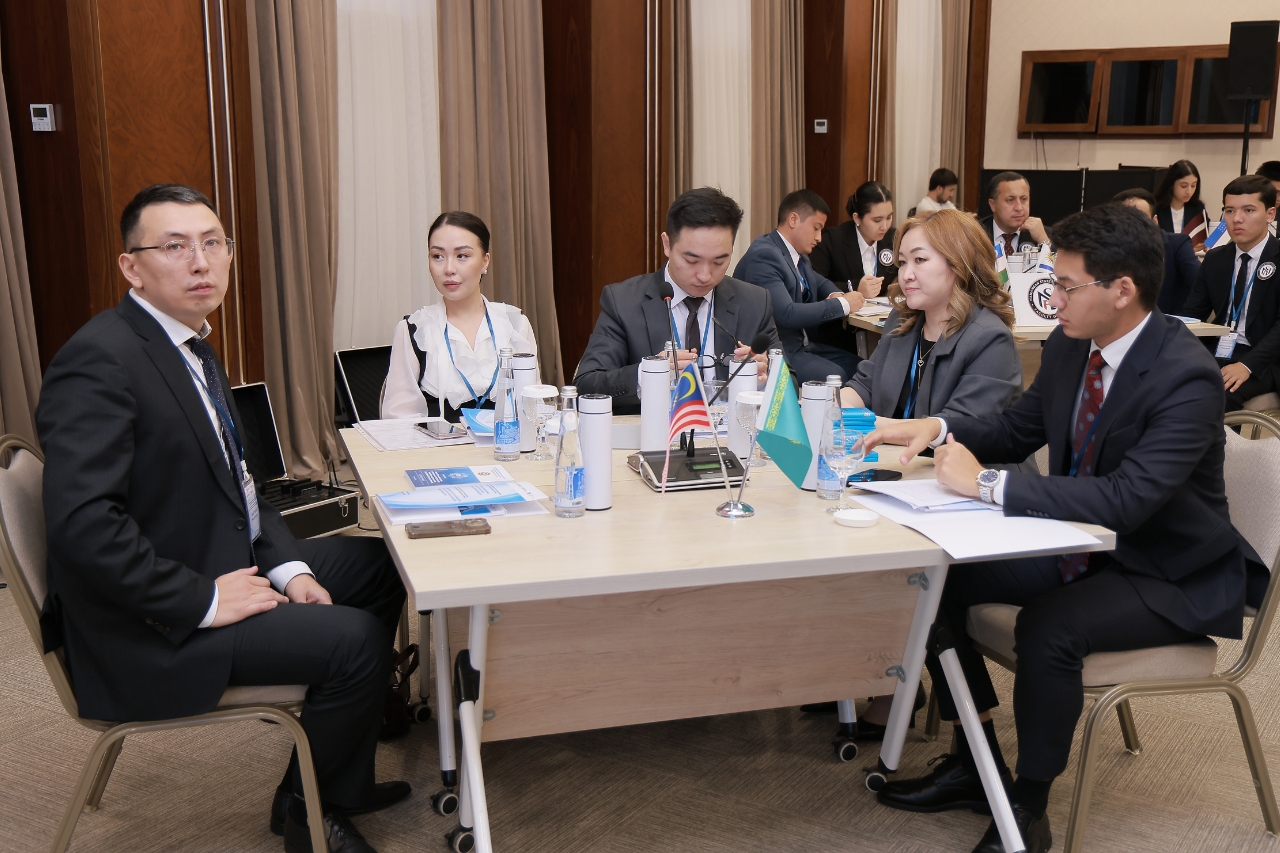
The participating teams represented the Academy of Law Enforcement Agencies under the Prosecutor General’s Office of the Republic of Kazakhstan, the Law Academy of the Prosecutor General’s Office of the Kyrgyz Republic, and Tajik National University. Uzbekistan was represented by teams from the Law Enforcement Academy, the University of World Economy and Diplomacy, Tashkent State University of Law, Karakalpak State University named after Berdakh, Namangan State University, and Westminster International University in Tashkent.
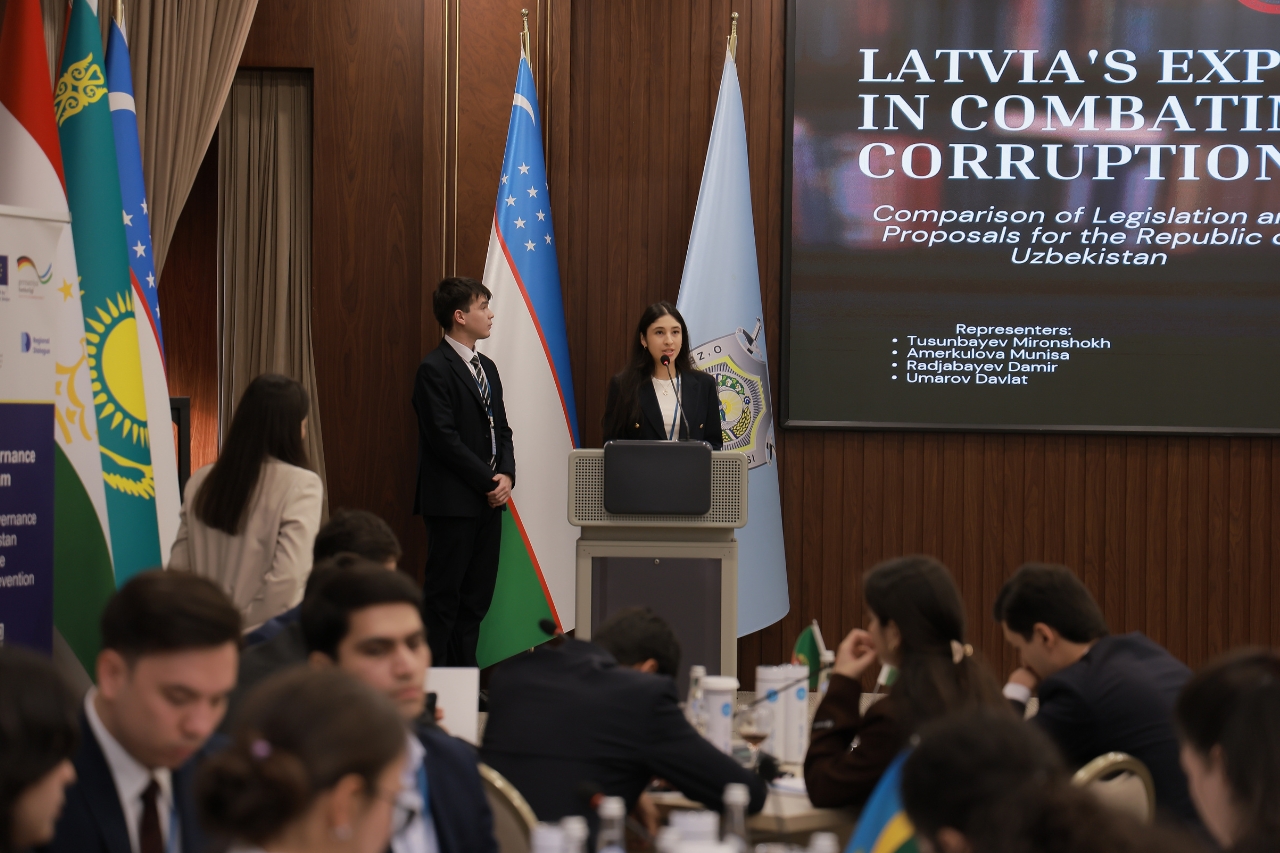
Within the framework of Article 5 of the Convention, participants discussed the development of coordinated anti-corruption policies, the introduction of corruption prevention mechanisms, and the promotion of public participation in these processes. During the first stage, teams assumed the roles of delegations from Latvia, Malaysia, Portugal, the Republic of Korea, Rwanda, Romania, Uruguay, France and Estonia, selected by lottery, and presented the legal and institutional mechanisms implemented in those countries.
In the second stage, teams presented the results of comparative legal analyses on behalf of their respective countries. They examined opportunities to adapt foreign practices to the legal systems and institutional structures of Central Asian countries and substantiated proposals for improving national legislation and law enforcement practices. The presentations were evaluated by experts from the United Nations Office on Drugs and Crime and the Anti-Corruption Agency.
Certificates and commemorative gifts were presented to participants at the conclusion of the conference.
The Model Conference provided participants with an opportunity to deepen their knowledge of international standards in corruption prevention and combating corruption, develop analytical, research and communication skills, and gain practical experience in conducting professional discussions and preparing well-founded proposals.