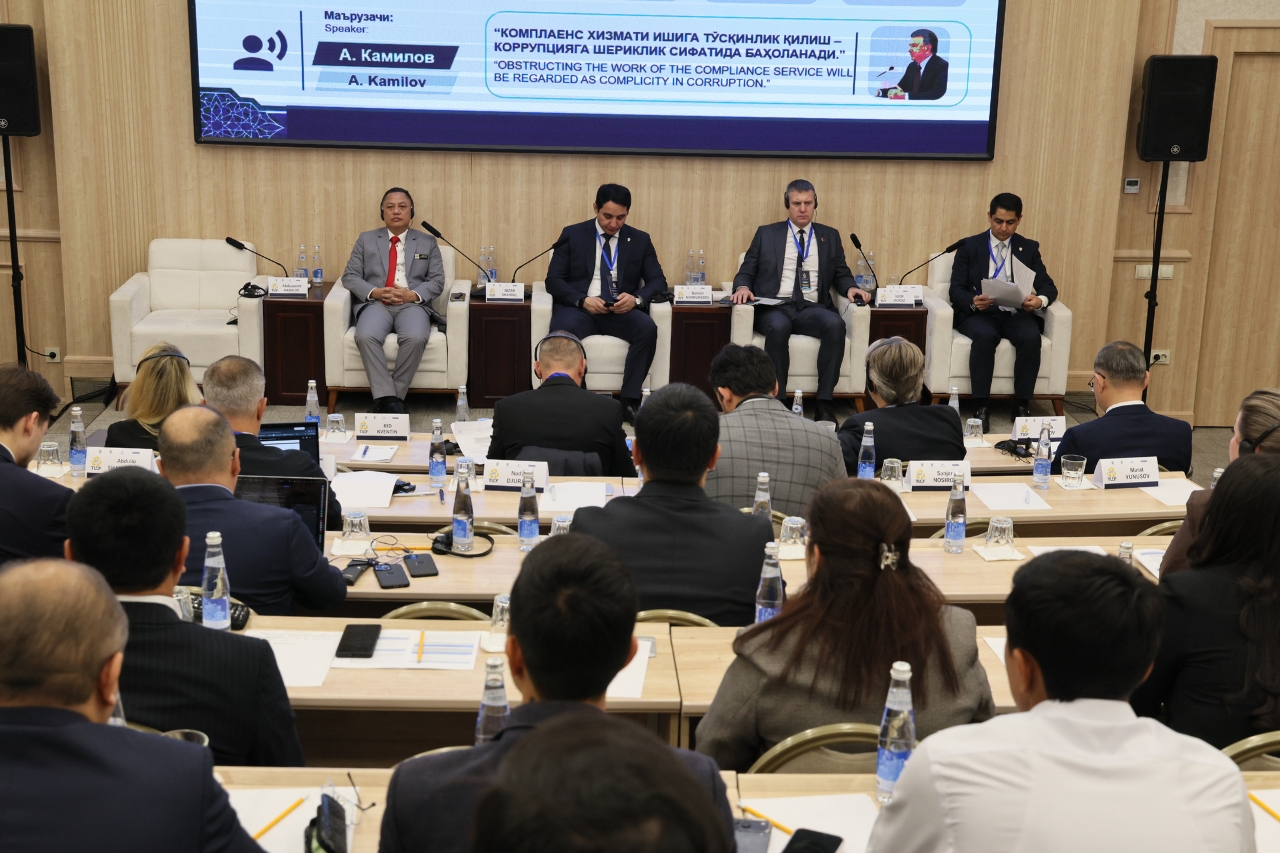
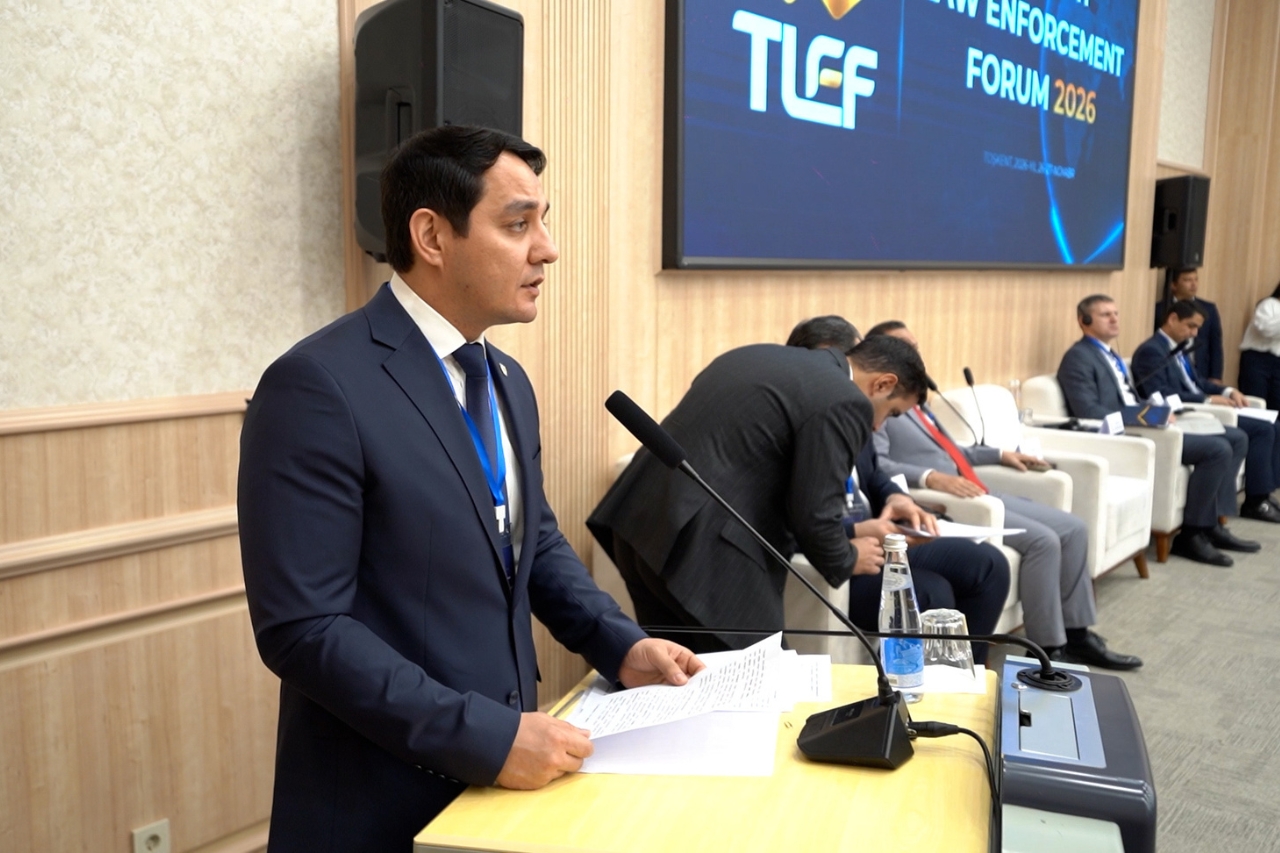
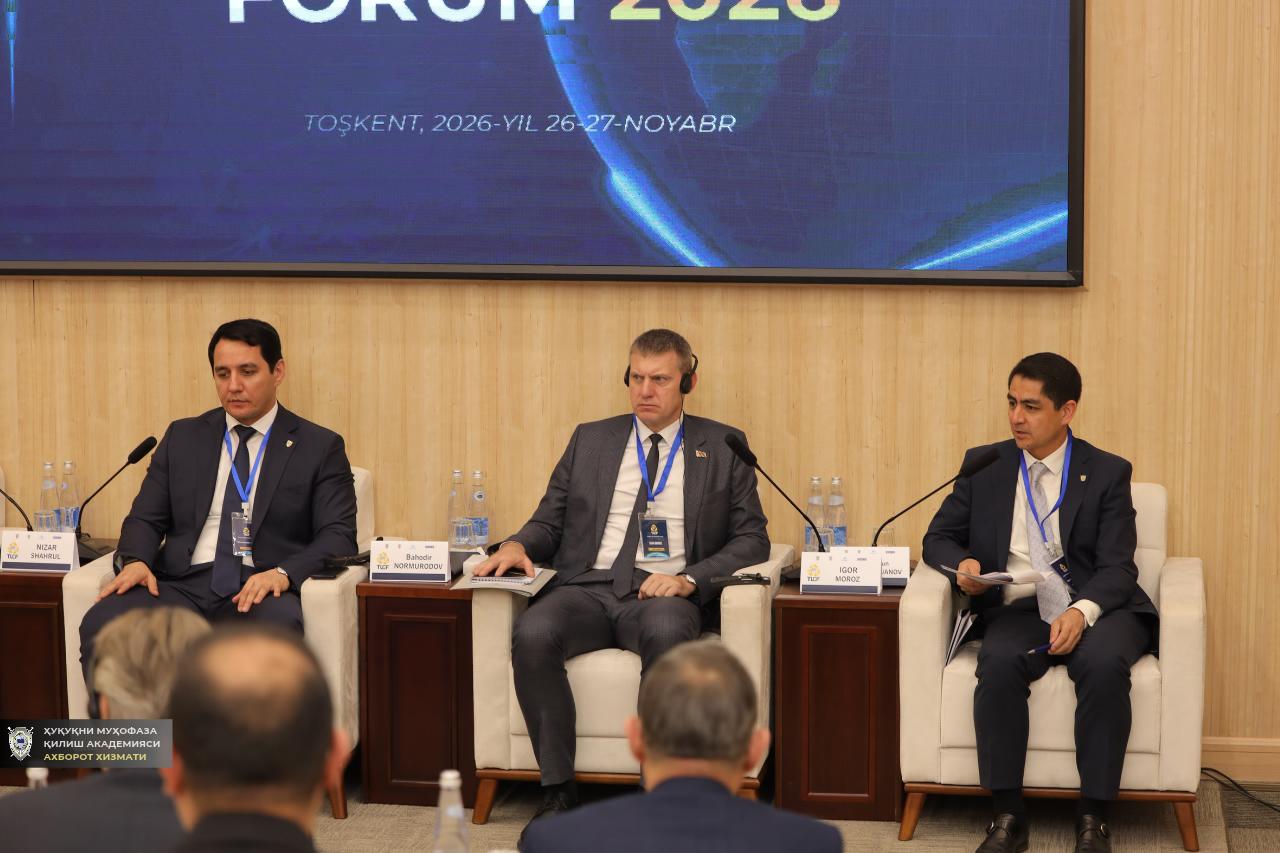
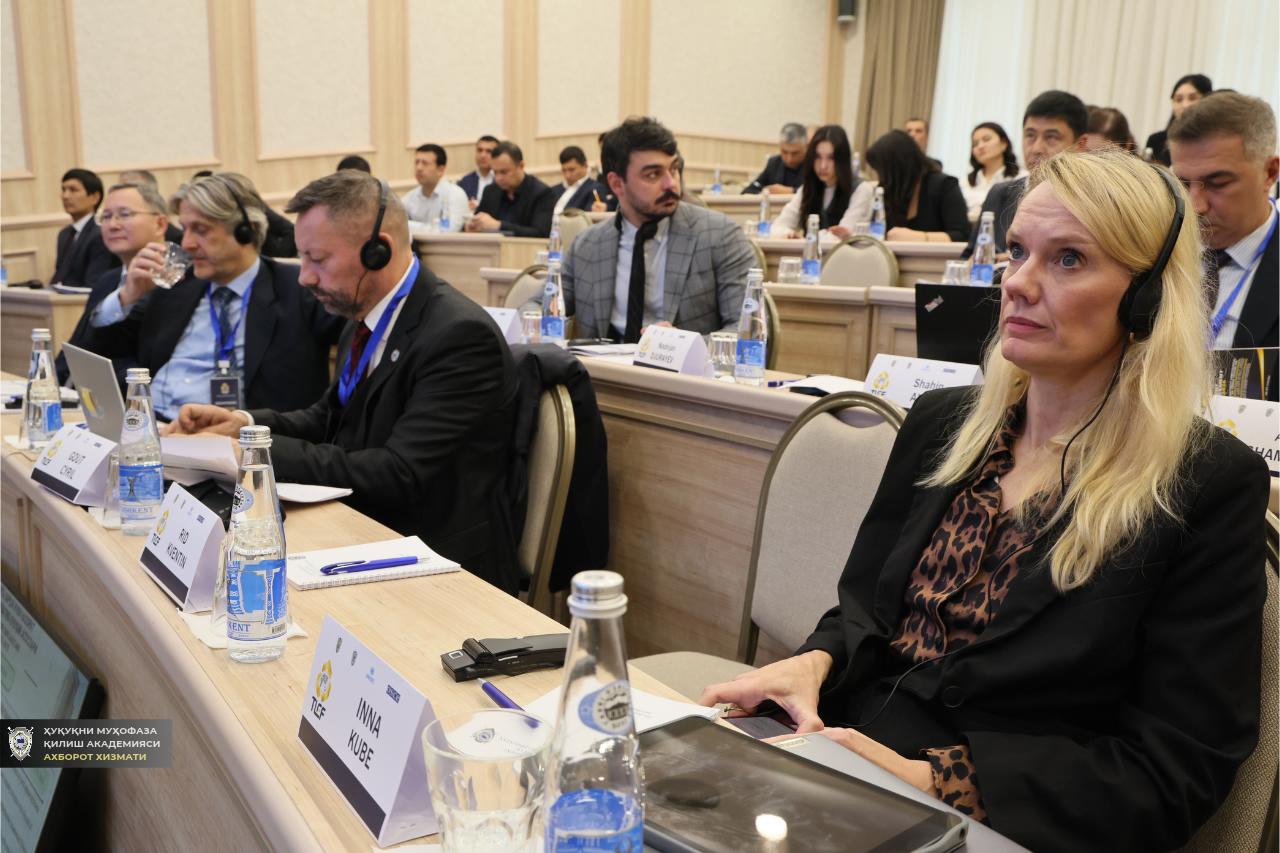
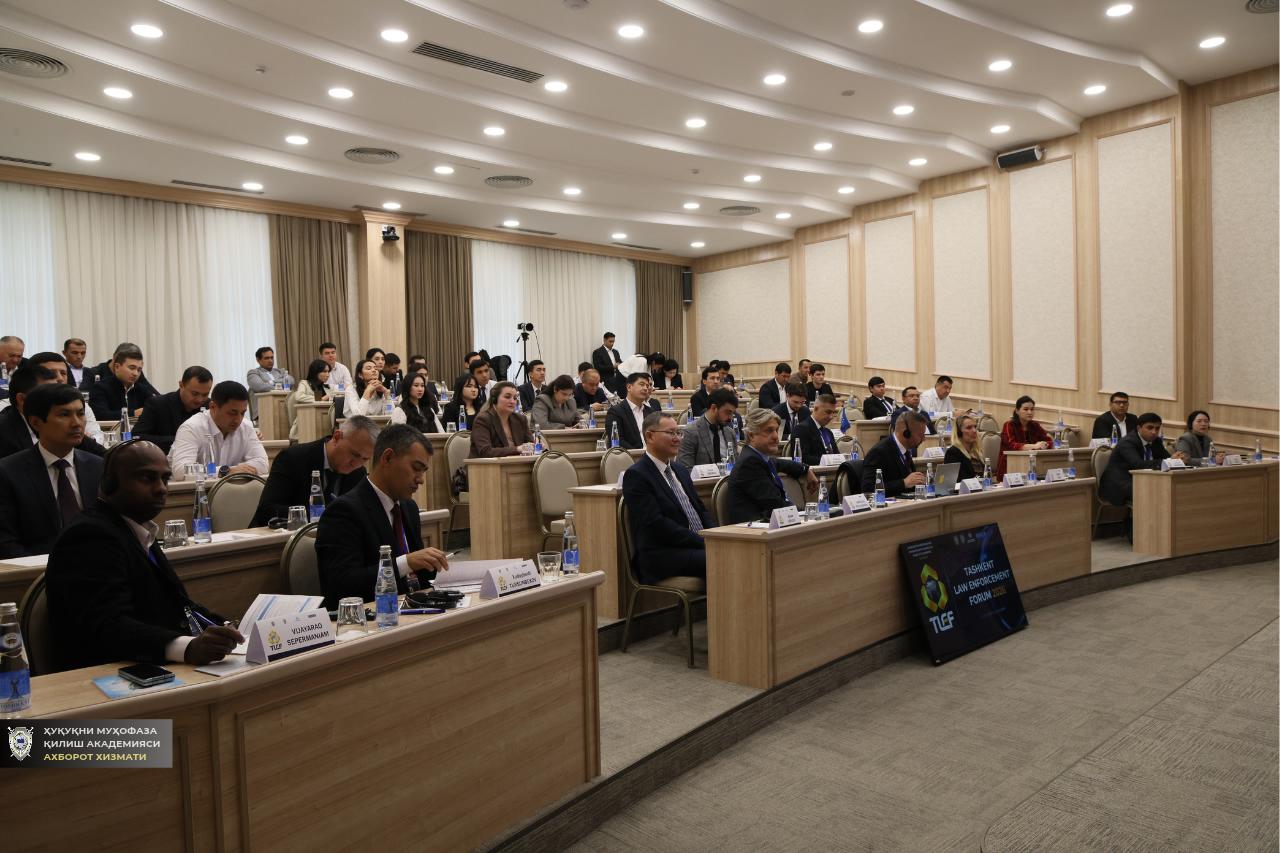
The third parallel session of the international scientific and practical forum “TASHKENT LAW ENFORCEMENT FORUM – 2026”, dedicated to the 35th anniversary of the establishment of the prosecution authorities of the Republic of Uzbekistan, focused on pressing issues related to countering corruption, money laundering and terrorist financing.
The session was held in a hybrid format and consisted of two parts. The first part was devoted to combating corruption, while the second focused on countering money laundering and terrorist financing.
The first part brought together representatives and heads of the General Prosecutor’s Office of the Republic of Uzbekistan, the Anti-Corruption Agency, the General Prosecutor’s Office of the Republic of Belarus, the Malaysian Anti-Corruption Academy, the Academy of the Ministry of Internal Affairs of the Kyrgyz Republic, the National University of Tajikistan, the United Nations Office on Drugs and Crime (UNODC), the International Anti-Corruption Academy (IACA), and the international non-governmental organization “Regional Dialogue”.
Presentations by national, foreign and international experts addressed the activities of law enforcement agencies, including prosecution authorities, in combating corruption in Uzbekistan, ongoing reforms aimed at preventing corruption and their outcomes.
Discussions also covered criminological reviews of draft regulatory legal acts, Malaysia’s experience in combating corruption, the application of international standards in implementing anti-corruption policies, and the use of modern educational tools to raise public awareness and enhance the professional qualifications of civil servants.
The second part featured presentations by representatives of the Department for Combating Economic Crimes under the General Prosecutor’s Office of the Republic of Uzbekistan, the Supreme Court, the Central Bank, the National Agency for Perspective Projects, the Independent Commission Against Corruption of Hong Kong (China), the Embassy of France in Uzbekistan, the National Prosecutorial Academy of the People’s Republic of China, the Financial Monitoring Service of the Republic of Azerbaijan, the International Training and Methodology Centre for Financial Monitoring, AML Certification Centre (Estonia), and the University of Gdańsk (Poland).
Discussions focused on money laundering risks in the banking system and crypto-asset circulation, cooperation between financial intelligence units and law enforcement agencies, the conduct of parallel financial investigations into money laundering cases, relevant judicial practice, and the use of artificial intelligence.
The session provided an important platform for exchanging experience between national and international institutions and strengthening practical cooperation in combating corruption and financial crime.