Programme Objectives
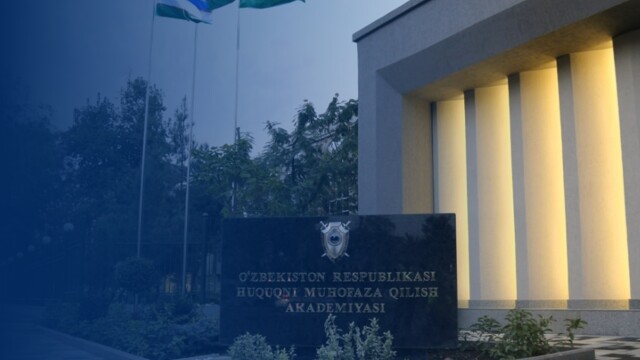
The Master's programme in Anti-Corruption (Master of Laws in Anti-Corruption) is a one-year, full-time, 60 ECTS programme delivered by the Law Enforcement Academy of the Republic of Uzbekistan under a special procedure for organising master's education.
The programme's primary objective is to combine high-level academic education with professional practice. Particular attention is given to corruption prevention, integrity in public administration, anti-corruption compliance, corruption risk assessment, conflict of interest management, professional ethics, organisational culture, accountability, transparency, and evidence-based policy development.
Through case analysis, problem-based learning, legal and policy analysis, simulations, research projects, professional placements, and collaboration with practitioners, students develop the ability to identify corruption risks, evaluate existing anti-corruption measures, and design proportionate, practical, and evidence-based solutions for public institutions, law enforcement agencies, private organisations, and other relevant sectors.
The programme's international and comparative-legal orientation prepares graduates to address the cross-border and global dimensions of corruption and to work effectively across different legal systems and international standards.
Intended Learning Outcomes (Graduate Profile)
Upon successful completion of the programme, graduates will be able to demonstrate the following outcomes, expressed as knowledge, skills, and competences:
A. Knowledge and Understanding
- Systematic and critical understanding of corruption as a legal, institutional, political, economic, social, behavioural, and ethical phenomenon
- Critical evaluation of the national legal and institutional framework against UNCAC and other international standards
- Integrity in public administration, anti-corruption compliance, risk assessment, conflict of interest management, transparency, and accountability mechanisms
- Investigation of corruption-related offences, anti-money laundering, asset recovery, integrity in public procurement, and private-sector corruption
B. Intellectual and Research Skills
- Critical analysis and application of national legislation, international standards, and comparative-legal approaches
- Identification and assessment of corruption risks, evaluation of the effectiveness of existing measures
- Development of evidence-based solutions for public institutions and private organisations
- Planning and conducting independent research culminating in a master's dissertation
C. Professional and Practical Competences
- Application of knowledge in professional practice within prosecutorial service, public administration, and compliance
- Clear and effective communication of complex legal and policy conclusions
- Independent, ethical, and responsible decision-making
- Responsible use of digital technologies and artificial intelligence
Teaching Methods
The programme primarily employs a flipped classroom approach. Students independently study lecture materials and literature through the Academy's Learning Management System (LMS) before classes. Contact hours are dedicated to discussions, case analysis, collaborative problem-solving, and practical application of knowledge.
Key methods used in the programme:
- Case-based learning — analysis of real and simulated situations related to corruption, compliance, financial investigations, and asset recovery
- Legal Laboratory — small teams work on extended cases, allocate roles, and present a reasoned team product
- Practitioners' Forum — structured meetings with expert practitioners on current cases and professional experience
- Research-based learning — working with international academic databases, systematic literature review, and step-by-step dissertation preparation
- Professional placement — 240 hours (8 ECTS) in a prosecutorial, law enforcement, supervisory, or compliance setting
Internationalisation
The programme integrates international anti-corruption and integrity standards throughout the curriculum, covers the cross-border and global dimensions of corruption (including transnational bribery, money laundering, and asset recovery), and develops the ability to work across different legal systems and in international professional settings.
Master's Dissertation
The dissertation topic is determined within the programme's field and must address a relevant scholarly and practical problem. The recommended length of the main text is 70–80 pages. Prior to the formal defence, the dissertation undergoes preliminary discussion, internal and external review. At least two published academic articles or conference abstracts are required for admission to the preliminary defence.
The formal defence is conducted by the Final State Attestation Commission. The commission comprises at least five professors and specialists. An external scholar or experienced practitioner who is not an Academy employee is appointed as chair.
Academy Infrastructure
The physical infrastructure comprises 47 classrooms, including 5 postgraduate lecture halls, 11 lecture theatres, 14 seminar rooms, 3 computer laboratories, and 160 computers. The library has 132 seats, 25 computers, subscriptions to 16 electronic databases (EBSCO, Springer, ProQuest, Web of Science, and others), and 521 electronic resources. 70–75% of the campus is covered by Wi-Fi.