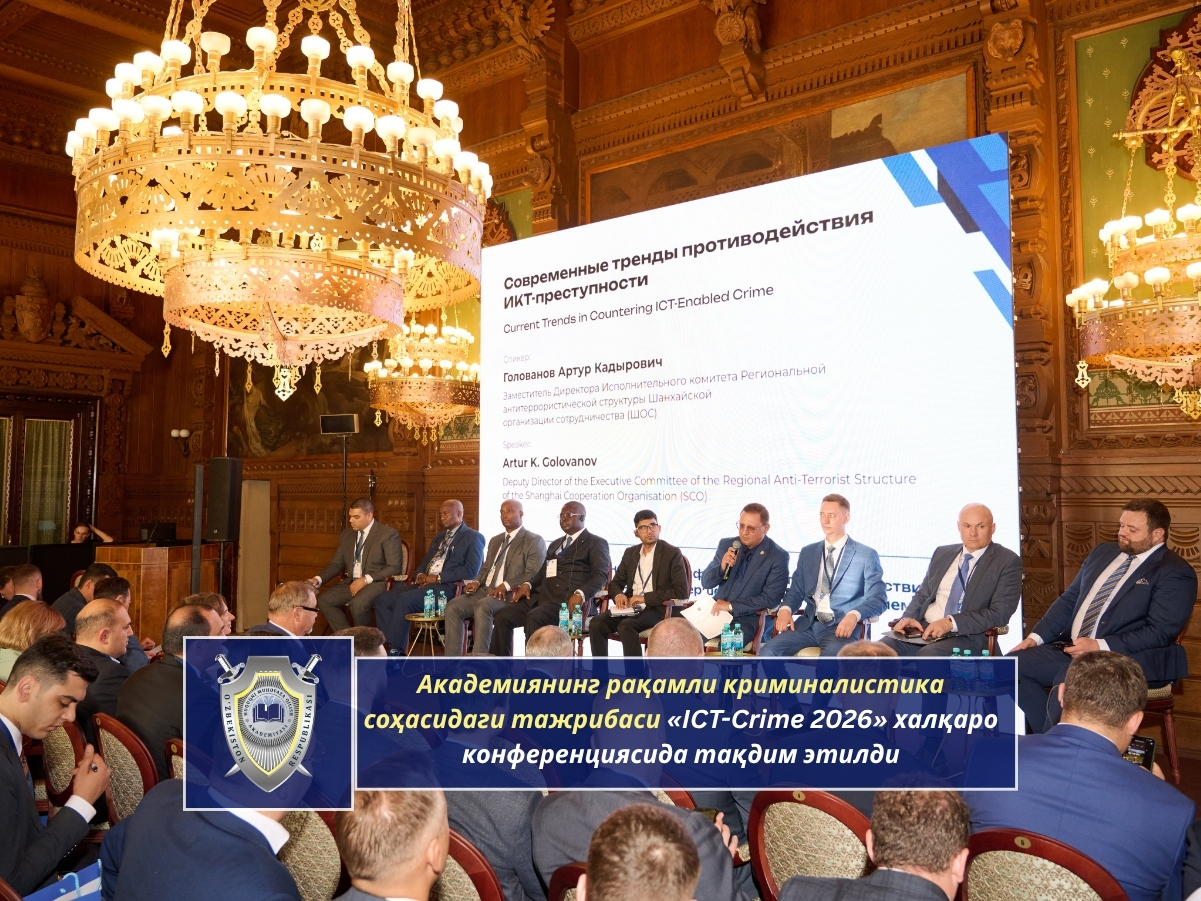
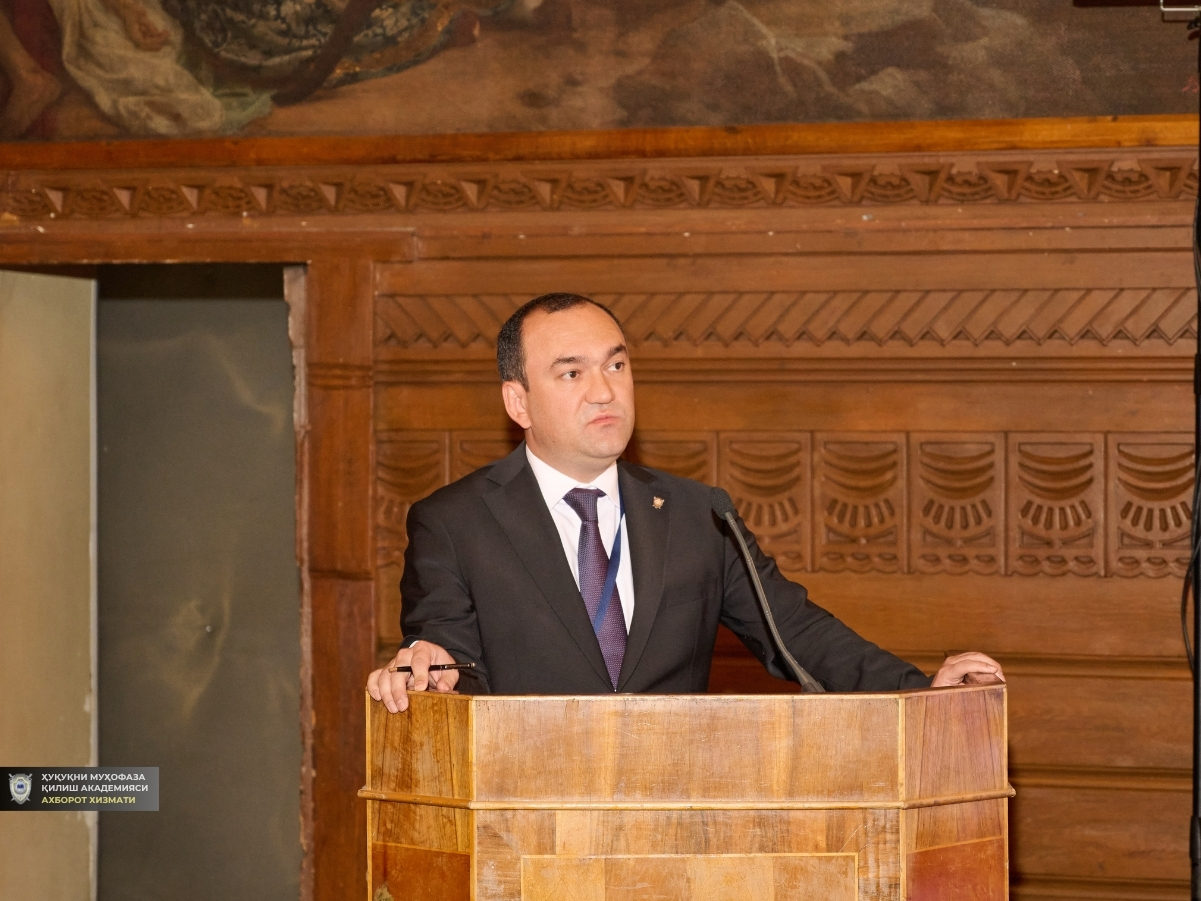
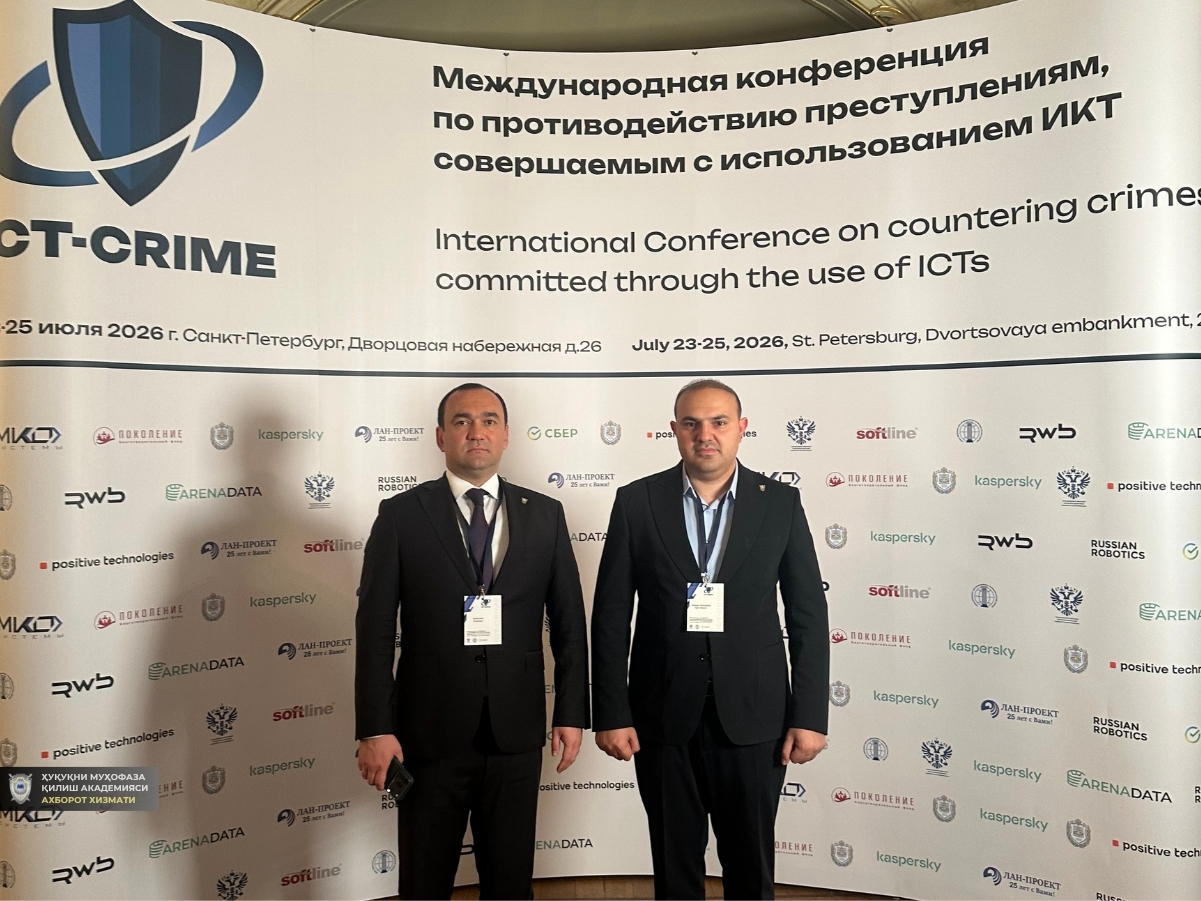

The Law Enforcement Academy of the Republic of Uzbekistan presented its national experience in training digital forensics specialists and investigating crimes committed through the use of information and communication technologies at the international conference "ICT-Crime 2026" held in Saint Petersburg.
The conference brought together representatives of 29 countries and five international organizations – the United Nations, the Conference on Interaction and Confidence Building Measures in Asia (CICA), the Shanghai Cooperation Organization (SCO), the Commonwealth of Independent States (CIS), and the Collective Security Treaty Organization (CSTO), as well as specialists from government agencies, academia, and expert communities. The conference addressed issues related to the detection, prevention, suppression, and investigation of crimes committed through the use of ICT, the improvement of international cooperation and legal regulation mechanisms in this field, as well as countering threats associated with the unlawful use of personal data.
On behalf of the Academy, Sardorbek Urozbayev, Head of the Digital Forensics Research Institute, and Khagani Gadjiev, Head of the Institute's Center for Specialized Digital Research, delivered presentations during the session entitled "Best Practices in Combating Crimes Committed through the Use of ICT."
In his presentation, Sardorbek Urozbayev introduced the Academy's experience in training specialists to combat crimes in the field of ICT, as well as educational approaches aimed at developing professional competencies in digital forensics.
Khagani Gadjiev focused on advanced practices in investigating crimes committed through the use of ICT and spoke about the practical methodologies and approaches applied in the Institute's expert and research activities.
The presented materials demonstrated the effective integration of education, scientific research, and expert practice in the field of digital forensics at the Academy. The Institute conducts activities related to the identification, documentation, collection, and examination of digital evidence, as well as forensic examinations of computer equipment, mobile devices, networks, large volumes of data, and databases.
Participation in the conference contributed to demonstrating the Academy's scientific and practical potential in the field of digital forensics at the international level, expanding professional cooperation with foreign law enforcement and expert institutions, studying advanced practices, and identifying promising areas for future cooperation.