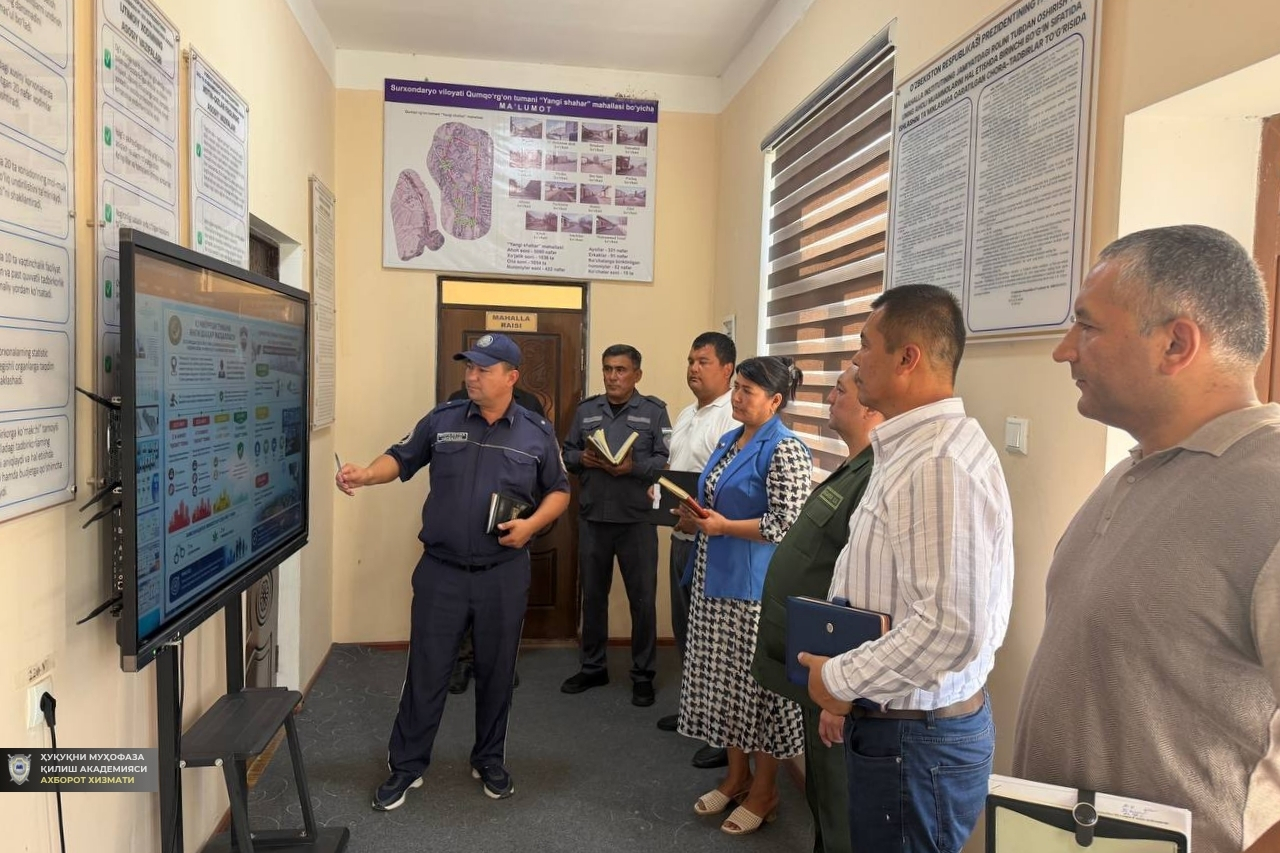
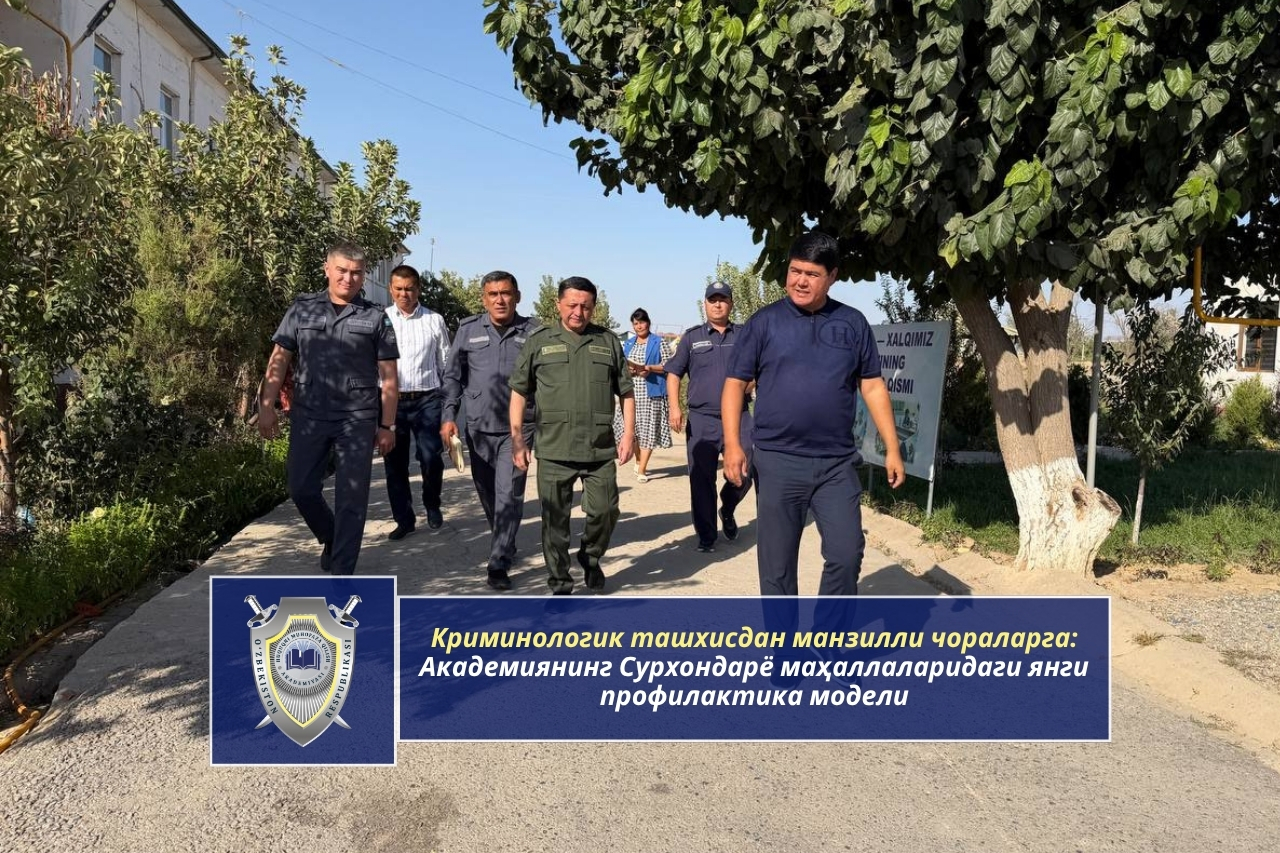
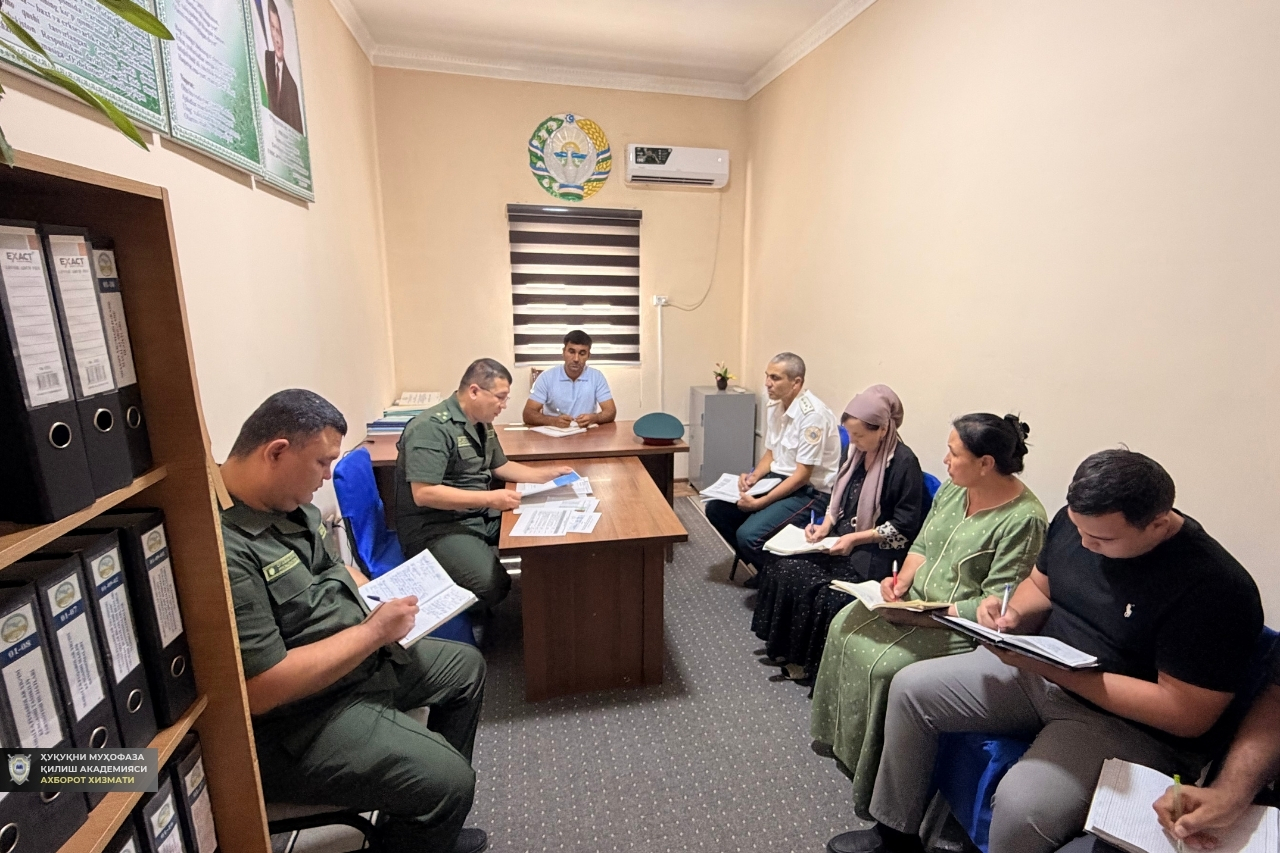
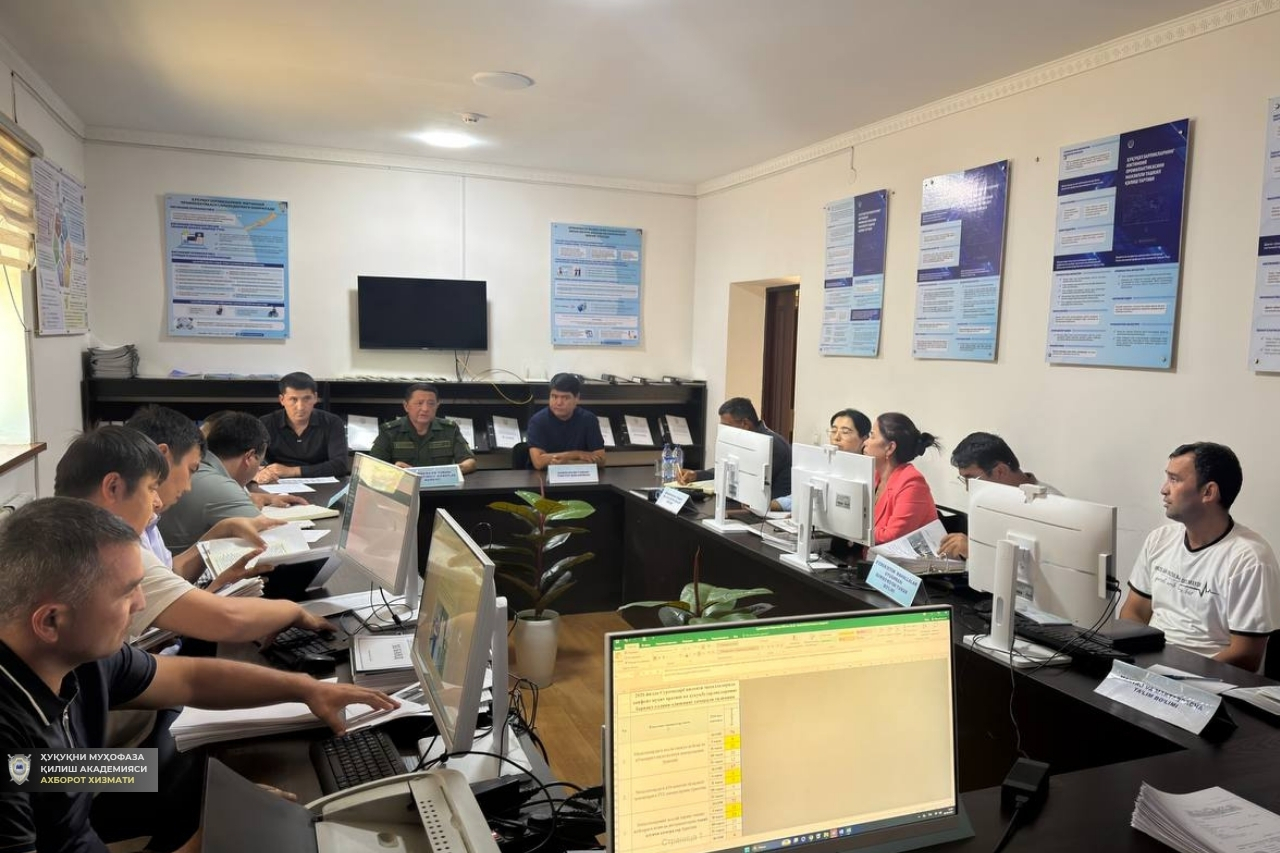
In Surkhandarya Region, the criminogenic situation is being comprehensively studied by a working group of the Law Enforcement Academy of the Republic of Uzbekistan in the mahallas assigned to the Academy, particularly those classified as “red”. The work is organised based on the principle of “scientific conclusion – recommendation – result”.
The main objective is not limited to taking measures after an offence has been committed, but is to identify and eliminate the root causes of problems directly within the local social environment.
As part of the study, criminological maps and risk profiles of each mahalla were developed, and risk factors related to conflict-prone families, unemployed young people, and individuals in need of social adaptation were thoroughly analysed.
Scientific and methodological training sessions based on real cases have been organised for prevention inspectors and representatives of the “mahalla seven”. The sessions address issues of resolving conflicts through mediation and curbing aggressive attitudes. As a result, moving away from standard templates, express algorithms for providing social, legal and psychological assistance adapted to the real conditions of a particular household or street are being introduced into practice.
The empirical data collected by the Academy’s working group will serve as a basis for developing specific recommendations to stabilise the criminogenic situation in Surkhandarya Region, as well as for improving a crime prevention methodology that can be applied nationwide.