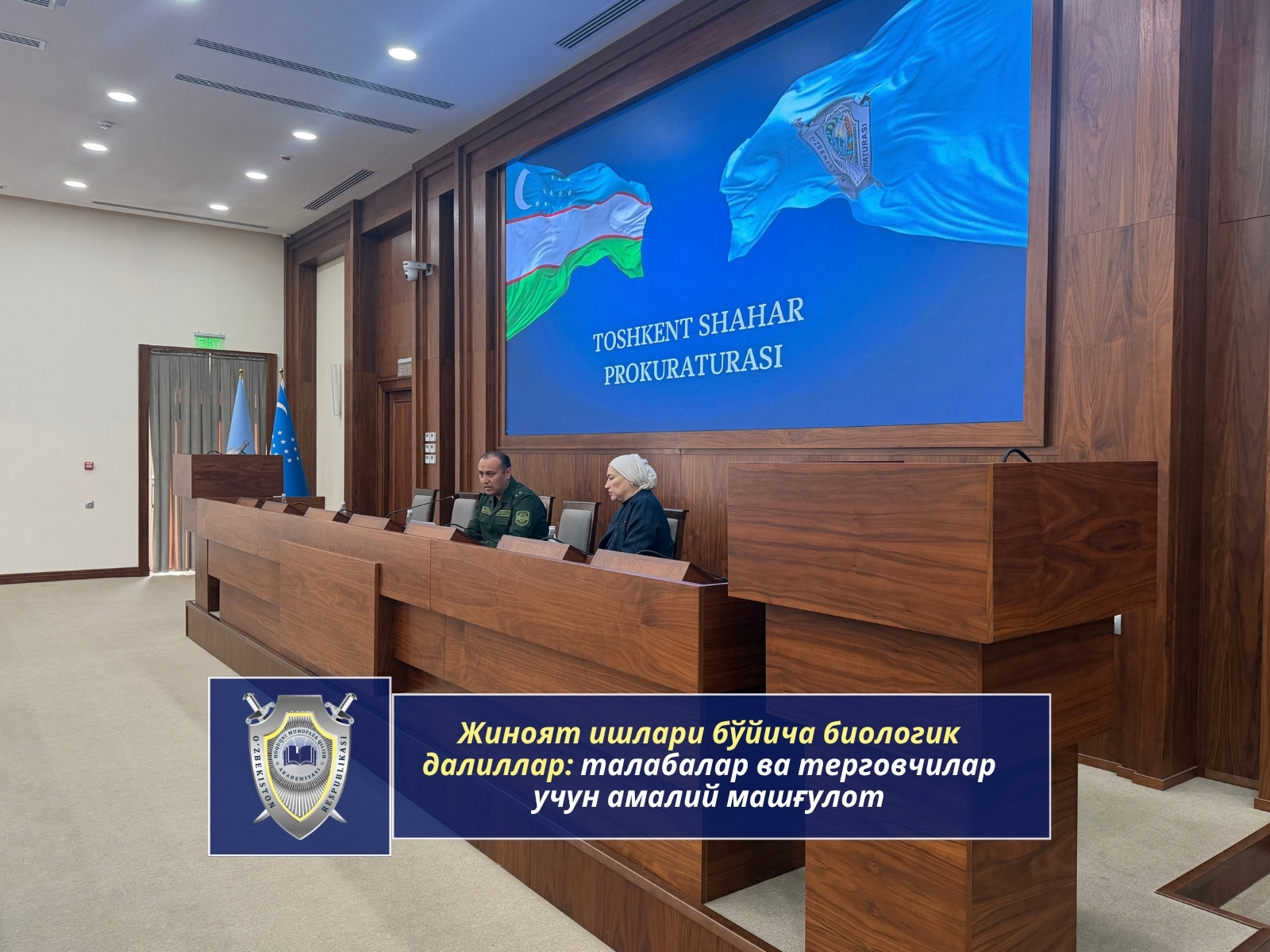
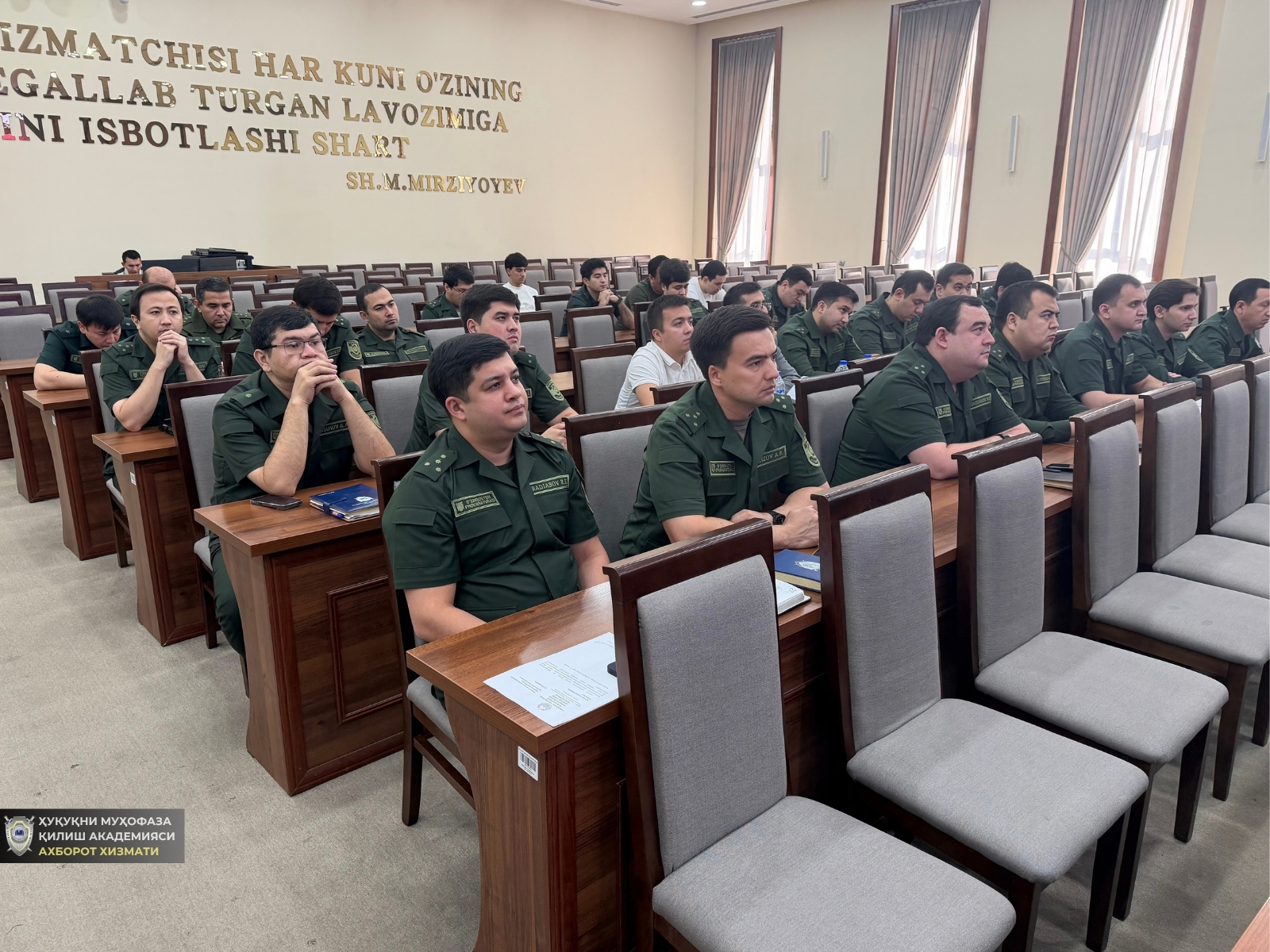
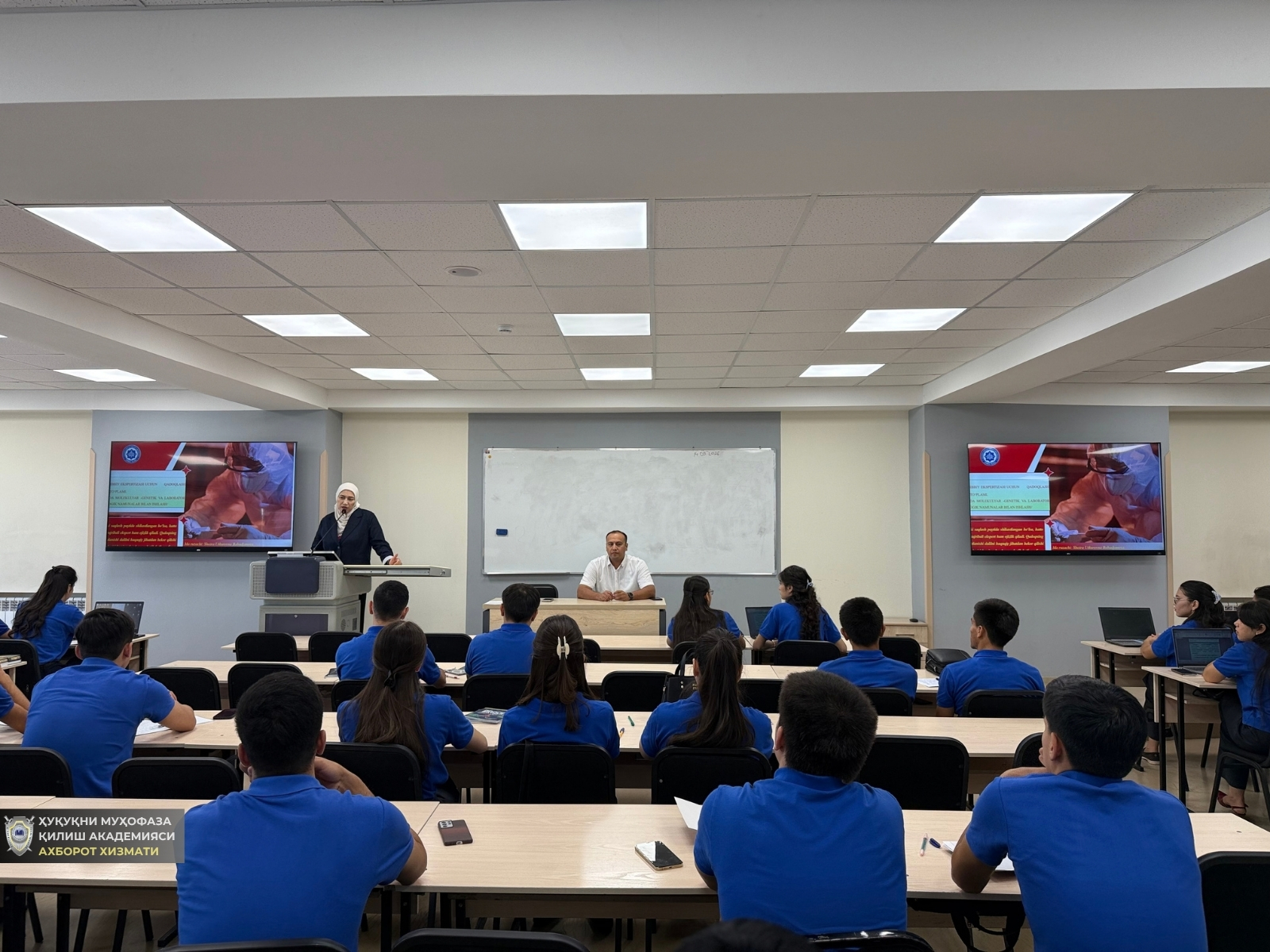
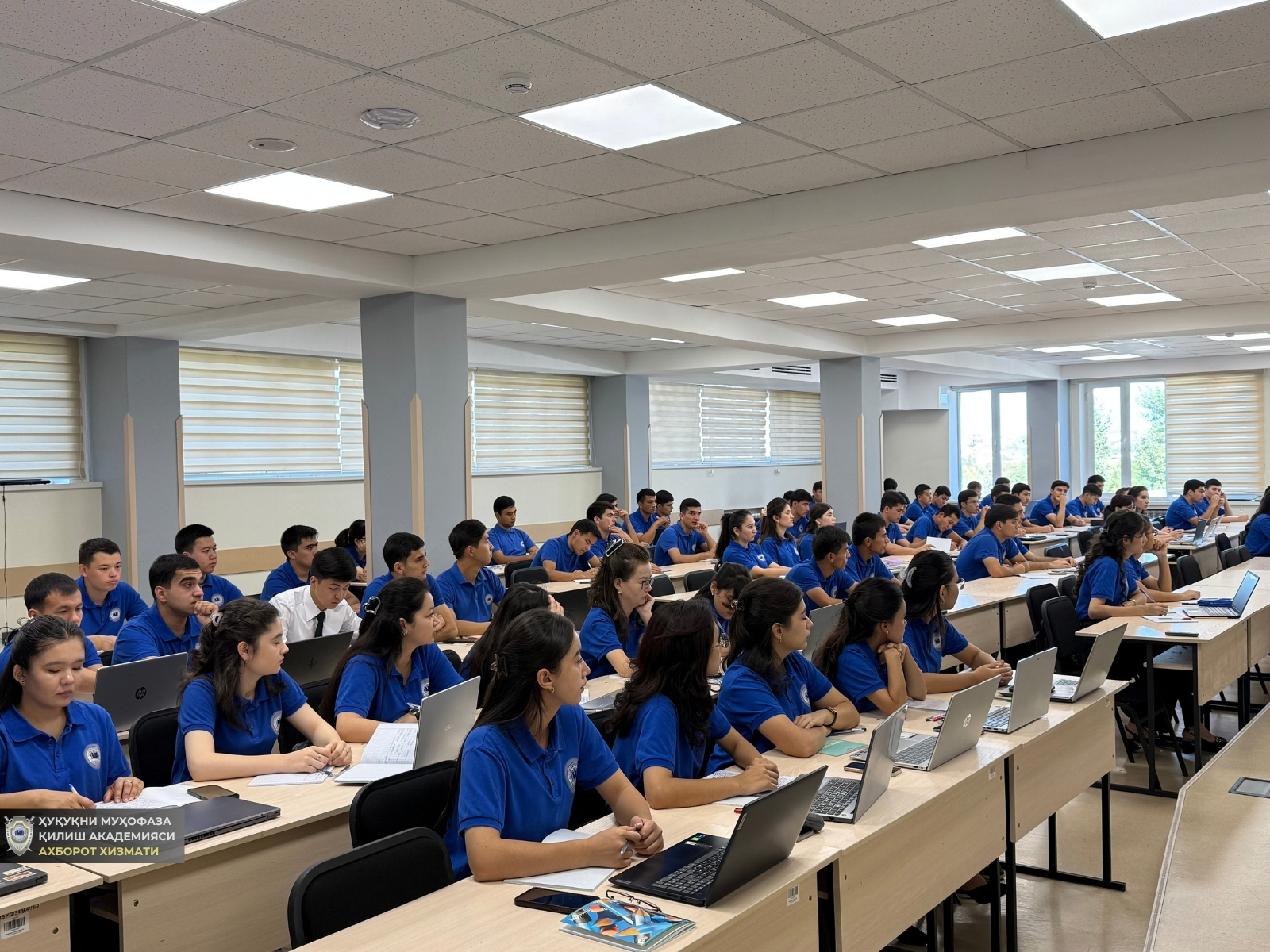
The Law Enforcement Academy organized a practical training seminar aimed at strengthening practical skills in handling biological evidence in criminal cases, including its identification, documentation, and packaging.
In accordance with Decree No. UP-33 of the President of the Republic of Uzbekistan dated March 3, 2026, “On Additional Organizational and Legal Measures to Strengthen the Protection of the Rights of Women and Children and Prevent Cases of Harassment and Violence against Them,” as of November 1, 2026, pre-investigation inquiries and preliminary investigations into crimes against sexual freedom are to be conducted exclusively by prosecution authorities.
As part of the implementation of these tasks aimed at improving the quality and transparency of investigations into such crimes, the seminar was attended by final-year students of the “Investigative Activities” program at the Law Enforcement Academy and investigators from the prosecution authorities of Tashkent City.
Representatives of the Department of Pathological Anatomy, Forensic Medicine and Medical Law of the Termez Branch of Tashkent State Medical University and the Law Enforcement Academy also participated in the training.
The seminar addressed issues related to handling biological materials in criminal cases, particularly cases involving crimes against sexual freedom, as well as key aspects requiring attention when identifying, documenting, and packaging biological evidence.
Particular attention was paid to ensuring prompt information exchange in the detection of crimes, as well as to the collection and documentation of evidence without compromising its integrity.
During the practical training, participants exchanged views on current issues arising in investigative activities and received practical recommendations on handling biological evidence and properly organizing investigative procedures.
The practical training seminar was aimed at strengthening the practical skills of future investigators, enhancing the professional competence of practicing investigators, and improving the quality of criminal investigations.