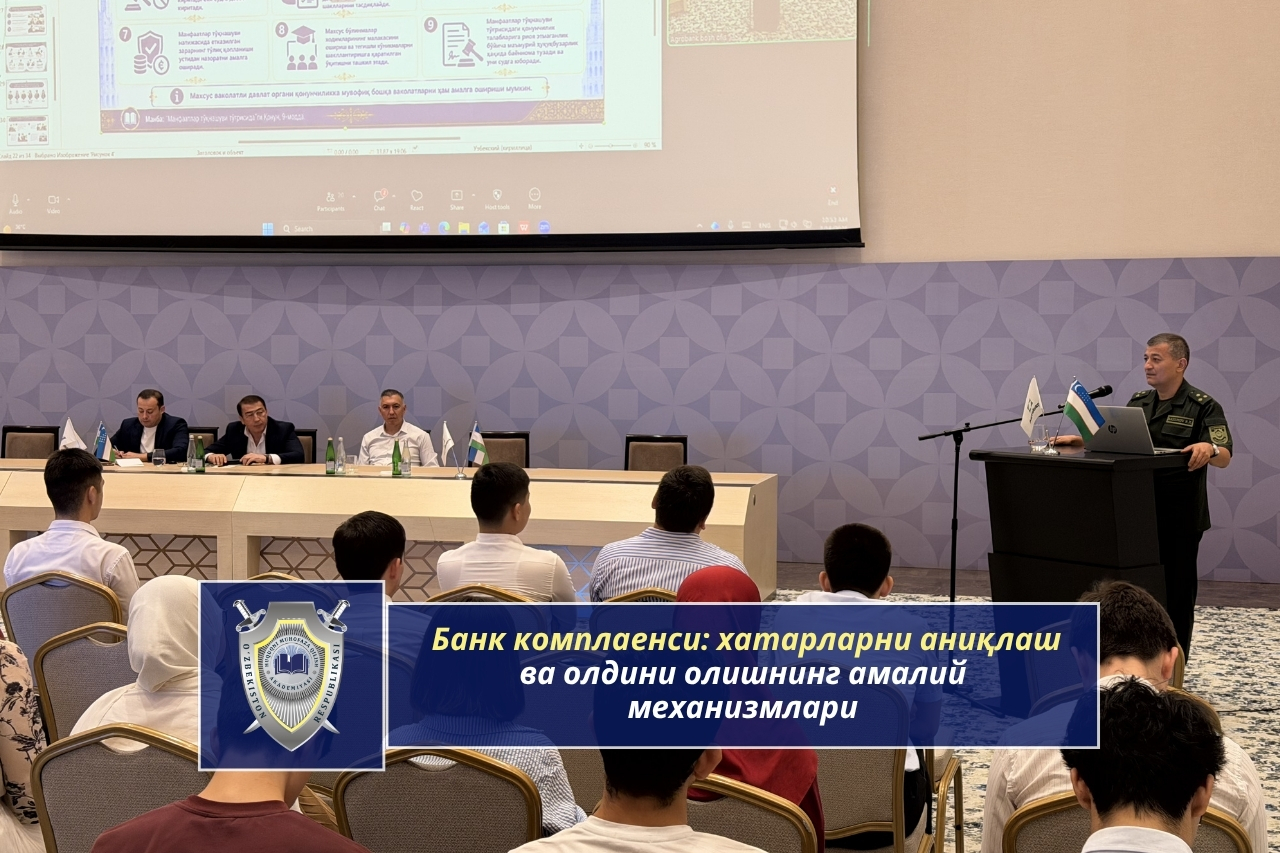
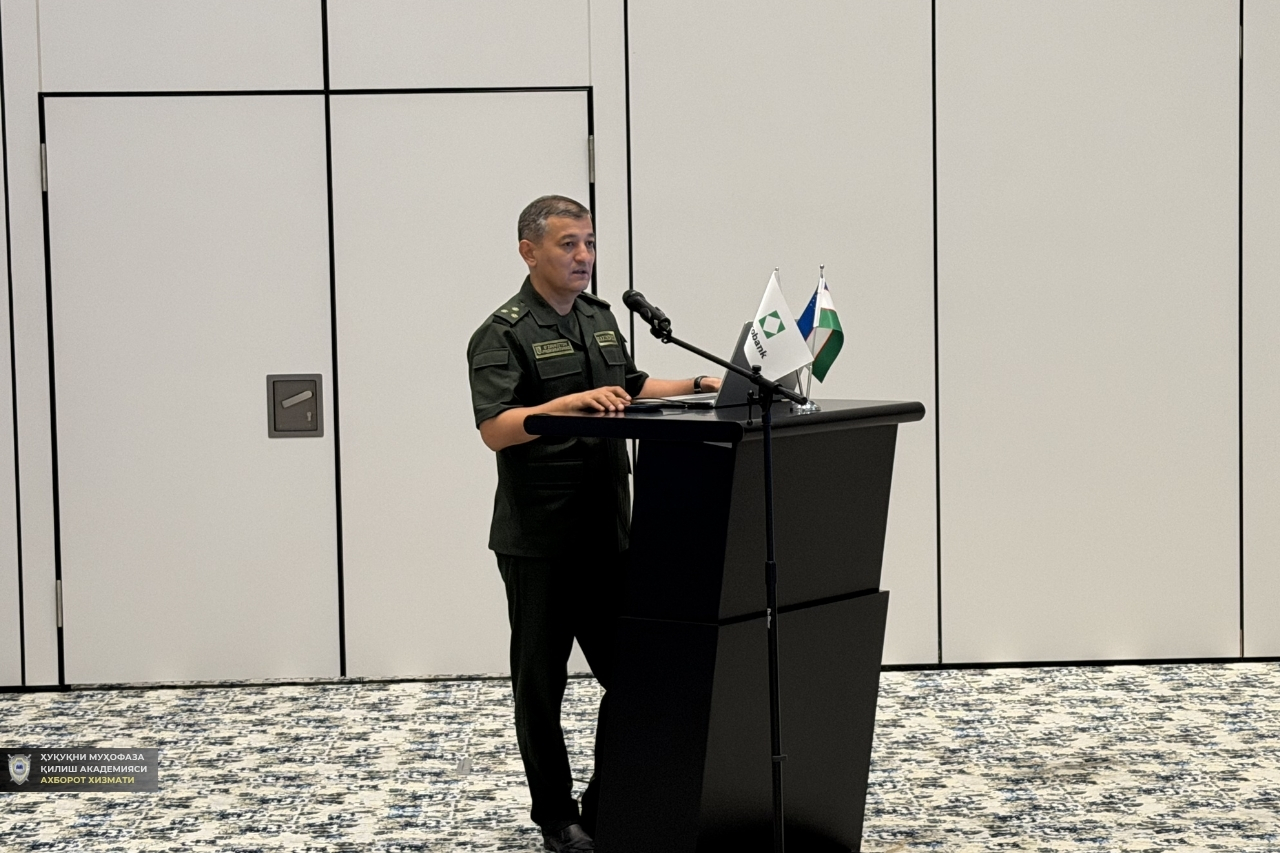
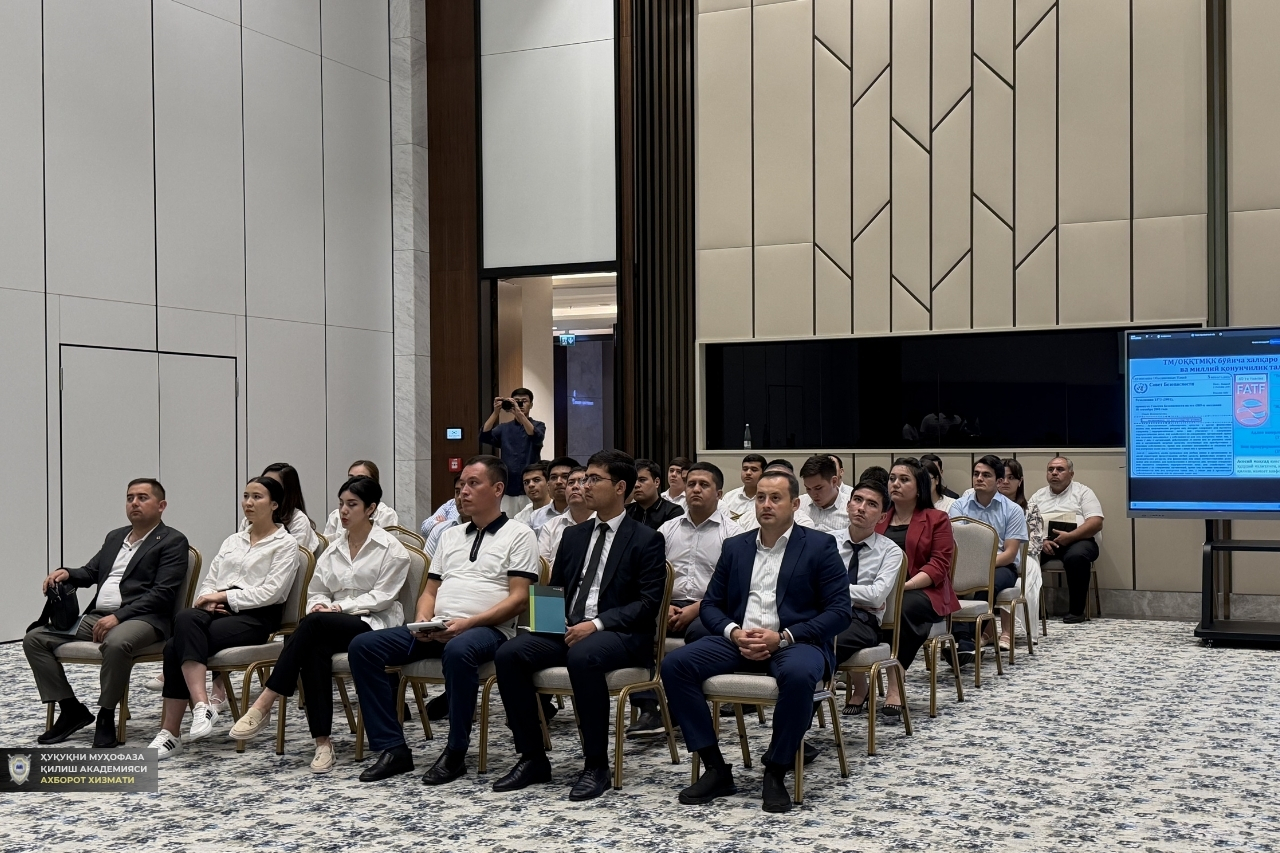
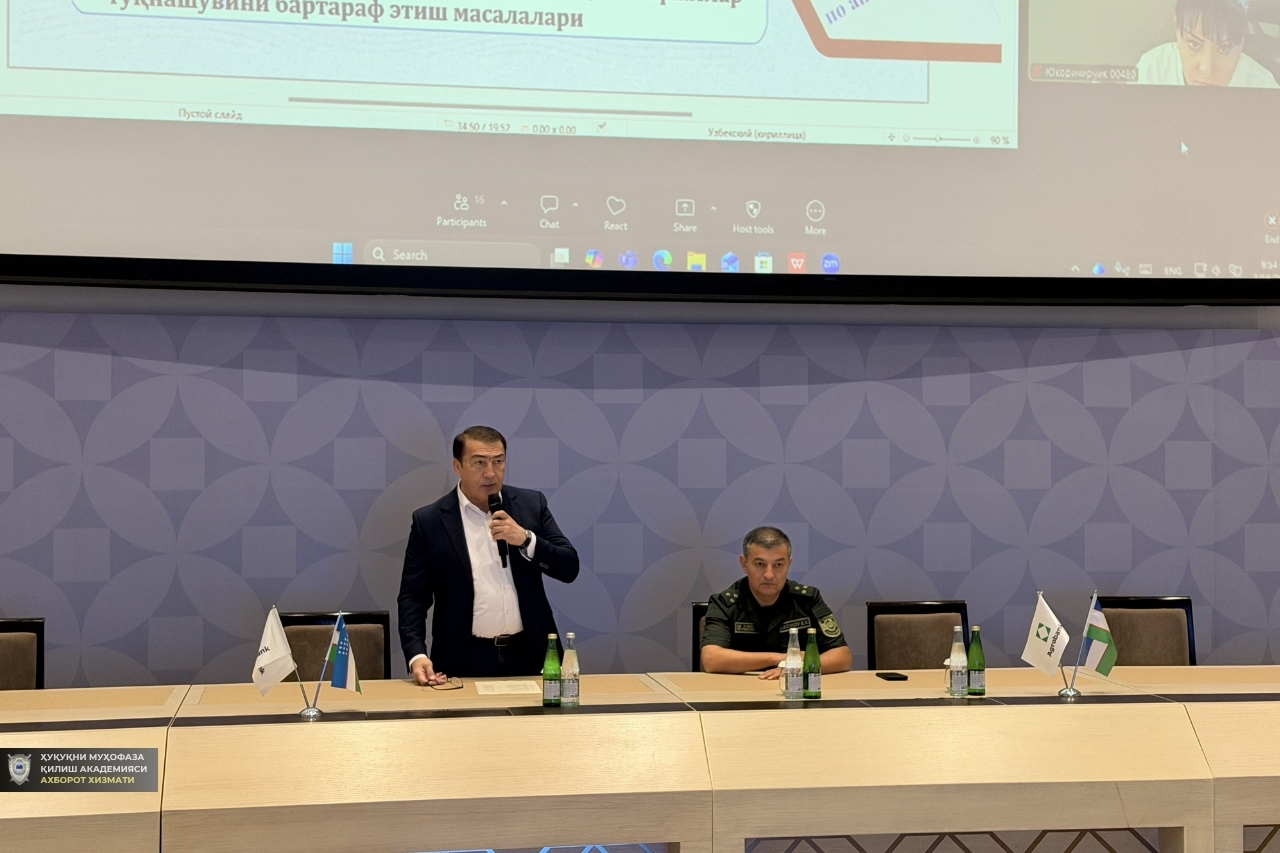
The Law Enforcement Academy of the Republic of Uzbekistan, in cooperation with Agrobank Joint-Stock Commercial Bank, organized an advanced training seminar for the bank’s compliance managers and personnel on combating money laundering and terrorist financing (AML/CFT). The training programme focused on assessing emerging risks in banking operations, identifying suspicious transactions, and enhancing the effectiveness of internal control systems.
During the seminar, participants received a comprehensive overview of the requirements of national legislation and the international standards of the Financial Action Task Force (FATF), as well as approaches to preventing conflicts of interest, managing risks associated with financial transactions, complying with sanctions-related restrictions, and applying criteria for identifying suspicious transactions. Particular attention was paid to deficiencies commonly encountered in banking practice, their legal and financial implications, and practical mechanisms for addressing them.
The training sessions were conducted in a practice-oriented format. Through the analysis of real-life case studies, participants explored the implementation of international standards in the national banking sector, the application of a risk-based approach, and customer due diligence (CDD) procedures. Interactive discussions and question-and-answer sessions provided an opportunity to examine complex compliance issues together with leading experts.
The sector-specific sessions featured experts from the Central Bank of the Republic of Uzbekistan and the Department for Combating Economic Crimes under the Prosecutor General’s Office of the Republic of Uzbekistan, who shared advanced practices and effective approaches currently applied in the field.
Upon completion of the seminar, participants strengthened their practical skills in preventing conflicts of interest, establishing effective internal control mechanisms, conducting risk assessments, analysing suspicious transactions, and promoting a strong compliance culture within banking institutions.
This educational initiative contributes to expanding practical cooperation between the Academy and the banking sector, enhancing financial transparency, and strengthening the resilience of the banking system against the risks associated with money laundering and terrorist financing.